Researchers from MIT, Brigham and Women’s Hospital, and Harvard Medical School have developed a potential new treatment for alopecia areata, an autoimmune disorder that causes hair loss and affects people of all ages, including children.
For most patients with this type of hair loss, there is currently no effective treatment. The developed microneedle patch can be painlessly applied to the scalp and releases drugs designed to rebalance the immune response locally, thereby halting the autoimmune attack on hair follicles.
In a study conducted on mice, this treatment demonstrated the ability to promote hair regrowth and significantly reduce inflammation at the treatment site, while importantly avoiding systemic immune effects elsewhere in the body. The researchers suggest that this strategy could also be adapted to treat other autoimmune skin diseases such as vitiligo, atopic dermatitis, and psoriasis.
“This innovative approach marks a paradigm shift. Rather than suppressing the immune system, we’re now focusing on regulating it precisely at the site of antigen encounter to generate immune tolerance,” explained Natalie Artzi, a principal research scientist in MIT’s Institute for Medical Engineering and Science and an associate professor of medicine at Harvard Medical School and Brigham and Women’s Hospital.
Artzi and Jamil R. Azzi, an associate professor of medicine at Harvard Medical School and Brigham and Women’s Hospital, are the senior authors of the study, which was published in the journal Advanced Materials. Nour Younis and Nuria Puigmal, both postdocs at Brigham and Women’s Hospital, are the lead authors of the paper.
The research team is currently working on launching a company to further develop this technology, with Puigmal leading the initiative, having recently been awarded a Harvard Business School Blavatnik Fellowship.
Understanding Alopecia Areata and Current Treatment Limitations
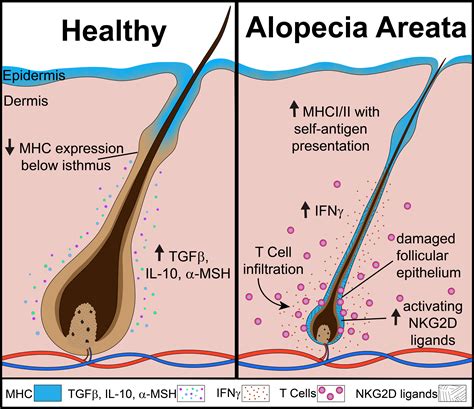
Alopecia areata affects over 6 million Americans and occurs when the body’s own T cells mistakenly attack hair follicles, leading to hair loss. The primary treatment available to most patients involves painful injections of immunosuppressant steroids into the scalp, which many patients find intolerable.
For some individuals with alopecia areata and other autoimmune skin diseases, oral immunosuppressant drugs can be used. However, these medications cause widespread suppression of the immune system, leading to potential adverse side effects.
“This approach silences the entire immune system, offering relief from inflammation symptoms but leading to frequent recurrences. Moreover, it increases susceptibility to infections, cardiovascular diseases, and cancer,” Artzi noted.
The Development of the Microneedle Patch Technology
The development of this microneedle patch stemmed from a collaboration between Artzi and Jamil R. Azzi, an immunologist and transplant physician seeking novel methods for direct drug delivery to the skin for treating skin-related diseases. Their initial conversation led to a joint effort to create a microneedle patch for localized drug delivery.
In 2021, they reported the successful use of such a patch to prevent rejection following skin transplants. The new study builds upon this foundation, applying the approach to autoimmune skin disorders.
“The skin is the only organ in our body that we can see and touch, and yet when it comes to drug delivery to the skin, we revert to systemic administration. We saw great potential in utilizing the microneedle patch to reprogram the immune system locally,” Azzi stated.
Microneedle Patch Composition and Functionality
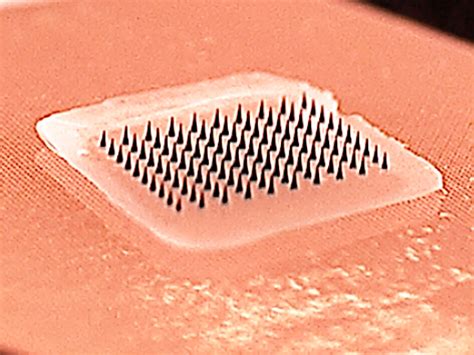
The microneedle patches used in this study are constructed from hyaluronic acid crosslinked with polyethylene glycol (PEG), both of which are biocompatible materials commonly employed in medical applications. This delivery method allows drugs to penetrate the tough outer layer of the epidermis, a barrier that topical creams often struggle to overcome.
“This polymer formulation allows us to create highly durable needles capable of effectively penetrating the skin. Additionally, it gives us the flexibility to incorporate any desired drug,” Artzi explained. For this research, the patches were loaded with a combination of the cytokines IL-2 and CCL-22.
These immune molecules work together to recruit regulatory T cells (T-regs), which then proliferate and help to dampen inflammation. Crucially, these cells also assist the immune system in recognizing hair follicles as native structures rather than foreign antigens, thereby ceasing the autoimmune attack.
Promising Results in Preclinical Studies
In studies involving mice, researchers observed that those treated with the microneedle patch every other day for three weeks exhibited a significant increase in regulatory T cells at the treatment site, accompanied by a reduction in inflammation. Hair regrowth was evident in these areas, and this growth was sustained for several weeks after the treatment concluded.
Importantly, these mice showed no changes in the levels of regulatory T cells in their spleen or lymph nodes, indicating that the treatment's effects were localized to the application site.
Further experiments involved grafting human skin onto mice with a humanized immune system. In these models, the microneedle treatment also successfully induced the proliferation of regulatory T cells and reduced inflammation.
Potential for Treatment Monitoring
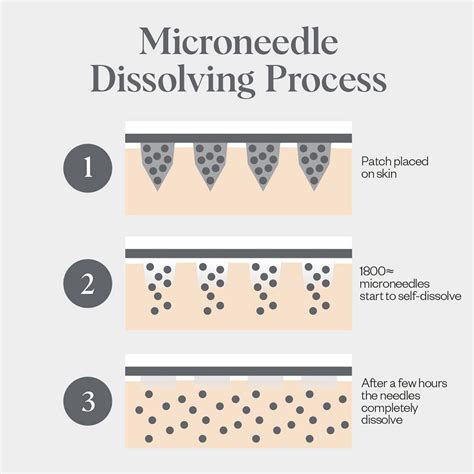
The microneedle patches were ingeniously designed to collect samples after releasing their drug payload. This feature could be invaluable for monitoring the progress of the treatment. Upon entering the skin, the hyaluronic acid causes the needles to swell significantly, enabling them to absorb interstitial fluid containing biomolecules and immune cells from the skin.
Following patch removal, these collected samples can be analyzed to measure levels of regulatory T cells and inflammation markers. This capability could prove highly beneficial for monitoring patients undergoing this treatment in the future.
Existing Treatments and Emerging Therapies for Alopecia Areata
While the microneedle patch represents a novel approach, several other treatments are currently available or under development for alopecia areata.
Janus Kinase (JAK) Inhibitors
Janus kinase (JAK) inhibitors are oral medications that target an overactive immune pathway known as JAK-STAT. This pathway normally helps regulate inflammation, but in alopecia areata, it becomes dysregulated, leading the immune system to attack hair follicles. By blocking JAK signaling, these drugs interrupt this feedback loop, allowing for hair regrowth.
“The JAK-STAT pathway acts like an on-switch for the immune system. When we block it, we prevent the immune system from recruiting more inflammatory cells to attack the hair,” explains Dr. Mostaghimi.
Currently, three FDA-approved JAK inhibitors are available for treating moderate-to-severe alopecia areata:
- Baricitinib (Olumiant): Approved in June 2022, this once-daily oral medication was the first systemic treatment for adults with severe alopecia areata. It works by blocking JAK1 and JAK2 proteins involved in inflammation. Clinical trials showed significant hair regrowth in a substantial portion of patients after 36 weeks, with further improvement after two years. Baricitinib also has established safety data from its use in rheumatoid arthritis and atopic dermatitis.
- Ritlecitinib (Litfulo): This oral JAK inhibitor received FDA approval in June 2023 for adults and adolescents aged 12 and older with severe alopecia areata. Taken once daily, pivotal trials demonstrated significant hair regrowth compared to placebo. Ritlecitinib targets JAK3 and TEC kinases, a slightly different mechanism that may influence its side effect profile. It is currently the only approved treatment for adolescents.
- Deuruxolitinib (Leqselvi): Approved in 2024 for adults with severe alopecia areata, this twice-a-day medication also blocks JAK1 and JAK2. Approval was based on phase 3 trials showing substantial scalp regrowth in about one-third of participants compared to placebo. Deuruxolitinib has a different metabolic pathway than other approved JAK inhibitors, requiring a genetic test before treatment initiation to ensure safe metabolism.
Sun Pharma has made Leqselvi (deuruxolitinib) available in the United States, offering an additional oral treatment option for adults with severe alopecia areata. Clinical trial data indicates rapid and significant hair regrowth for many patients, with over 30% experiencing 80% or more scalp hair coverage at 24 weeks. The drug company is also implementing initiatives like the Leqselvi SUPPORT program to help patients with affordability challenges.
While JAK inhibitors offer promising results, they carry safety risks that require careful consideration by patients and physicians. Common side effects observed in clinical trials include headache, acne, and nasopharyngitis.
Alopecia Areata: How Do JAK Inhibitors Help With Hair Growth? | GoodRx
Other Treatment Modalities
For milder forms of alopecia areata, several other treatments may be considered:
- Corticosteroids: These medications reduce inflammation around hair follicles, promoting hair growth. Intralesional injections of corticosteroids into bald patches are a common treatment for adults with patchy alopecia areata, with potential regrowth visible within six to eight weeks. However, these injections do not prevent further hair loss. Oral steroids can be used but are not suitable for long-term treatment due to potential side effects such as weight gain, bone thinning, elevated blood sugar, and high blood pressure.
- Topical Corticosteroids with or without Minoxidil: For moderate alopecia areata, topical corticosteroids, possibly combined with topical or oral minoxidil, may be prescribed.
- Immunotherapy: This treatment involves applying an agent that causes an allergic rash (allergic contact dermatitis) at the application site. This process alters the immune response around hair follicles, leading to hair regrowth in a significant percentage of patients. However, treatment typically needs to be continuous to maintain regrowth, and the application can cause discomfort, redness, and rash.
- Dupilumab (Dupixent): This monoclonal antibody is FDA-approved for treating atopic dermatitis, a condition that affects about one-third of people with alopecia areata.
- Oral Minoxidil: Available in various strengths, oral minoxidil tablets can be part of the treatment regimen for moderate alopecia areata.
The Future of Alopecia Areata Treatment
The microneedle patch technology developed by MIT and its collaborators represents a significant advancement in the potential treatment of alopecia areata. By focusing on local immune regulation rather than systemic suppression, this approach offers a promising avenue for rebalancing the immune system precisely where it is needed, minimizing side effects and promoting hair regrowth.
“Microneedles offer a promising avenue for targeted and localized delivery of therapeutics to the skin,” Artzi concluded. “Their ability to precisely administer drugs directly to the affected area of the skin enables more effective modulation of the immune response while minimizing systemic side effects.”