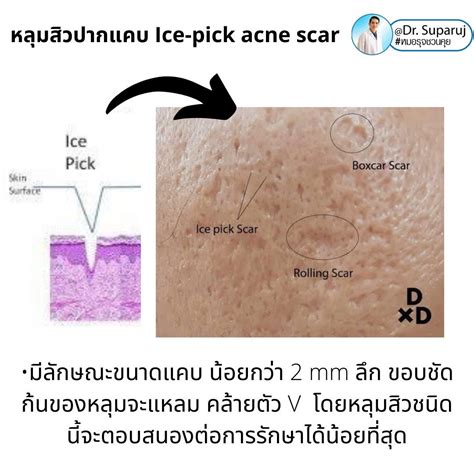
Acne, or acne vulgaris, is a common skin condition that can range from minor breakouts to severe inflammatory lesions. While acne itself can be distressing, the aftermath, particularly scarring, can have a lasting impact on skin texture and appearance. Among the various types of acne scars, ice pick scars are some of the most challenging to treat due to their deep, narrow indentations.
What Are Ice Pick Scars?
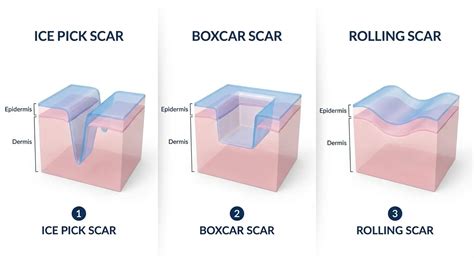
Ice pick scars are a distinctive type of atrophic acne scar, characterized by deep, narrow pits that resemble puncture marks. These scars are typically wider at the skin's surface and taper into a sharp point as they extend into the deeper layers of the dermis or even subcutaneous fat. They are often most noticeable on the cheeks and forehead, areas frequently affected by severe acne. The irregular texture of these scars can significantly alter the overall smoothness of the skin, leading to emotional distress for those affected.
Unlike hypertrophic scars or keloids, which are types of scar overgrowth, ice pick scars represent a loss of tissue. Hypertrophic scars are raised but confined to the original wound area, while keloids are raised scars that extend beyond the original wound boundaries. Both hypertrophic and keloid scars are more common on the chest, back, jawline, and shoulders, and individuals with darker skin tones are more prone to developing them. Keloids can result from various injuries, including acne, surgery, or chickenpox, and can grow larger over time. Treatments for keloids include steroid injections, surgical removal, or cryotherapy.
Ice pick scars, however, are a direct result of severe acne where the skin's healing process is compromised. They are generally narrower than other atrophic scars but are notably deeper. These deep, narrow, and sharply marginated epithelial tracts are a common form of atrophic scarring, occurring in a significant percentage of patients with this scar type.
The appearance of ice pick scars can range from small, deep pits to enlarged pores, depending on their severity and depth.
What Causes Ice Pick Scars?
The formation of ice pick scars is primarily linked to severe inflammatory acne. When acne lesions, such as cysts or nodules, become deeply inflamed and rupture, they can damage the skin and its underlying tissue. This damage disrupts the normal wound healing process, leading to insufficient collagen production to adequately repair the defect. Consequently, the skin collapses, creating a depression or indentation.
Key factors contributing to the development of ice pick scars include:
- Severe Acne: Acne that progresses to deep, inflamed lesions like cysts and nodules has a higher likelihood of resulting in ice pick scars.
- Delayed or Inadequate Treatment: Untreated or poorly managed acne can lead to prolonged inflammation, exacerbating tissue damage and increasing the risk of scarring.
- Picking or Squeezing Pimples: This common habit can push bacteria deeper into the skin, intensifying inflammation and leading to more severe scarring.
- Genetics: Some individuals are genetically predisposed to developing more severe acne or scarring.
- Skin Type: While not exclusive, individuals with thicker or oilier skin may be more prone to deep acne scarring due to the severity of lesions.
The inflammation associated with acne is a critical factor. The deeper the inflammation penetrates the skin, the greater the potential for scarring upon healing. The body's immune system fights the bacteria, and during the subsequent wound healing phase, tissue is repaired. However, in individuals prone to depressed acne scars, there can be an imbalance between tissue creation and degradation, favoring tissue loss. When this tissue loss is concentrated around pores, deep and narrow scars, such as ice pick scars, can develop.
Treating Ice Pick Scars
Due to their depth and narrowness, ice pick scars are notoriously difficult to treat effectively with at-home remedies. Professional intervention from a dermatology provider is generally required to address these types of scars. A comprehensive approach often involves combining various treatments to achieve the best possible outcome.
Professional Treatment Options
Dermatologists offer a range of specialized treatments targeting the underlying causes of scarring and promoting skin regeneration:
- TCA CROSS (Chemical Reconstruction of Skin Scars): This highly effective technique involves applying a high concentration of trichloroacetic acid (TCA), typically 50-100%, directly into the base of each ice pick scar using a fine instrument like a toothpick. This controlled chemical injury stimulates fibroblast activity, leading to new collagen production and an increase in dermal volume, which helps to lift the scar. TCA CROSS is considered a safe, cost-effective, and minimally invasive method. Multiple sessions, usually spaced several weeks apart, are often needed to achieve significant improvement, with each treatment potentially yielding a 20-30% improvement.
- Punch Excision: For very deep ice pick scars, a punch excision may be performed. This minor surgical procedure involves using a circular tool to cut out the scar tissue. The resulting wound is then closed with sutures, leaving a smoother, flatter scar. While effective, this method can leave a small linear scar and may not address surrounding skin discoloration. It can be combined with other resurfacing treatments.
- Punch Grafting: This technique is reserved for particularly deep ice pick scars. Similar to punch excision, the scar is removed, but the defect is then filled with a small skin graft, typically taken from behind the ear. Punch grafting can effectively fill deep indentations, though multiple grafts may be necessary for a single scar, and the grafted area might be slightly elevated.
- Laser Resurfacing: Both ablative and non-ablative lasers can be used to treat ice pick scars. Ablative lasers remove the outer layers of skin, while non-ablative lasers use heat to stimulate collagen production in deeper layers. Laser resurfacing can improve skin texture and diminish the appearance of scars by enhancing collagen synthesis. However, potential side effects include redness, swelling, and sun sensitivity, and multiple sessions may be required.
- Subcision: This procedure is primarily used for rolling scars but can sometimes be employed in conjunction with other treatments for tethered ice pick scars. It involves using a needle to break up the fibrous bands of scar tissue that pull the skin down, allowing the skin surface to rise.
- Dermal Fillers: Temporary fillers, such as hyaluronic acid, can be injected into the indentations to temporarily plump the skin and smooth out the appearance of ice pick scars. This offers immediate but temporary results.
- Microneedling: Also known as collagen induction therapy, microneedling creates tiny puncture wounds in the skin using fine needles. This process stimulates the body's natural healing response, promoting the production of collagen and elastin, which can help to reduce scar depth over time. Multiple treatments are typically required.
- Dermabrasion and Microdermabrasion: Dermabrasion uses a rotating abrasive tool to remove the upper layers of skin, while microdermabrasion uses fine crystals or a diamond-tipped wand for a less aggressive exfoliation. These treatments can help to shallow deeper scars and improve overall skin texture, often used to complement surgical scar removal.
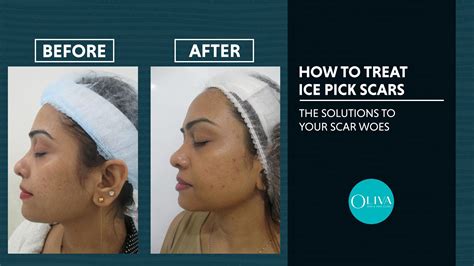
It is crucial to consult with an experienced dermatology provider to determine the most appropriate treatment plan based on the individual's skin type, scar severity, and overall skin condition. Combining different treatment modalities often yields the best results.
Other Types of Acne Scars
Understanding the different types of acne scars is essential for effective treatment. Besides ice pick scars, other common types include:
- Boxcar Scars: These are broad, shallow scars with sharply defined vertical edges, resembling the shape of a box. They can be treated with chemical peels, dermal fillers, or laser therapy.
- Rolling Scars: These scars give the skin an uneven, wave-like appearance due to sloping edges. Treatments often include dermal fillers and microneedling.
- Hypertrophic Scars: As mentioned earlier, these are raised scars caused by excessive collagen production. Treatment options include steroid injections and laser therapy.
For all types of acne scars, a personalized treatment plan developed by a dermatologist is key. While over-the-counter products containing retinoids or vitamin C may help with mild discoloration or texture, they are generally not potent enough for deep scars like ice pick scars.
When to See a Dermatology Provider
Seeking professional help for acne scars is advisable under several circumstances:
- Persistent Scarring: If your acne scars are not improving and are causing significant emotional distress.
- Severe Scarring: If you have deep ice pick scars or other types of scarring that result in uneven skin texture.
- Ineffective Home Remedies: When over-the-counter or natural remedies have not yielded the desired results.
- Preventing Future Scarring: A dermatologist can offer guidance on managing active acne and preventing new scars from forming.
It's important to note that treatments for acne scarring are typically considered cosmetic procedures and may not be covered by insurance. Costs can vary depending on the chosen treatment and the number of sessions required.
Types of Acne Scar Surgery Treatments and How Do They Work? Dr. Jangid | SkinQure