The passing of Ustad Rashid Khan on January 9, 2024, at the age of 55, marked the end of an era in Hindustani classical music. While his physical presence is no longer with us, his profound musical legacy continues to resonate, prompting reflection on the nature of mortality and immortality. As the saying goes, "the soul is immortal," and the impact of Ustad Rashid Khan's music ensures his spirit endures within the hearts of his listeners.
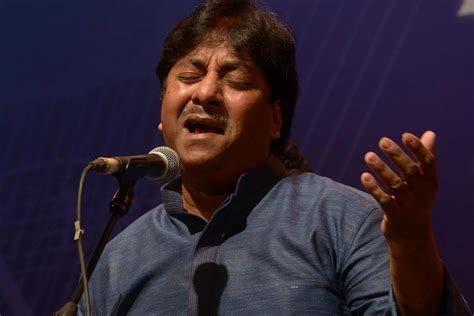
For many, memories of Ustad Rashid Khan are intertwined with the cassette and CD covers of HMV and Saregama from the 1980s and 1990s. These images often depicted a young, pensive artist with his swarmandal, frequently accompanied by Jyoti Goho on the harmonium and Ananda Gopal Bandopadhyay on the tabla. The melodies of ragas like Ahir Bhairav, Jog, Bilaskhani Todi, Bairagi Bhairav, Shree, Malkauns, and Madhuvanti, played on loop, became the soundtrack to quiet household moments, evoking a sense of deep musical immersion.
Aspiration to Romanticism and Technical Prowess
Ustad Rashid Khan's music was characterized by its deep emotional resonance, where even his formidable technical skill seemed to serve the expression of feeling. He possessed an extraordinary ability to unravel the intricacies of notes, making them appear as if they willingly presented themselves to him. His renditions were rarely light; instead, his voice, seamlessly integrated with the shruti, created an ardent mood without ever compromising the melodic integrity of the raga.
A prime example of his artistry can be heard in his rendition of Darbari. Even before the raga fully unfolds, he captivates the listener's attention. He unhurriedly explores the lower octaves, establishing the raga's grandeur without resorting to superficial charm. A recurring theme in his performances was an unspoken aspiration to infuse the khayal with the finest elements of thumri, lending a distinct romanticism to his style. His vocal delivery and interpretation were a seamless integration of the esteemed traditions of the past masters of his gharana.
Best of Ustad Rashid Khan | Hindustani Classical | Rashid Khan Songs
Early Life and Training
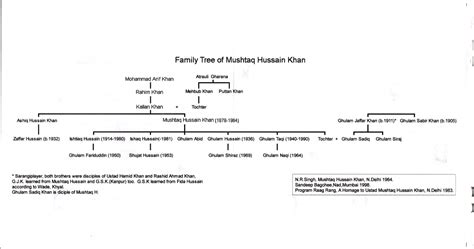
Born on July 1, 1968, in Sahaswan, Badayun, Uttar Pradesh, Rashid Khan hailed from a family with a rich lineage of classical musicians. His musical journey began under the guidance of his maternal grand-uncle, Ustad Nisar Hussain Khan, a significant figure of the Rampur-Sahaswan Gharana, who became his guru. Ustad Rashid Khan himself admitted to being an initially reluctant student, uninterested in formal schooling. He preferred to exist in his "own world," filled with music on his own terms, often taking long walks while composing bandishes and improvising taans.
Despite his early aversion to formal lessons, his uncle, Ustad Ghulam Mustafa Khan, recognized his inherent talent and provided initial guidance. However, it was the rigorous and formative training under Ustad Nisar Hussain Khan that truly honed Rashid Khan's musical abilities. This discipline involved early morning voice training sessions, dedicating hours to perfecting a single note, which laid the groundwork for his future mastery of taan and layakaari.
Rashid Khan's debut concert at the age of eleven marked the beginning of a musical journey that would span over three decades. His move to the ITC Sangeet Research Academy (SRA) in Kolkata at the age of 14 further refined his skills, culminating in his formal recognition as a musician by 1994. His dedication to the Rampur-Sahaswan gayaki, a style closely associated with the Gwalior Gharana, was evident in his performances, characterized by moderate to slow tempos, a deep and full-bodied vocal quality, and complex rhythmic patterns.
Musical Style and Innovations
Ustad Rashid Khan's mastery of vilambit khayal gayaki, influenced by maestros like Ustad Amir Khan and Pandit Bhimsen Joshi, allowed him to infuse profound emotional depth into his melodic elaborations. He was known for his exceptional expertise in the use of sargams and sargam taankari (play on the scale). While he was also a master of the tarana, much like his guru, he interpreted them in his unique style, favoring the khayal approach over the instrumental stroke-based style for which Nissar Hussain was renowned, thereby avoiding any imitation of instrumental tones.
His renderings were distinguished by their emotional overtones, a quality he believed could be expressed in the alaap, the bandish, or through the interpretation of lyrics. This approach brought a modern sensibility to his style, differentiating him from older maestros who often placed greater emphasis on impressive technique and the skillful execution of challenging passages. His command over tonal variations, dynamics, and timbre adjustment represented the pinnacle of voice culture.
Beyond the confines of pure Hindustani classical music, Rashid Khan's innovative spirit led him to explore fusions with other genres. He experimented with blending Hindustani music with lighter forms, evident in his Sufi fusion recording of "Naina Piya Se" (songs of Amir Khusro) and in experimental concerts with Western instrumentalist Louis Banks. He also engaged in jugalbandis with renowned musicians like sitar maestro Shahid Parvez.
Transition to Wider Audiences and Celebrityhood
The advent of the 2000s saw Ustad Rashid Khan lend his voice to Hindi films, achieving significant success with songs such as "Sajna Barse Hain Kyon Akhiyan," "Aaoge Jab Tum," and "Allah Hi Reham." This period coincided with the rise of music reality shows, which propelled him to celebrity status. He collaborated with various artists for Coke Studio, including Bombay Jayashri, Richa Sharma, and Sulaiman, and also explored Tagore songs, ghazals, and improvisational sessions with his children, continuously broadening his musical horizons.
While these ventures were often market successes and showcased his virtuosity, some critics felt they did not fully preserve the meditative quality and depth of his classical music. The songs, they argued, lacked the expansive scope of the khayal, a genre in which Ustad Rashid Khan was an unparalleled practitioner. The transition into celebrityhood, for some listeners, represented a departure from the intensely focused classical performances of his earlier years. His classical concerts in recent times were often shorter, relying more on his established skill and celebrity status rather than the prolonged, deeply immersive experiences of the past.
Awards and Recognition
Ustad Rashid Khan's immense contribution to Indian classical music was recognized with numerous prestigious accolades. He was awarded the Padma Shri in 2006, the Sangeet Natak Akademi Award in 2006, and the Padma Bhushan in 2022. He also received West Bengal’s Banga Bibhushan and the Rashtriya Kumar Gandharva Award from the Government of Madhya Pradesh in 2002. Pandit Bhimsen Joshi famously described him as "the future of Hindustani music," a testament to his profound impact and the assurance he provided for the continuation of the genre.
His career was marked by stellar performances at renowned music conferences such as the Dover Lane Music Conference, SRA Sangeet Sammelan, and various Lalit Kala festivals. He was also a revered teacher, serving as a Guru at the ITC Sangeet Research Academy, where he nurtured the next generation of musicians through lectures, workshops, and recordings. He established the Shakhri Begum Memorial Trust in memory of his mother and founded The Fifth Note Global Centre of Excellence in 2009.
Enduring Legacy
Ustad Rashid Khan's music created a unique sensibility that is difficult to match. The experiences he offered listeners remain evergreen, a testament to his profound artistry. Even as he navigated the complexities of fame and wider musical explorations, the core of his musical being remained rooted in the rich traditions of the Rampur-Sahaswan gharana. He was a custodian of not only his gharana's best aspects but of Hindustani classical music as a whole, preserving its essence while fearlessly pushing its boundaries.
His passing is a significant loss, but his voice, his interpretations, and his dedication to the art form ensure that Ustad Rashid Khan will forever be remembered as a maestro who touched the souls of millions and inspired countless aspiring musicians. The melodies he created continue to play, a timeless echo of a genius who lived and breathed music.