Fordyce spots, also known as Fordyce granules, are a common dermatological finding characterized by enlarged, slightly raised sebaceous (oil) glands. These spots typically appear in hairless areas of the skin and are most frequently observed around the edges of the lips (vermillion border) and on the inside of the cheeks. In some instances, they can also manifest in the genital area, including the penis, scrotum, vulva, and labia. It is important to note that Fordyce spots are benign, meaning they are not cancerous.
The condition was first described by American dermatologist Dr. John Addison Fordyce in 1896. While their appearance, particularly in sensitive areas like the mouth or genitals, can sometimes cause alarm, Fordyce spots are a normal occurrence and are not contagious. They are not associated with any sexually transmitted diseases or infections (STDs or STIs).
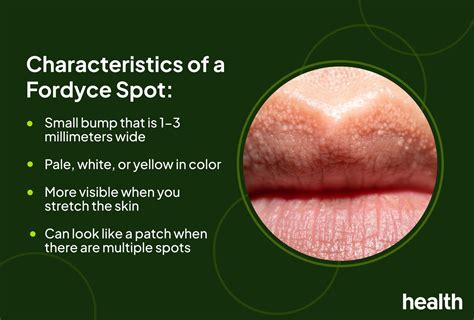
Distinguishing Fordyce Spots from Other Conditions
It is crucial to differentiate Fordyce spots from other skin conditions that may present with similar appearances, especially in the genital and oral regions. Understanding these distinctions can help alleviate unnecessary worry and ensure appropriate medical attention when needed.
Fordyce Spots vs. Herpes
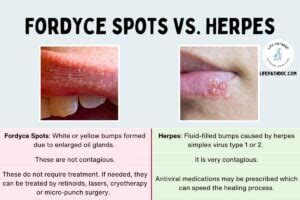
Genital herpes is a sexually transmitted infection (STI) caused by the herpes simplex virus (HSV). Individuals with genital herpes develop painful blisters on their genitals, which can spread through sexual contact. Herpes simplex virus type 1 (HSV-1) can also cause cold sores on the lips, gums, tongue, and inside the mouth. In contrast, Fordyce spots are not an STI, are not caused by a virus, and are not contagious. Their presence in the genital or oral areas is normal and does not indicate an infection.
Fordyce Spots vs. Genital Warts
Genital warts are another type of STD caused by the human papillomavirus (HPV). They typically appear as small bumps or growths in and around the genitals and rectum and are highly contagious. In their early stages, genital warts can resemble Fordyce spots. If there is a sudden appearance of small bumps on the genitals, it is advisable to consult a healthcare provider for an accurate diagnosis.
Prevalence and Demographics
Fordyce spots affect a wide range of individuals and typically do not become noticeable during early childhood. They tend to become more apparent during puberty and adulthood, coinciding with hormonal changes. While they can appear on the penis, scrotum, labia, or the vermilion border of the lips, they are generally small, painless, and pale or skin-colored bumps. In the vast majority of cases, medical treatment is not required as Fordyce spots are a normal finding and do not pose any health risks.
Older adults may observe that Fordyce spots become more prominent due to natural aging processes. However, these spots are generally harmless and do not lead to serious or long-term complications.
Causes and Contributing Factors
Currently, there are no known infectious agents or environmental factors definitively identified as direct causes of Fordyce spots. They are not contagious and do not result from any infection. There is also no strong scientific evidence linking Fordyce spots to genetic or autoimmune conditions. However, some research suggests a potential correlation with a family history of similar skin conditions.
While lifestyle and dietary factors do not directly cause Fordyce spots, certain habits might influence their visibility. For example, smoking, dehydration, and poor oral hygiene have been suggested as factors that could exacerbate their appearance.
Characteristics and Diagnosis
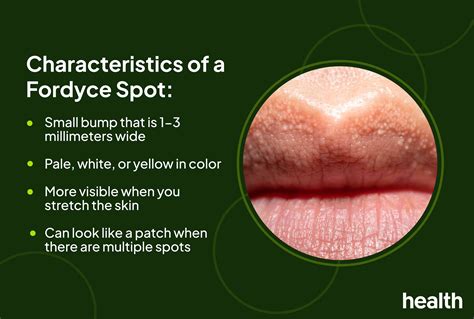
Fordyce spots are described as small, painless, pale or yellowish bumps that can range in size from 1 to 3 millimeters. They are ectopic sebaceous glands, meaning they are oil-producing glands that are not associated with hair follicles. Their most common locations include the vermilion border of the lips, the inner lining of the cheeks, and the genital area.
The diagnosis of Fordyce spots typically begins with a clinical evaluation by a healthcare provider. This involves taking a detailed patient history and performing a physical examination of the affected areas. In most cases, no specific diagnostic tests are necessary to confirm the presence of Fordyce spots.
Treatment and Management
In the majority of instances, Fordyce spots do not require any medical treatment due to their benign nature and lack of associated health risks. Reassurance from a healthcare provider is often sufficient. For individuals who experience self-consciousness about their appearance, particularly in intimate areas, clinical treatments are available.
Gentle hygiene, involving daily washing with lukewarm water and a mild, fragrance-free cleanser, is recommended. If desired, Fordyce spots can be treated safely and effectively under clinical supervision. One such method is hyfrecation, which is offered by specialized clinics. These treatments often include local anesthesia, either via injection or cream, depending on the specific lesions. A follow-up visit is typically included in the treatment package.
It is important to distinguish Fordyce spots from other conditions. For instance, while Fordyce spots are rare in children, they can occur. They also do not typically go away on their own. There are no scientifically proven home remedies for Fordyce spots.
Understanding that Fordyce spots are a common and benign condition can help alleviate concerns and promote confidence. Early diagnosis and reassurance from a healthcare provider play a significant role in an individual's outlook regarding this condition.