Concrete is a cornerstone of modern infrastructure, indispensable in the construction of buildings, roads, bridges, and dams. It is fundamentally a composite material, comprising a binder (cement), water, and aggregate (filler). Cement itself is a compound material, typically a mixture of limestone and clay that undergoes high-temperature processing.
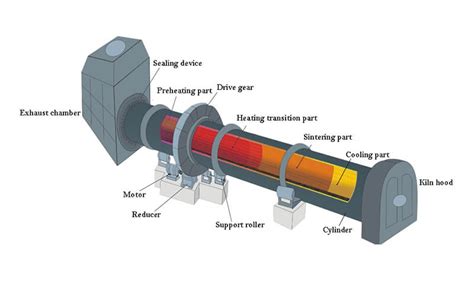
While various types of cement exist, with ongoing research into sustainable alternatives, Portland cement remains the most popular. The production of Portland cement involves heating a mixture of limestone and clay to very high temperatures, often between 1400 and 1600 °C, within large, rotating steel kilns. This process, which can take up to two hours depending on kiln size, allows the different elements to react and transform.
The Production and Composition of Portland Cement
The journey of Portland cement begins with the quarrying of limestone (CaCO3). This limestone is crushed into small pieces and then mixed with clay (or shale), sand, and iron ore. This mixture is ground into a fine powder, which, despite its uniform appearance, is microscopically heterogeneous. This powder is then heated in large, inclined, rotating steel kilns.
As the mixture slowly travels through the kiln due to rotation and inclination, it undergoes several transformations. Initially, any free water evaporates. This is followed by calcination, where bound water and carbon dioxide are lost. The next crucial stage is clinkering, during which calcium silicates are formed. Finally, the material is cooled, producing marble-sized pieces known as clinker. This clinker is then ground once more, with the addition of gypsum to regulate the setting time of the mixture.
The major chemical compounds that constitute Portland cement are:
- Tricalcium silicate (3CaO · SiO2), often denoted as C3S.
- Dicalcium silicate (2CaO · SiO2), denoted as C2S.
- Tricalcium aluminate (3CaO · Al2O3), denoted as C3A.
- Tetracalcium aluminoferrite (4CaO · Al2O3Fe2O3), denoted as C4AF.
- Gypsum (CaSO4 · 2H2O), added to regulate setting.
Small amounts of uncombined lime, magnesia, alkalies, and other elements may also be present.
The Role of Water and Aggregates in Concrete
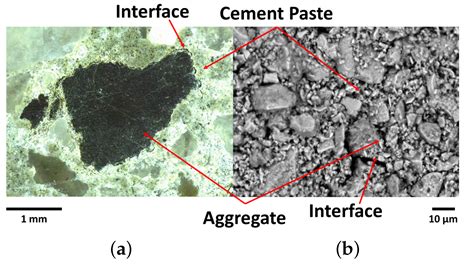
Water is a critical ingredient in concrete, initiating the process of hydration. When mixed with cement, water forms a paste that binds the aggregates together. Hydration is a chemical reaction where the major cement compounds bond with water molecules, forming hydrates or hydration products. The water-to-cement ratio is paramount; too much water weakens the concrete, while too little makes it unworkable. Pure water is essential to prevent side reactions that could compromise the concrete's integrity.
Aggregates, which can be fine (like sand) or coarse (like gravel or crushed stone), serve as the filler material in concrete. They are chemically inert and are held together by the cement paste. Aggregates constitute the largest portion of concrete's material composition, ideally between 70-80% of the volume. Their shape, size, and material type determine the desired characteristics of the final concrete. Aggregates should be clean, hard, and strong, often washed to remove impurities that could interfere with the bonding process.
The Hydration Process and Concrete Hardening
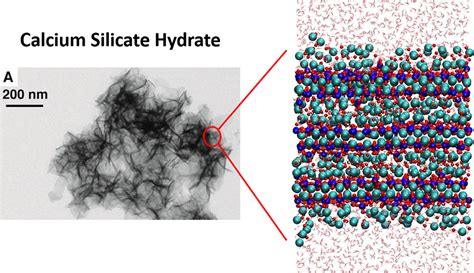
The hardening of concrete occurs through the process of hydration. When water is added to cement, the calcium silicates (C3S and C2S) react with water molecules to form calcium silicate hydrate (C-S-H) and calcium hydroxide (CH). This reaction is exothermic, releasing heat and causing the temperature to rise.
The hydration process can be broadly divided into stages:
- Stage I (Initial reaction): Rapid dissolution of cement compounds with significant heat evolution.
- Stage II (Dormancy period): A period of slow heat evolution, during which the concrete remains plastic and workable. This is crucial for transportation and placement. Initial setting begins at the end of this stage.
- Stages III and IV: Concrete begins to harden as C-S-H and CH are produced, with increasing heat evolution, primarily due to C3S hydration.
- Stage V: Reached after approximately 36 hours, indicating significant hardening.
Tricalcium silicate (C3S) is primarily responsible for the early strength of concrete (within the first 7 days), while dicalcium silicate (C2S) contributes to strength at later stages, reacting more slowly and releasing less heat.
The formation of calcium silicate hydrate (C-S-H) is the key to concrete's strength and durability. C-S-H is an amorphous gel with variable stoichiometry, forming the binding matrix. Calcium hydroxide (CH) is also a byproduct, but excess CH is not a major contributor to strength and can be vulnerable to chemical attack.
Factors Influencing Concrete Properties
Several factors influence the final properties of concrete:
Water-to-Cement Ratio
As stated by Abrams' law, a lower water-to-cement ratio yields stronger, more durable concrete. Conversely, a higher ratio results in a more workable mix but with reduced strength due to increased porosity (empty spaces between particles). The excess water not consumed in hydration remains in the microstructure, creating pores that weaken the concrete.
Aggregates
The physical characteristics of aggregates-shape, texture, and size-can indirectly affect strength. If aggregates lead to poor workability, more water might be added, increasing the water-to-cement ratio and weakening the concrete. Well-graded aggregates improve packing efficiency, minimizing the amount of cement paste needed and enhancing workability.
Time and Curing
Concrete hardens over time as hydration reactions continue, albeit at a slower pace. The curing process is critical for strength development. Concrete requires moisture to hydrate and cure; drying stops the hardening process. Proper curing involves maintaining adequate moisture and temperature. Pouring concrete in cold weather slows curing, while excessively high temperatures can cause it to cure too quickly, leading to cracking.
Admixtures
Admixtures are substances added to concrete to modify its properties. They are distinct from the primary ingredients (cement, water, aggregate) and reinforcements. Examples include:
- Air-entraining agents: Improve durability, workability, reduce bleeding, and enhance resistance to freeze-thaw cycles.
- Plasticizers (water-reducers): Increase workability without adding extra water, or allow for reduced water content while maintaining workability.
- Superplasticizers (high-range water-reducers): Offer greater workability enhancement with fewer deleterious effects and can increase compressive strength.
- Retarders: Slow down the hydration (setting) time, useful for large or difficult pours.
- Accelerators: Speed up hydration and setting time, beneficial in cold weather or for rapid repairs.
- Mineral admixtures: Fine-grained materials like fly ash, ground granulated blast furnace slag (GGBFS), and silica fume, which can replace part of the Portland cement to improve properties like strength, durability, and workability.
- Crystalline admixtures: Block water and contaminant pathways by forming crystals in pores and micro-cracks.
- Polymers: Added to Portland cement for increased flexibility, better adhesion, and chip resistance.
- Pigments: Used to add color to the concrete.
Workability Agents for Concrete || Admixtures #11
Types of Portland Cement
Standardized types of Portland cement exist to meet specific construction needs:
- Type I (Ordinary): General-purpose use.
- Type II (Modified): Moderate resistance to sulfate attack and moderate heat of hydration.
- Type III (High-early-strength): Achieves high strength in a short period.
- Type IV (Low-heat): Generates less heat during hydration, used for massive structures like dams.
- Type V (Sulfate-resistant): Offers high resistance to sulfate attack.
Special types include colored cements (with added pigments), air-entraining cements, low-alkali cements, masonry cements, quick-setting cements, waterproof cements, hydrophobic cements, and oil-well cements designed for high-temperature and high-pressure environments.
White cement is chemically similar to gray Portland cement but has significantly lower iron and manganese oxide content, achieved through higher processing temperatures and finer grinding. It is primarily used for decorative purposes.
Historical Context and Evolution
The use of concrete-like materials dates back to ancient civilizations. The Nabatean traders utilized hydraulic lime as early as 700 BC. The Romans extensively employed Roman concrete (opus caementicium), made from quicklime, pozzolana (volcanic ash), and aggregate, from 300 BC to AD 476. This material was revolutionary, freeing Roman construction from the limitations of stone and brick and contributing to the longevity of structures like the Pantheon and the Baths of Caracalla.
Following the Roman Empire, the quality of concrete and mortar declined in some regions but did not become a lost art. The demand for mortar increased with stone construction from the 11th century in England. Quality began to improve in the 12th century through better grinding and sieving. Medieval lime mortars were non-hydraulic.
A significant advancement was made by John Smeaton in the mid-18th century for the construction of Smeaton's Tower. However, the invention of modern Portland cement is credited to Joseph Aspdin, an English bricklayer who patented a method in 1824. He named it Portland cement due to its resemblance to Portland stone.
Modern structural concrete differs from Roman concrete in its fluid, homogeneous consistency, allowing it to be poured, a contrast to the hand-layering and rubble aggregate placement of Roman practice. The long-term durability of Roman concrete has been attributed to the presence of volcanic rock and ash.
The 19th and 20th centuries saw the widespread adoption of concrete in modern construction, leading to innovations like prestressed and post-tensioned concrete pioneered by Eugène Freyssinet. Modern concrete production typically occurs in batch or ready-mix plants, with careful proportioning, mixing, placement, and curing essential for achieving desired strength and durability.