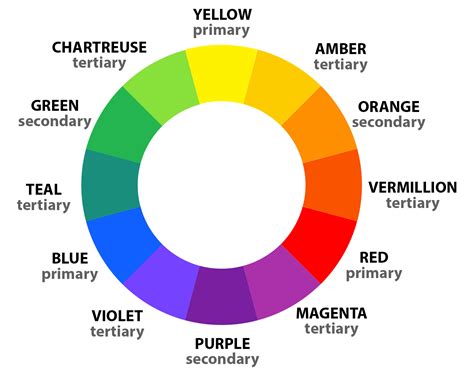
Color correcting makeup has been around for a long time and is a hidden secret to achieving a flawless face on the Hollywood Red Carpet. It is gaining popularity as people seek to further disguise facial discolorations that concealer alone cannot address. Color correction, or color fixing, has its origins in art class, specifically with the use of the color wheel. The color wheel demonstrates that when a certain color, such as red, is paired with its opposite on the wheel, green, the two shades will cancel each other out, resulting in a neutral tone. This color theory is not limited to art class; it can also be effectively applied to correct colors on our faces.
Understanding the Color Wheel and Color Theory
Color theory is the art and science of mixing colors, offering practical guidance for understanding the visual effects of specific color combinations. It guides us in creating harmonious color palettes that are visually appealing. At its core, color theory explains how to make colors look beautiful together.
Color Systems
There are various color systems, depending on the medium. For makeup and art, the RYB (Red, Yellow, Blue) system is typically used. This system deals with the physical presence of color in objects. Other systems include CMY(K) (Cyan, Magenta, Yellow, Key/Black) used in graphics and printing, and RGB (Red, Green, Blue) used in electronics like televisions and computers. The RYB system is subtractive, dealing with physical colors, while CMY(K) and RGB are additive, dealing with colors created by light.
The Color Wheel
The color wheel, a fundamental model for subtractive color mixing, displays a logical sequence of 12 hues in relation to each other. Originally developed to illustrate color relationships, it helps us understand how colors interact and how the human eye perceives them. This is crucial for makeup artistry. The wheel is structured to show the relationships between primary, secondary, and tertiary colors.
Color Terminology
Colors are categorized by three characteristics: Hue, Value, and Intensity.
- Hue: The pure color found on the color wheel, including primary, secondary, and tertiary colors.
- Value: The relative darkness or lightness of a color, also known as the grayscale.
- Intensity: The purity of a color, indicating how bright or dull it appears.
Color Combinations
Understanding color combinations is key to effective color correction:
- Primary Colors: Red, Yellow, and Blue. These cannot be created by mixing other colors.
- Secondary Colors: Created by mixing equal parts of two primary colors. These are Orange (Red + Yellow), Green (Yellow + Blue), and Violet (Blue + Red).
- Tertiary Colors: Created by mixing a primary color with an adjacent secondary color. Examples include Red-Orange, Yellow-Orange, Yellow-Green, Blue-Green, Blue-Violet, and Red-Violet.
- Complementary Colors: Colors found directly opposite each other on the color wheel. When mixed, they cancel each other out, forming a neutral tone. They are also referred to as 'opposite colors' or 'correcting colors.'
- Analogous Colors: Three colors that are next to each other on the color wheel, typically consisting of a primary, secondary, and tertiary color.
Tints, Shades, and Tones
Further manipulating colors involves adding neutral tones:
- Tint: Adding white to a color makes it lighter (e.g., pastel colors).
- Shade: Adding black to a color makes it darker (e.g., navy blue from blue).
- Tone: Adding gray to a color makes it duller or less vibrant.
Skin Tone, Undertone, and Complexion
Understanding skin characteristics is vital for makeup application:
- Skin Tone (Complexion): The surface color of the skin, primarily determined by melanin.
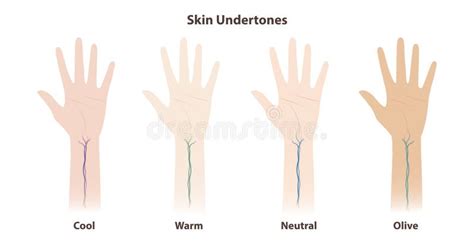
- Undertone: The subtle colors beneath the skin's surface that do not change with external factors like tanning. Undertones can be cool (pink/rosy), warm (golden), or neutral.
A common misconception is that fair skin is always cool and dark skin is always warm; this is not true. Misjudging undertones can lead to foundation appearing unnatural.
Color Correction in Makeup
Color correction utilizes the principle of complementary colors to neutralize unwanted tones in the skin. This technique is used to address concerns like dark circles, bruising, hyperpigmentation, rosacea, and more. By understanding the color wheel, makeup artists can select the appropriate corrector to balance the skin tone.
Choosing the Right Color Corrector
The effectiveness of color correcting makeup depends not only on the shade but also on the formula. Formulas should be lightweight, have a satin finish, be crease-resistant, and layer well under foundation and concealer without appearing visible. Ingredients like hyaluronic acid and rose flower water can be beneficial.
Specific Color Corrector Uses:
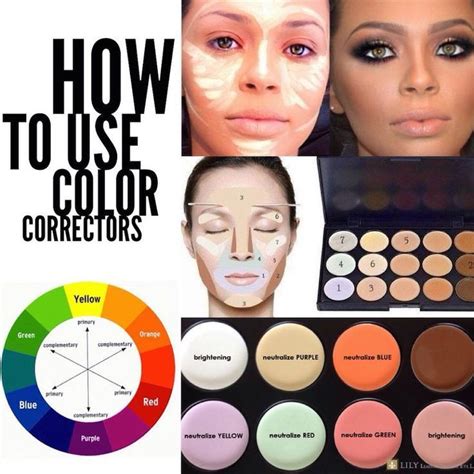
- Yellow Color Corrector: Neutralizes pink tones and subtle redness. It brightens fair-to-medium skin tones and can help disguise light purple tones, making it ideal for dull or tired-looking skin.
- Green Color Corrector: A powerful tool for neutralizing redness. It's effective for red spots, birthmarks, rashes, acne, rosacea, redness around the nose, and even sunburns. Green is suitable for all skin tones.
- Peach to Orange Color Corrector: Addresses darkness and dark spots, particularly bluish under-eye circles. Lighter skin tones benefit from peach shades, while deeper skin tones require darker orange hues. These can also correct sunspots and age spots.
- Blue Color Corrector: Primarily used to counteract orange tones, making it useful for correcting spray tan mistakes or orange-hued hyperpigmentation. Blue is also suitable for all skin tones.
Application Technique
When applying color corrector, use a flat concealer brush and dab the product precisely onto the area needing correction, avoiding the surrounding skin to prevent a halo effect. Use a small amount and blend well, as the goal is to neutralize the color, not to cover it completely. The color corrector should not be visible once blended.
After color correction, apply foundation as usual, being gentle over the corrected areas. Concealer is then applied to provide full coverage over the corrected spots.
The Impact of Light on Makeup
Light significantly affects how we perceive color. Natural daylight provides a full spectrum of color and is the best condition for applying makeup, as it shows the true state of the colors and blending. Artificial light, especially cooler tones, can alter the appearance of makeup. Understanding how light interacts with skin is essential for achieving a natural and flawless look.
How Lighting and Makeup Work Together
Mastering Camouflage Correction
For correcting pigmentation, sometimes starting with a complementary color, setting it with powder, and then applying skin-toned makeup is advisable. However, achieving camouflage often requires fine layers of makeup, especially on thinner skin areas, to avoid a cakey or artificial appearance. Mixing complementary colors with neutralizers and tones similar to the skin's undertone can achieve effective corrections in fewer layers.
Color Theory Correction Exercise Example
Correcting dark circles under the eyes involves analyzing the undertones of both the skin and the discoloration. For instance:
- Image 1: Neutral skin with a cool undertone, dark circles with blue/green undertones. Solution: A mixture of bright orange (to correct blue) and highlighter, with a touch of red (to neutralize green).
- Image 2: Yellow skin with a warm undertone, dark circles with blue-green undertones. Solution: Highlighter (to maintain fairness), yellow neutralizer, and bright orange.
- Image 3: Pinkish skin with a cool undertone, dark circles with blue-purple undertones. Solution: Highlighter, red, and a small amount of bright orange.
By referring to the color wheel and analyzing individual skin tones and undertones, one can adapt this knowledge to correct any skin pigmentation.