Skin cancer is a condition that begins with the abnormal growth of cells on the skin, which can then invade and destroy healthy body tissue. While numerous types of skin cancer exist, the most common forms are basal cell carcinoma and squamous cell carcinoma. Although these are the most prevalent, they are often treatable. The deadliest type of skin cancer is melanoma. Most skin cancers develop on skin that has been exposed to significant sunlight, with ultraviolet (UV) radiation from the sun being a primary suspected cause. However, some skin cancers can occur on skin that doesn't typically receive sun exposure, suggesting other contributing factors. Regular self-examination of the skin for any changes is recommended to reduce risk.
Where Skin Cancer Develops
The majority of skin cancers appear on body parts frequently exposed to the sun, including the scalp, face, lips, and ears. Nevertheless, skin cancer can also manifest on areas that are not typically sun-exposed, such as the palms of the hands, the genital region, and beneath fingernails and toenails.
Causes and Risk Factors of Skin Cancer
Exposure to ultraviolet (UV) light from the sun is the leading cause of most skin cancers. This type of light can also originate from tanning beds and tanning lamps. While not all skin cancers occur on sun-exposed skin, indicating other causative agents, several factors are known to increase the risk. The development of skin cancer begins when skin cells undergo changes in their DNA. DNA provides cells with instructions for growth and multiplication. In healthy cells, these instructions regulate growth at a set rate. In cancer cells, DNA alterations lead to rapid and uncontrolled growth and multiplication. Cancer cells can survive when normal cells would die, leading to invasion and destruction of healthy tissue. Eventually, cancer cells may detach and spread to other parts of the body.
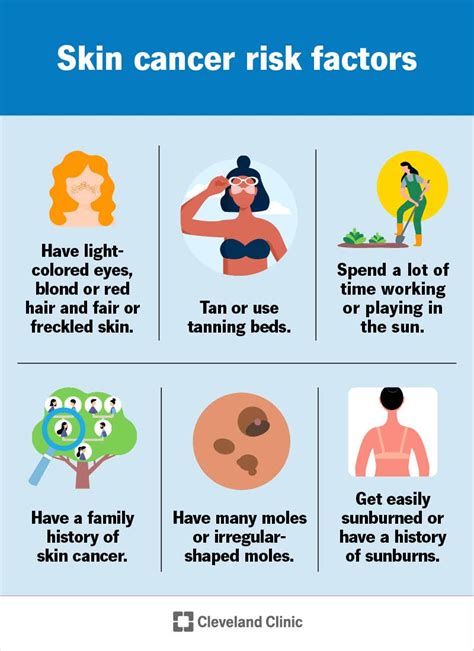
Factors Increasing Skin Cancer Risk:
- Skin that sunburns easily: While anyone can develop skin cancer, individuals with skin that burns easily are at higher risk.
- Exposure to sunlight: Ultraviolet (UV) light from the sun is a significant risk factor.
- Use of tanning beds: Indoor tanning beds, which emit UV light, increase the risk of skin cancer.
- History of sunburns: Experiencing one or more blistering sunburns elevates the risk of developing skin cancer.
- Personal or family history of skin cancer: A prior diagnosis of skin cancer or a family history of the disease increases susceptibility.
- Weakened immune system: A compromised immune system, due to medication (e.g., after organ transplant) or disease, can heighten the risk of skin cancer.
Prevention of Skin Cancer
The majority of skin cancers can be prevented through diligent sun protection measures. It is advisable to avoid direct sun exposure during peak hours, typically between 10 a.m. and 4 p.m., and to schedule outdoor activities for other times of the day. Consistent use of sunscreen year-round is crucial. A broad-spectrum sunscreen with an SPF of at least 30 should be applied generously, even on cloudy days. Wearing protective clothing, such as dark, tightly woven garments that cover the arms and legs, and a wide-brimmed hat to shade the face and ears, offers additional protection. It is also strongly recommended to avoid tanning beds altogether, as their lights emit harmful ultraviolet radiation.
Regular self-examination of the skin is essential for early detection. This involves frequently checking the skin for new growths and any changes in existing moles, freckles, bumps, or birthmarks. A thorough examination should include the chest, trunk, arms, hands, legs, and feet, as well as the undersides of limbs and the spaces between toes.
Understanding Melanoma
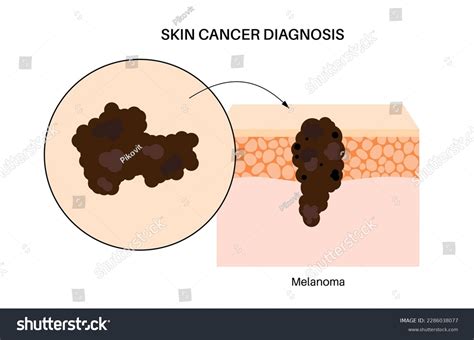
Melanoma, often referred to as a "black tumor," is the most dangerous form of skin cancer due to its rapid growth and potential to spread to other organs. It originates from specialized skin cells called melanocytes, which produce melanin, the pigment responsible for skin color. While most melanomas appear black or brown, some can be pink, red, purple, or skin-colored. Approximately 30% of melanomas develop from existing moles, but the majority arise from normal skin, emphasizing the importance of monitoring all skin changes.
Knowing one's risk for melanoma is vital, as early detection and treatment can significantly improve outcomes. Melanomas have a high cure rate when identified in their earliest stages, with treatment success directly correlating to the depth of the cancerous growth. Delays in treatment can be critical due to the fast-growing nature of melanomas.
Incidence and Prevalence of Melanoma
Melanoma accounts for only about 1% of all skin cancers but is responsible for the vast majority of skin cancer-related deaths. It is one of the most common cancers among young adults, particularly young women, with incidence rates dramatically increasing over the past 30 years. This rise is widely attributed to increasing levels of ultraviolet (UV) exposure.
Where Melanoma Can Occur
Melanoma can develop anywhere on the body, including the eyes and internal organs. Men are more prone to melanoma on their trunk, while women are more likely to develop it on their legs. Melanoma can occur even in areas not typically exposed to the sun.
Recognizing the Signs of Melanoma
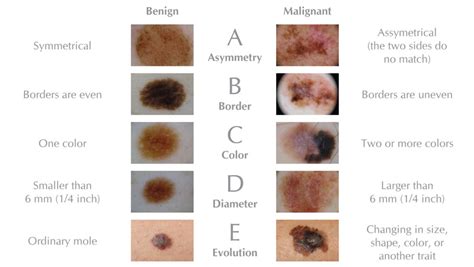
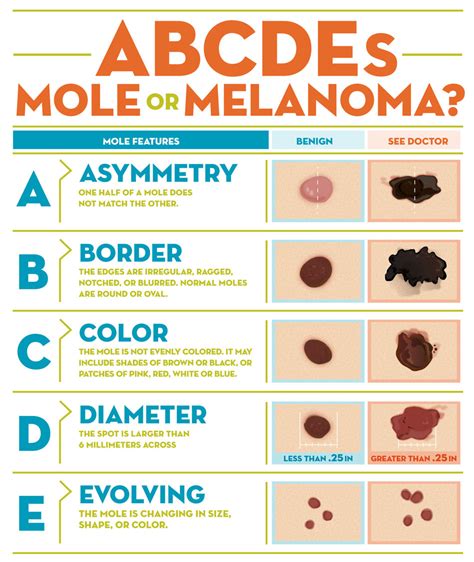
Early detection of melanoma is crucial for successful treatment. Melanoma can present as moles, scaly patches, open sores, or raised bumps. The American Academy of Dermatology's "ABCDE" mnemonic is a valuable tool for identifying potential warning signs:
- Asymmetry: One half of the spot does not match the other half.
- Border: The edges are irregular, notched, or blurred.
- Color: The color is uneven, with shades of tan, brown, black, gray, red, or white.
- Diameter: The spot is larger than the tip of a pencil eraser (approximately 6 mm or 1/4 inch).
- Evolving: The spot is new or has changed in size, shape, or color over time.
It's important to note that some melanomas may not fit the ABCDE criteria. Any sores that do not heal, unusual bumps, rashes, or changes in existing moles should be reported to a healthcare provider. The "ugly duckling sign," where a mole looks significantly different from other moles on the body, is also a key indicator.
Most skin cancers, including melanoma, originate in the epidermis, the outermost layer of skin. Melanomas arise from melanocytes, the pigment-producing cells. While basal cell carcinoma (BCC) and squamous cell carcinoma (SCC) are the most common types of skin cancer, they are generally less concerning due to their lower likelihood of spreading compared to melanoma.
Types of Melanoma
Several types of melanoma exist, each with distinct characteristics:
- Superficial spreading melanoma: This is the most common type, accounting for about 70% of melanomas. It tends to grow outward on the skin's surface initially, appearing as a changing dark spot.
- Nodular melanoma: This type comprises about 20% of skin melanomas. It often presents as a raised bump on the skin that can be dark brown, black, pink, or red, sometimes making early detection difficult.
- Lentigo maligna melanoma: This type is more common in older individuals and typically develops on chronically sun-damaged skin, often on the face.
- Acral lentiginous melanoma (acral melanoma): This type occurs in areas not typically exposed to the sun, such as the palms of the hands, soles of the feet, or under the nails. The musician Bob Marley was diagnosed with this type.
- Ocular melanomas: These melanomas occur inside the eye.
Malignant melanoma animation | skin cancer | #SkinCancer #MalignantMelanoma #MelanomaAwareness
Other Types of Skin Cancer
Skin cancers that are not melanomas are often grouped as non-melanoma skin cancers. These include:
- Basal cell carcinoma (BCC): The most common type of skin cancer, BCC arises from basal cells in the lower epidermis. It typically appears as a flesh-colored, pearl-like bump or a pinkish patch and is often found on sun-damaged skin, particularly the head, neck, and arms.
- Squamous cell carcinoma (SCC): The second most common type, SCC develops from squamous cells. It can appear as a firm red bump, a scaly patch, or a sore that reopens. SCC is caused by sun exposure and can also arise in burn scars or chronic ulcers. It commonly forms on sun-exposed areas like the rim of the ear, face, neck, arms, chest, and back.
Actinic keratoses (AKs) are precancerous growths caused by excessive sun exposure, often appearing as dry, scaly patches on the head, neck, hands, and forearms. AKs can progress to squamous cell carcinoma.
Moles and Their Relation to Melanoma
A mole, or nevus, is a benign skin tumor originating from melanocytes. While most moles are harmless, certain types can increase the risk of melanoma. A Spitz nevus, more common in children and teens, can sometimes resemble melanoma but is typically benign. However, distinguishing between Spitz nevi and true melanomas can be challenging even for medical professionals.
Treatment Options for Skin Cancer
Treatment for skin cancer depends on the type and stage of the disease. Early detection significantly improves treatment success rates.
- Mohs surgery: This precise surgical technique is often used for melanoma in its early stages. It involves removing thin layers of skin, with each layer examined under a microscope to ensure all cancerous cells are eliminated while preserving healthy tissue.
- Chemotherapy and Immunotherapy: These treatments may be used alone or in combination with radiation if the cancer has spread too extensively for surgical removal or radiation alone. Immunotherapy drugs are often a first-line treatment.
- Radiation therapy: Radiation may be employed for very large tumors, those in difficult-to-access areas, or for individuals who cannot or prefer not to undergo surgery. It can be combined with chemotherapy.
- Topical Creams, Gels, and Solutions: These are prescribed for patients with numerous or widespread actinic keratoses.
- Photodynamic Therapy: This treatment is used for widespread AKs on the face and scalp. A topical agent is applied to make the lesions sensitive to light.
Early Detection Strategies
Regular skin examinations are paramount for early detection. This includes performing monthly self-exams and scheduling annual skin cancer screenings with a healthcare professional. Utilizing the ABCDEs of melanoma detection and consulting a doctor about any concerning moles or skin changes are critical steps. A healthcare provider can confirm a diagnosis by taking a biopsy of the suspicious area for microscopic examination.