Lip injections are a popular cosmetic procedure designed to enhance the appearance of your lips, making them look fuller, more symmetrical, and well-defined. This non-surgical treatment offers a relatively quick and easy way to achieve aesthetic goals with minimal risk and complications, making it an appealing option for many individuals seeking to boost their confidence and improve their facial aesthetics.
Full, plump lips have long been associated with youthfulness and beauty, making lip injections a sought-after treatment for those looking to enhance their facial features. As we age, lips can naturally thin and lose their plumpness, and lip injections can effectively help to revitalize a smile, restore lost volume, and improve lip symmetry without significant discomfort or downtime.
The Consultation Process
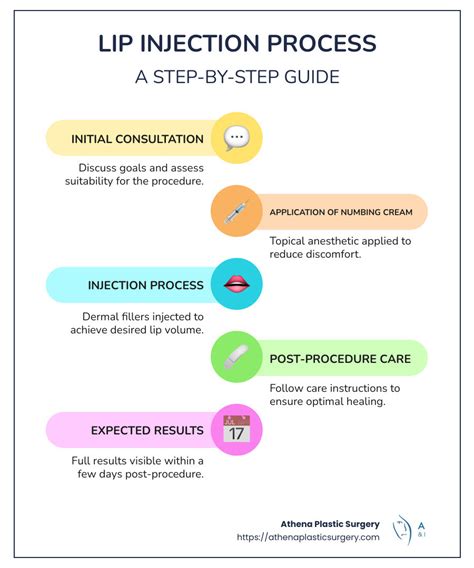
Before proceeding with any lip injection treatment, your provider will conduct a thorough consultation. This initial appointment is crucial for discussing your medical history, understanding your aesthetic goals, and managing your expectations for the treatment. If you are deemed a good candidate for lip injections, the procedure can often be performed on the same day as the consultation.
During the consultation, you will have the opportunity to discuss your aesthetic goals and concerns with a qualified specialist. Your provider will assess your facial anatomy and discuss the various lip enhancement options available. This personalized approach ensures that a treatment plan is tailored to your unique needs and preferences, setting the stage for a successful and satisfying outcome.
It's important to have realistic expectations. While you might bring in photos of desired results, your provider will assess if those results are achievable based on your unique facial structure and features. Be prepared to describe your desired look thoroughly, as the goal is to enhance your natural beauty and achieve harmony with your other facial features.
Choosing Your Filler
Several types of dermal fillers are used for lip augmentation, each with distinct characteristics and benefits. Your provider will help you select the most suitable filler based on factors such as the desired volume enhancement, longevity, and the naturalness of the results you wish to achieve.
Commonly used fillers are often hyaluronic acid-based products, such as Juvederm® and Restylane®. Hyaluronic acid is a substance that your body produces naturally, making these fillers generally well-accepted and safe for use. These fillers offer natural-looking results and can be adjusted to achieve your desired lip shape and size.
Other types of dermal fillers may include calcium hydroxylapatite (e.g., Radiesse) and poly-L-lactic acid (e.g., Sculptra). Each has unique properties and durations of effects. Based on your individual needs and goals, your doctor will recommend the most suitable option.
Preparing for Your Lip Injections
To ensure a smooth and successful treatment, your specialist will provide specific pre-appointment instructions. These may include avoiding certain medications or supplements that can increase the risk of bruising, such as aspirin or ibuprofen, and refraining from alcohol consumption in the days leading up to your appointment. Following these guidelines helps minimize potential side effects and ensures optimal results.
It is also recommended to stay hydrated by drinking plenty of water. If you are prone to cold sores, inform your provider, as they may prescribe preventative medication.
The Lip Injection Procedure
On the day of your treatment, you will be welcomed into a comfortable and sterile treatment room. The process is relatively quick and straightforward.
Your provider will begin by cleansing the treatment area. To minimize discomfort during the injections, a topical numbing cream is typically applied to your lips. This numbing agent usually takes about 15 to 30 minutes to become fully effective, rendering your lips numb.
In some cases, if you have an allergy to BLT (benzocaine, lidocaine, tetracaine) numbing creams, your healthcare provider may offer a nerve block injection to numb your lips. This also takes about 15 to 30 minutes to work.
Using a fine needle or cannula, the filler will be strategically injected into your lips to achieve your desired level of enhancement. The number of injections will vary depending on your aesthetic goals, but your provider will likely administer several small shots.
The needle typically won't go deeper than 2.5 millimeters into your skin. You may feel a mild stinging sensation or pressure during the injections, but it should not be painful, especially with the numbing agent. Some patients report feeling a pinching sensation, and their eyes may water.
After administering the injections, your provider may apply ice or gently massage your lips to help them absorb the filler and ensure even distribution. The entire procedure commonly takes between 15 to 30 minutes, though it can extend up to two hours depending on the extent of the treatment required.
Lip Filler - Collagen
What to Expect Immediately After Treatment
You should plan to stay at your provider’s office for at least 15 to 30 minutes after the procedure to ensure you don’t experience any immediate side effects like nausea or dizziness. Your provider will monitor you during this period.
Swelling, bruising, and tenderness around the lips are typical side effects following the treatment. These effects are normal and usually subside on their own within a few days to a week. To help manage these, applying ice packs to the treated area is recommended.
It is advisable to avoid touching or manipulating your lips for at least 24 hours to allow the filler to settle properly. You should also avoid strenuous activity, excessive heat, and alcohol consumption for the first 24 to 48 hours post-treatment.
Aftercare and Maintenance
Unlike surgical procedures, lip injections generally offer immediate results that continue to improve in the days following treatment as any swelling subsides. Your provider will provide specific post-treatment care instructions, which are essential for minimizing healing time and reducing the risk of complications.
These instructions may include continuing to apply ice packs, staying hydrated, and avoiding strenuous activities or facial expressions that could put pressure on your lips. For the first few days, you might need to eat softer foods that don’t require wide mouth opening and avoid using straws.
The Healing Process: Day by Day
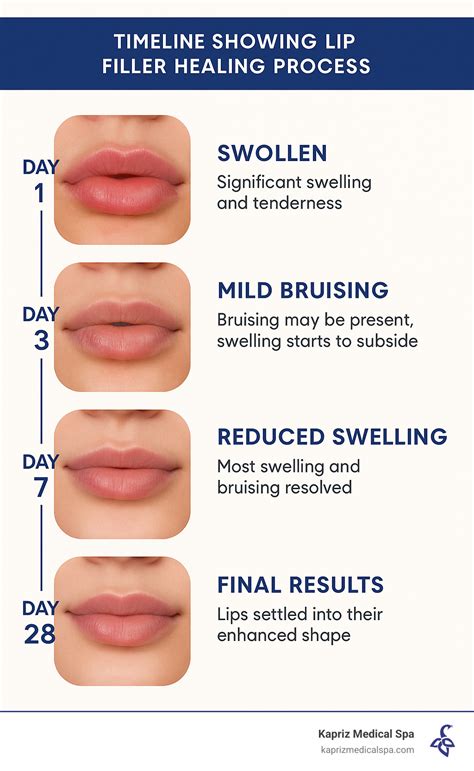
The healing process for lip fillers can vary from person to person, but a general timeline can help manage expectations:
- Day 1: Immediately after the procedure, expect tenderness, redness, and noticeable swelling. Small red marks or pinprick spots may be visible at the injection sites. Avoid touching your lips and apply ice to minimize swelling.
- Days 2-3: Swelling typically peaks during these days, making your lips appear significantly larger than their final size. You might experience tightness and discomfort. Sleeping with your head elevated can help reduce swelling.
- Days 4-5: Swelling should start to decrease, and your lips will feel more natural. Bruising, if present, will begin to fade. Eating and drinking will become easier.
- End of Week 1: Most of the swelling should resolve, though slight puffiness may persist, especially in the morning. Bruising, if any, will be significantly faded. Your lips should look much closer to their final result.
- Week 2: The filler continues to integrate with your tissue. Your lips should feel completely natural, and any remaining traces of swelling typically disappear. You can usually return to all normal activities without restrictions.
- End of Month 1: The filler is fully integrated with your natural tissue, and any remaining swelling has completely disappeared. This is the ideal time to assess your final results.
Longevity of Results and Maintenance
The duration of your lip filler results will vary depending on factors such as the type of filler used and your body’s metabolism. Hyaluronic acid fillers typically last anywhere from 6 to 18 months, or sometimes longer, before gradually metabolizing.
To maintain your enhanced lip volume and shape over time, you may opt for periodic touch-up treatments. Regular maintenance appointments can help preserve your desired look.
Potential Risks and Side Effects
While lip injections are generally considered safe when performed by a qualified and experienced professional, it is important to be aware of potential risks and side effects. These can include:
- Mild swelling
- Slight bruising
- Tenderness at the injection sites
- Redness
- Lumps or irregularities (usually temporary and can often be massaged out or corrected)
More serious but rare risks can include infection, allergic reactions, asymmetry, or vascular occlusion. During your consultation, your provider will discuss these risks in detail and take all necessary precautions to ensure your safety.
Frequently Asked Questions
Are lip injections painful?
Most patients report minimal discomfort. The use of a topical numbing cream and the lidocaine often mixed into modern fillers significantly manage pain. While you may feel a quick pinch or pressure, it is generally considered tolerable, especially when compared to other cosmetic procedures like tattoos. Some patients opt for a dental nerve block for a virtually painless experience.
How long do results last?
Results vary depending on the type of filler and individual factors, but typically range from 6 months to 2 years for most hyaluronic acid fillers.
Will my lips look natural?
When performed by an experienced and cautious injector who understands the value of subtlety, lip injections provide natural-looking results that enhance your features without appearing overdone. The goal is to achieve a harmonious and balanced look.
What is the FDA's stance on lip fillers?
The U.S. Food and Drug Administration (FDA) has not approved the use of lip fillers for individuals under the age of 21. Therefore, you must be at least 21 years old to receive FDA-approved lip fillers.
tags: #lip #injections #what #to #expect