As we age, the skin on the forehead and around the eyes naturally loses elasticity, leading to the eyebrows beginning to droop. This can often create an appearance of being tired or angry, even when that is not the case. A brow lift, also known as a forehead lift, is a surgical procedure designed to correct these common signs of aging in the forehead, upper eyelids, and eyebrows, helping individuals to look as good as they feel.
A brow lift procedure aims to reposition the eyebrows and smooth the forehead, addressing one of the very first signs of aging: the lengthening of the forehead and drooping of the eyebrows. The goal is to lift or reshape sagging brows to a more desirable position and contour by removing excess skin and sometimes addressing underlying muscles. This can lead to a more relaxed and aesthetically pleasing appearance by repositioning tissues rather than solely removing them. It is considered a conservative way to achieve a more harmonious balance to the face.
Types of Brow Lift Surgery
Several techniques exist for brow lift surgery, each tailored to specific patient needs and aesthetic goals. The choice of technique depends on factors such as current eyebrow position and contour, hairline, facial structure, and overall patient objectives.
Endoscopic Brow Lift
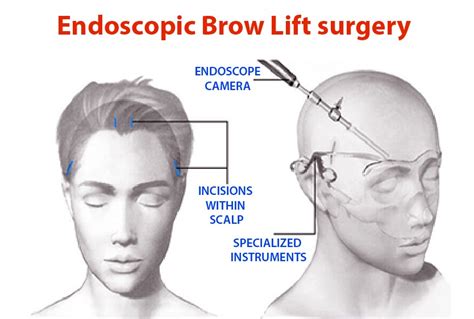
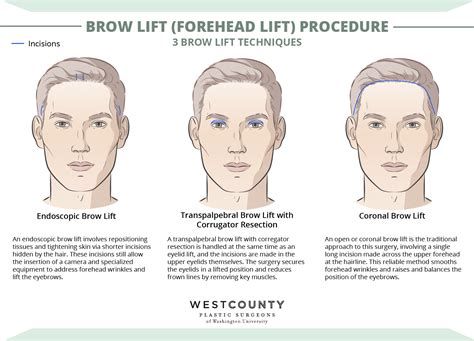
The endoscopic brow lift is a state-of-the-art, minimally invasive procedure that is often recommended for most patients due to its less invasive nature. This approach offers the benefits of traditional brow lift surgery with the advantages of smaller incisions and a shorter recovery time. The procedure typically involves making three to five small incisions hidden behind the hairline. Through these incisions, a specialized instrument called an endoscope (a tiny camera used for minimally invasive procedures) and other surgical instruments are inserted. The skin is separated from the underlying tissues, and sutures are inserted to lift and secure the tissues in a higher position. Tiny dissolvable implants called Endotines are sometimes used to stabilize the muscles and skin in their new, refreshed position. This technique allows for the entire upper face (forehead) to be lifted and/or contoured, and forehead lines can be softened, often leaving no visible scars.
Temporal Brow Lift
A temporal lift, often considered a mini brow lift, is best suited for patients looking to enhance and lift the tail end of their eyebrows and the temple area. This technique involves making small incisions near each temple, typically hidden behind the hairline. This type of brow lift is frequently combined with other procedures such as blepharoplasty (eyelid surgery) or a mini facelift to achieve comprehensive facial rejuvenation.
Coronal Brow Lift
The coronal brow lift is a traditional approach that uses a longer incision made in a headband-type pattern across the top of the head, behind the hairline. While an endoscopic brow lift is generally preferred for most patients, a coronal lift may be beneficial for individuals seeking a more significant change, or for those with very high foreheads or high hairlines. This technique involves an incision made from ear to ear across the top of the scalp. While effective for significant lifting, it can involve a longer recovery time and a greater potential for hair loss or sensory changes compared to less invasive methods. The coronal browlift incision from ear to ear is rarely the preferred method today due to these factors.
Gliding Brow Lift
A gliding brow lift is another minimally invasive technique that involves making small incisions, often concealed within the hairline. Through these incisions, a surgeon inserts an endoscope to provide a clear view of the underlying structures. Using specialized instruments, the surgeon then carefully releases the soft tissues from the underlying muscle and glides them to a higher position. The tissues are anchored in their new location, effectively lifting the brows and smoothing out forehead wrinkles. This can be a good option for patients with a heavy brow or hooded eyes.
Pretrichial Brow Lift
The Pretrichial Brow Lift requires an incision along the hairline, usually along both temples, as it is often used when only the outer half of each eyebrow needs to be lifted. This procedure is ideal for patients who wish to lift their eyebrows and simultaneously raise and shorten the forehead, effectively lowering the hairline in those with a high forehead.
Direct Brow Lift
A Direct Brow Lift involves removing a section of skin and underlying tissue directly above and following the length of the eyebrows. This procedure is suitable for individuals who do not wish to involve the hairline and is usually reserved for cases of severe brow droopiness, such as those resulting from facial paralysis (paralytic brow ptosis). Care is taken to position the scar just along the eyebrows to ensure maximum camouflage.
Brow Pexy
Brow Pexy is a technique performed through the same upper eyelid incision used in upper blepharoplasty. It is ideal for patients who are also undergoing upper blepharoplasty and have mild eyebrow ptosis, where the primary need is to support the brow and prevent its future descent, rather than significant lifting.
What to Expect From Your Brow Lift Surgery
Consultation and Preparation
Your initial consultation appointment is a crucial opportunity to meet with a facial plastic surgeon, discuss your aesthetic goals, and learn about the options available for brow lift surgery and any complementary cosmetic procedures. The surgeon will review your medical history, examine your facial features, and determine if you are a suitable candidate for a brow lift. If you decide to proceed, a personalized treatment plan will be created, and you will receive detailed pre-surgical instructions. These instructions may include guidelines on fasting before the procedure, necessary adjustments to medications, and a list of vitamins, herbs, or medications to avoid in the days and weeks leading up to your surgery. For patients 45 years or older, an EKG may also be required, along with basic lab tests and medical clearance from a primary care physician.
The Brow Lift Procedure
Brow lift surgery is typically performed as an outpatient procedure. The type of anesthesia used can vary based on your treatment plan, with general anesthesia being common, although local anesthesia with sedation may be used for less invasive techniques. Board-certified anesthesiologists ensure patient safety and comfort throughout the operation. The surgical process itself will differ depending on the chosen brow lift technique. Generally, the surgeon will make the appropriate incisions, lift and recontour the underlying tissue, and then use sutures to close the incisions. The procedure usually takes about 1 to 2 hours, depending on the complexity and whether other procedures are being performed concurrently. Discomfort during and after the procedure is generally minimal to moderate and can be managed with over-the-counter or prescription pain medications.
Endoscopic Brow Lift | The Aesthetic Surgeons™ | HD
Recovery After Brow Lift Surgery
Your recovery experience will depend on the type of brow lift performed, as well as individual factors such as age and overall health. Your surgeon will advise you to sleep in an inclined position to help reduce swelling and to avoid strenuous activity for a period of time. For endoscopic brow lift patients, most day-to-day activities can typically be resumed about one week after surgery. Staples or skin clips are usually removed within 7 to 10 days. Swelling and bruising are common and typically begin to subside after a couple of days, with bruises fading within a week or two. It is important to avoid strenuous activities, heavy lifting, and bending over for at least two weeks, and specific guidelines will be provided regarding when you can resume normal routines, including exercise. Light cardio may be possible after seven days, but heavy cardiovascular activity, straining, or bending should be avoided for at least three weeks unless otherwise instructed. Initial wound healing may take 10 to 14 days, and most patients are ready to return to work within nine to ten days after surgery.
Scars are minimal with modern techniques, such as endoscopic procedures, where incisions are small and strategically placed within the hairline or natural creases, becoming barely noticeable over time. While initial wound healing takes about 10-14 days, and staples are removed in about a week, swelling can persist for a few months, and scars typically fade within six months.
Brow Lift Results
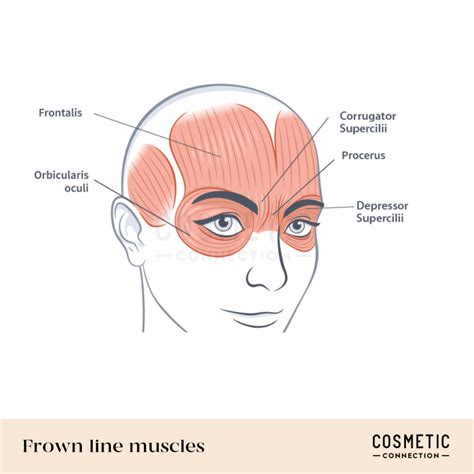
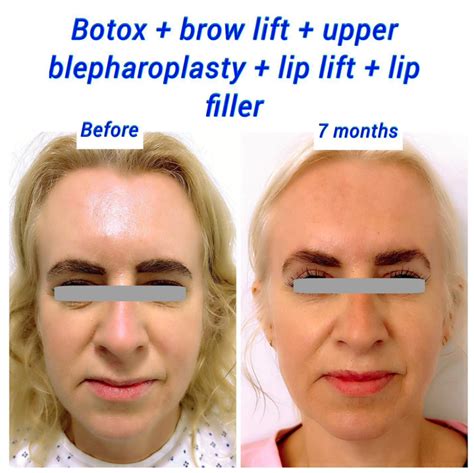
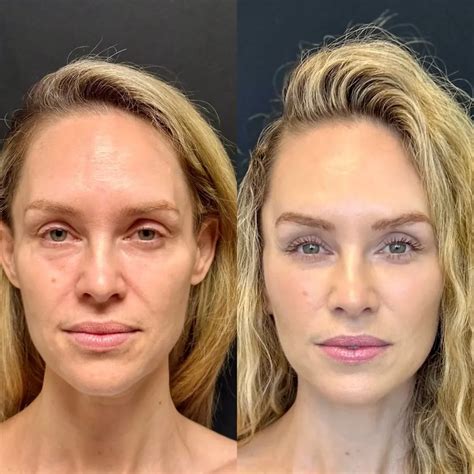
At Cassileth Plastic Surgery, a customized treatment and surgical experience is provided, taking into account all of your facial features, including skin thickness, texture, elasticity, and bone structure, to ensure beautiful and natural-looking results. The goal is to soften the signs of aging without creating an overly surprised or altered appearance. The muscles that cause frowns may also be weakened during surgery to create a pleasant, relaxed look. The position and contour of the eyebrows are important for facial appearance and expression; a low eyebrow can convey anger, while an unusually high eyebrow might suggest surprise. A brow lift corrects these issues to achieve a more natural, youthful eyebrow and eye appearance.
Brow lift results are considered long-lasting, with many patients reporting that their results can last for several years. However, the natural aging process continues, and some patients may require repeat procedures to maintain their desired outcomes. To optimize and maintain results for years to come, your surgeon may advise on an aesthetic routine that could include treatments like BOTOX, fillers, and specific skincare recommendations.
It is important to note that while brow lift results are long-lasting, they cannot stop the natural aging process. Repeat surgeries may be necessary to maintain the desired outcomes over time. If the procedure is to correct damage following an accident or due to a medical condition, it is advisable to consult with your health insurance company or primary care doctor to explore potential coverage options, as brow lift surgery is typically considered cosmetic and elective and therefore not covered by insurance.
Potential Risks and Complications
While brow lift surgery is performed with the utmost care to achieve the best possible results, like any surgical procedure, there are potential risks and complications. These can include allergic reactions to anesthesia, infection, bruising and swelling, hematoma, hair loss at the incision sites, nerve injury, scarring, sub-conjunctival hemorrhage (bleeding in the white part of the eye), pain, numbness, and an adjusted hairline. A thorough discussion of these risks will occur during your consultation.
Alternatives to a Brow Lift
For individuals seeking to reduce wrinkles and creases on the forehead without surgery, injectable treatments such as Botox and Dysport can offer an effective alternative. These treatments typically have very few side effects and can provide temporary rejuvenation for the forehead area.
Combining Procedures
A forehead lift is often combined with other procedures to achieve optimal results and restore aesthetic balance to the face. Common complementary surgeries include upper eyelid lift, lower eyelid lift, facelift, and neck lift. Combining these procedures on the same day typically does not significantly lengthen the recovery time and can lead to more comprehensive facial rejuvenation.