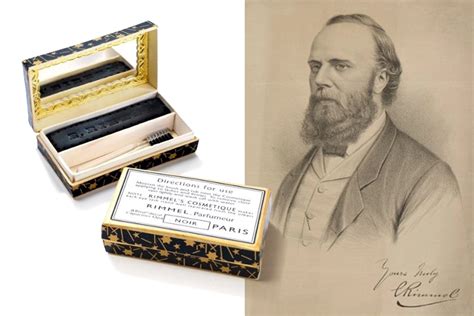
The Rimmel London brand has a rich history dating back to 1834, when Eugene Rimmel, at a young age, became an apprentice in his father's perfumery.
The Genesis of Rimmel: From Perfumery to Cosmetics Pioneer
In 1820, a respected French perfumer, trained by the renowned Lubin, perfumer to Empress Josephine, accepted an invitation to manage a perfumery in London’s prestigious Bond Street. By 1834, this venture proved so successful that, alongside his son and apprentice Eugene Rimmel, who was then just 14 years old, he opened his own perfumery. The business expanded, and so did Eugene Rimmel's talents. By the age of 24, Eugene was not only an expert perfumer but also a cosmetics genius. He experimented with colours and scents, travelling the world in search of new ingredients. A pioneer of personal hygiene, he developed innovative products, including mouth rinses, fragranced pomades, and a unique scented steam vaporiser.
Rimmel's Focus on Eye Makeup and International Expansion
Upon Eugene Rimmel's death in 1887, his two sons took over the business. They expanded their father’s success internationally, developing a range with a particular focus on eye-enhancing products, most notably Rimmel’s revolutionary mascaras. In fact, the word 'rimmel' itself means mascara in many languages. The brand's mascara range saw phenomenal success, flying off the shelves. Today, the Rimmel range is sold in over 40 countries and is recognized as Britain's best-selling cosmetics brand.
Post-War Evolution and the Rise of Mass-Market Appeal
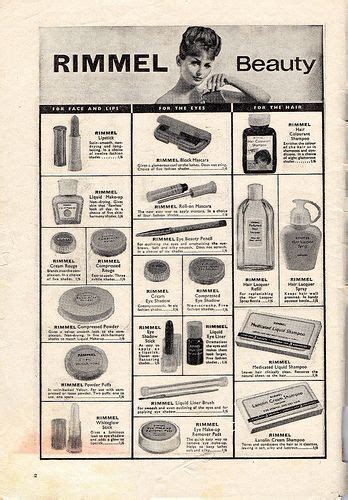
After the Second World War, Rimmel was acquired by Robert and Rose Caplin, owners of a London advertising agency. Anticipating a cosmetics boom driven by a new mood of optimism in Britain and the influence of Hollywood heroines as beauty icons, the Caplins expanded Rimmel’s colour range. A new factory was opened at 30 Bollo Bridge Road, Acton, London in 1946, after the original Hackney factory was bombed during the war. This factory continued to produce a wide array of cosmetics, including perfumes, lipsticks, face powder, mascaras, soaps, and various creams, with much of the production remaining labour-intensive.
New Product Launches and Strategic Shifts
In 1946, Rimmel (Distributors) resumed advertising its products, notably the Rimmel Beauty Cake in seven shades and Rimmel Eye Cosmetique in three shades. New lines like Beauty Cake, a powder cream, and the innovative Lip Brush Rouge were introduced. The Lip Brush Rouge, packaged in a rectangular plastic case with a mirror and a chisel-ended brush, aimed to provide a clearer lip outline than traditional lipstick. In 1948, Rimmel introduced its Lip Fashion Pencil, a long lipstick in a slim, gold-tone case available in ten shades, followed by a double-ended version in 1949 that offered shades for both day and night. Rimmel also brought back its Violet Oatmeal Soap range in 1949, expanding it to include Violet Oatmeal for the Bath, Violet Oatmeal for Toilet Purposes, and a Violet Oatmeal Face Pack in 1950, which later became the Violet Oatmeal Beauty Mask in 1953.
Despite their efforts, the new owners struggled to reverse the company's fortunes. In 1950, unable to pay their debts to Robert Caplin's advertising agency, Caplin was persuaded to buy Rimmel. After the change in ownership in 1951, Robert Caplin brought his sister, Rose Glazer, into the business. Lacking extensive experience in the cosmetics industry, the Caplins initially attempted to maintain Rimmel's position as a middle-to-upmarket brand, opening a salon at 70 Park Lane, London, in 1952 and repackaging products in elegant designs. This culminated in the launch of Rimmel’s New Beauty Series in 1954. However, Rimmel was more successful when reoriented as a mass-market brand. Mrs. Glazer's idea of small packs priced at 1s. 3d. and displayed on trays laid the foundation for the present Rimmel. The first self-service trays of Rimmel products, containing five 'trial-size' items, went on sale in early 1955. As this concept proved popular and profitable, Rimmel gradually phased out the New Beauty Series, repurposing many of its lines for the "Beauty on a Budget" Series, with most products priced at 1s. 3d. during the 1950s.
Expansion and Diversification in the 1960s
In 1960, Rimmel introduced new lipstick shades, a Gold Eye Shadow Stick, and Orange Ice and Gold Dust Nail Lacquers. The brand also branched out with the H.E. range of toiletries for men, with H.E. purportedly standing for 'His Excellency.' Rimmel’s success attracted the attention of Charles F. Sweeny of the Sanitas Trust, which acquired Rimmel in 1961. Sweeny became the new chairman, while Robert Caplin remained deputy chairman and Rose Glaser continued as managing director until 1983. One of the last developments before the sale to Sanitas Trust was the creation of the more upmarket Black Opal range, launched in 1961 and released generally in 1962. While many products in the Black Opal range were similar to those in the Beauty on a Budget series, they were larger and featured more luxurious packaging. The Black Opal range included skin-care products such as Cold Cream, Skin Food with Vitamins, Moisturising Film, Cleansing Milk, and Toning Lotion. The makeup in the Black Opal range, including lipsticks, rouges, powders, and nail lacquers, featured identical shades to the Beauty on a Budget series, with the key difference being the substitution of cake mascara with the Black Opal Mascarola roll-on mascara. This was an automatic/wand mascara applied with a grooved metal wand.
In 1968, the French and British businesses were subsumed into Rimmel International. The brand’s company motto is "Get the London Look."
Rimmel London Today: Iconic Collaborations and Brand Ethos
Rimmel London, now owned by parent company Coty, continues to embody the essence of London, aiming to be 'witty, edgy, and streetwise.' The brand is known for its reasonably priced products, encouraging experimentation and trend-setting. Rimmel emphasizes London as a source of inspiration, featuring it in its ad campaigns with slogans like 'Get the London look.'
Celebrity Endorsements and Product Highlights
The brand has famously collaborated with numerous high-profile individuals, including Georgia May Jagger, Zooey Deschanel, and most notably, Kate Moss, who has been a long-time ambassador for the brand. Kate Moss launched her first lipstick line for Rimmel, featuring seven striking shades. One popular product is the Moisture Renew Lipstick, enriched with vitamins A, C, and E, offering SPF 20 UV protection and available in 20 shades. The classic Rimmel Stay Matte pressed powder is another enduring favourite. Rimmel also offers mascaras designed to create volume and curl, with special brush shapes to catch even hard-to-reach lashes. In 2021, Rimmel announced Adwoa Aboah as its global activist for the brand.
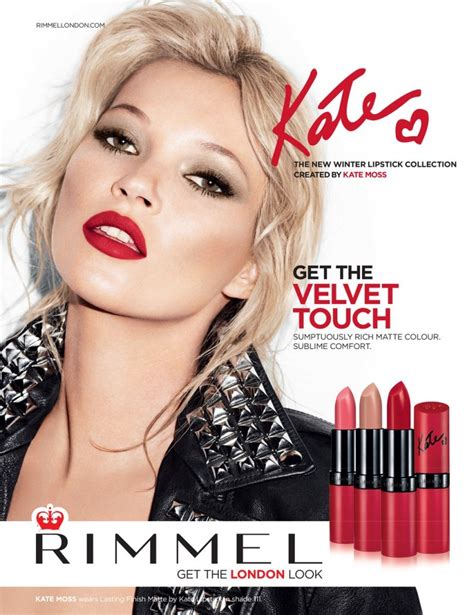
Rimmel London's ethos centers on self-expression and daring to experiment. Their brand philosophy includes statements like "Dare To Experiment," "True To You," "Live It London," and "Find Your Edge." The brand is committed to empowering individuals to express themselves through makeup without fear of judgment, partnering with organizations like The Cybersmile Foundation to combat beauty cyberbullying.