The story of the Tressy doll, and its close relative Mary Make-Up, is a fascinating chapter in the history of fashion dolls. Introduced by American Character Doll Company, these dolls offered innovative features that set them apart from their contemporaries, most notably Barbie.
The Genesis of Tressy: A Grow-Hair Phenomenon
The concept for Tressy, a doll with a unique "grow hair" feature, was conceived by inventor Jesse Dean. His wife, Diana, inspired the idea of a doll whose hair could be extended and retracted. After facing rejections from companies like Mattel and Ideal, Dean found a partner in the American Character Doll Company, which began production in 1963.
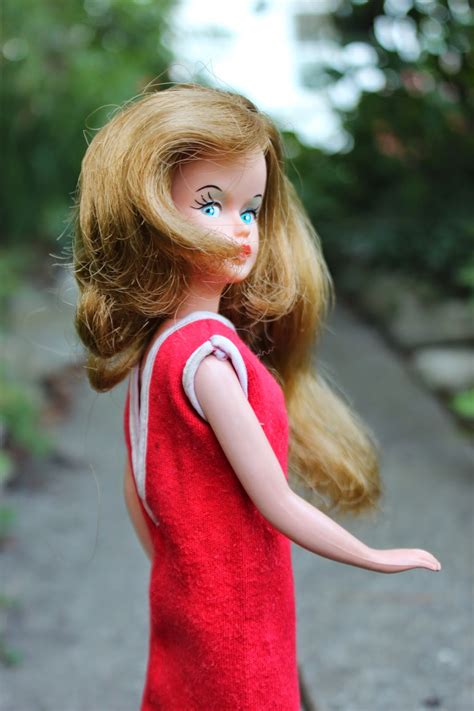
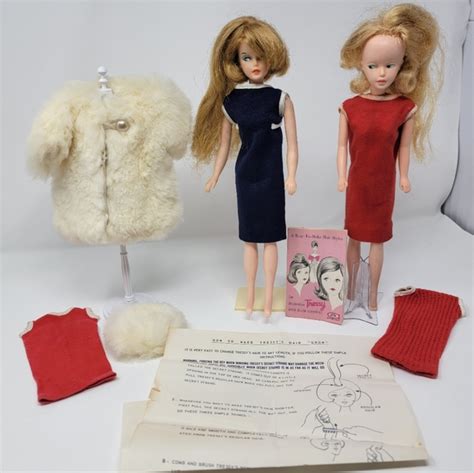
Tressy was initially marketed as an 11½" fashion doll, positioned as a competitor to Barbie. Her defining feature was a long swatch of hair that could be pulled from the top of her head by pressing a button on her midriff. This mechanism allowed children to style the hair in various ways, providing a novel play experience.
American Character produced six versions of Tressy, including an African-American doll. The company also introduced Cricket, a child doll marketed as Tressy's cousin, who bore a resemblance to Mattel's Skipper. Cricket went through several versions, with later iterations featuring posing legs and the grow-hair capability.
Mary Make-Up: The Cosmetics Companion
Parallel to Tressy's development, American Character created Mary Make-Up. This doll shared the same body as Tressy but was specifically designed for makeup application. Her face featured a waxy coating, allowing children to apply and remove makeup without staining the doll. This innovation positioned Mary Make-Up as a "cosmetics doll," encouraging creative play with beauty products.
However, Mary Make-Up's design also meant she was often pale and plain, relying on makeup to achieve a more glamorous look. Some versions of Tressy also came with Mary Make-Up faces, suggesting a close association between the two dolls in product development.
International Productions: Palitoy and Beyond
While American Character manufactured Tressy in the United States, the doll's popularity led to international production. In the United Kingdom, Palitoy manufactured Tressy from 1964 to 1979, releasing four different versions. The first Palitoy Tressy, released in 1964, featured a pink dress with a chain belt, white panties, and white shoes. Later Palitoy versions included variations in hair color and outfit designs.
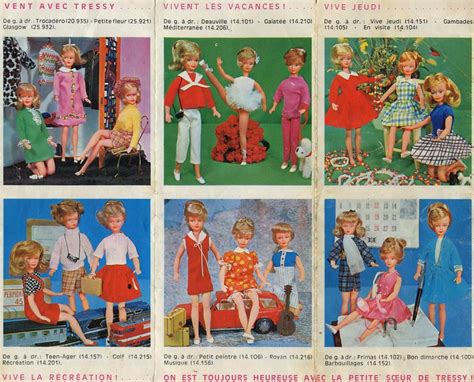
Palitoy also produced a doll named "Toots," marketed as Tressy's little sister, which was similar to American Character's Cricket. Other international versions included a Bella Tressy made by Societe Bella in France and a Tressy manufactured by the Regal Toy Company of Canada, which had a heavier eye and facial makeup.
Evolution and Variations of Tressy
Over the years, Tressy saw several iterations and variations across different manufacturers. Early versions, like the first Palitoy Tressy, often featured hard vinyl arms and straight legs. Some dolls came with a key to retract the hair, while others utilized a knob on the back.
The hair colors available for Tressy included black, mid blonde, dark blonde, brown, red, and pale blonde. Accessories often included a brush, comb, curlers, clips, ribbons, and a stand. Some dolls were dressed in short lurex dresses, ballet outfits, or knit fabric shift dresses.
The evolution of Tressy also saw changes in her features. Later versions might have bendable legs and different hair styling, such as bangs. The grow-hair mechanism itself was sometimes omitted in certain releases, with the hair length adjustment being worked by a knob on the back.
American Character Doll Company: A Broader Legacy
The American Character Doll Company, established in 1919, had a rich history before Tressy and Mary Make-Up. Their notable creations included "Tiny Tears," a baby doll that could cry, and "Sweet Sue," a pre-teen fashion doll. The company also produced "Toodles," a multi-jointed doll capable of assuming numerous poses.
Despite its successes, American Character faced financial difficulties, filing for bankruptcy in 1968. However, the legacy of their innovative dolls, particularly Tressy, continued through international manufacturers like Palitoy, who produced Tressy until 1979.
Shared Wardrobes and Design Similarities
Tressy and Mary Make-Up shared a similar body mold, which was comparable to the vintage Barbie body. This similarity allowed for some degree of clothing interchangeability between Tressy, Mary, and even some modern Barbie outfits. Tressy was slightly taller than Barbie, with a smaller rear, but their movement and articulation were quite alike.
Patterns, such as those published by Simplicity in 1964, listed a wide array of dolls whose clothes could potentially fit Tressy, including Barbie, Midge, and Tammy, among others. This shared wardrobe potential further cemented Tressy's place in the fashion doll landscape.
Later Interpretations and Collectible Status
The concept of Tressy even saw a German market release in 1979 called "Goldköpfchen" (little gold head). In 1980, Palitoy produced a different doll named Mary Makeup, which was larger and styled differently from the American Character version.
Today, Tressy and Mary Make-Up dolls are highly sought after by collectors. Their innovative features, historical significance, and variations across different manufacturers make them compelling pieces of toy history. The differing versions, from the early American Character releases to the later Palitoy productions, offer a rich field for doll enthusiasts to explore.