Men's dress shoes are footwear designed for smart casual or more formal events. They are most commonly found in black or brown and are typically crafted from leather, often encompassing the outers, lining, and sole. For enhanced durability, many dress shoes feature rubber soles, though this may slightly compromise their elegance.
The construction of men's dress shoes often involves multiple pieces of leather, with seams that can be embellished through various decorative techniques, most notably through broguing. Broguing refers to rows of decorative punching in patterns that can range from subtle to elaborate.
Types of Dress Shoes
Brogues
Brogues are characterized by decorative perforations, originally designed to allow water to drain from the feet when crossing boggy terrain. Today, broguing is a stylistic detail applied to various shoe types. The extent and pattern of these perforations define different sub-types:
- Full brogues, also known as wingtips in American English, feature a toe cap with a wavy shape and punched patterns across various sections of the shoe.
- Half brogues have a standard straight-edged toe cap with less extensive punching.
- Other terms like quarter-brogue describe progressively less broguing.
Oxfords (Balmorals)
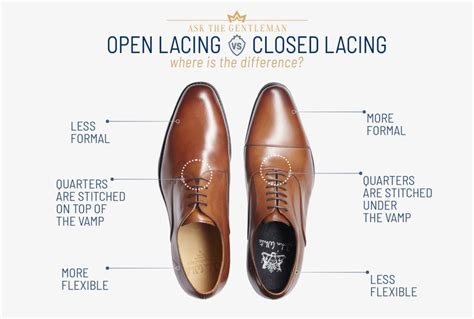
Oxfords, or Balmorals in American terminology, are lace-up shoes characterized by a closed lacing system. In this design, the pieces of leather holding the eyelets are sewn together at the bottom, creating a sleek appearance. Many Oxfords also feature an additional piece of leather sewn over the toe section, known as a toe cap. Oxfords are considered the standard shoe for most suit ensembles.
Derbies (Blüchers)
Derbies, referred to as Blüchers in America, share similarities with Oxfords but are distinguished by their open lacing system. This design offers a more robust and versatile feel compared to the sleeker Oxford. Derbies are available in a range of colors, including cognac and oxblood, and can be paired with suits, jeans, or chinos.
Monk Straps
Monk strap shoes, also known as monkstraps, are laceless and secured by a strap with a buckle across the upper. They offer a stylish alternative to lace-up shoes and fall into the semi-formal category, making them suitable for office wear. Variations include single-strap and double-strap (double-monk) designs, with the latter often featuring a toecap and exuding a military feel.
Loafers (Slip-ons)
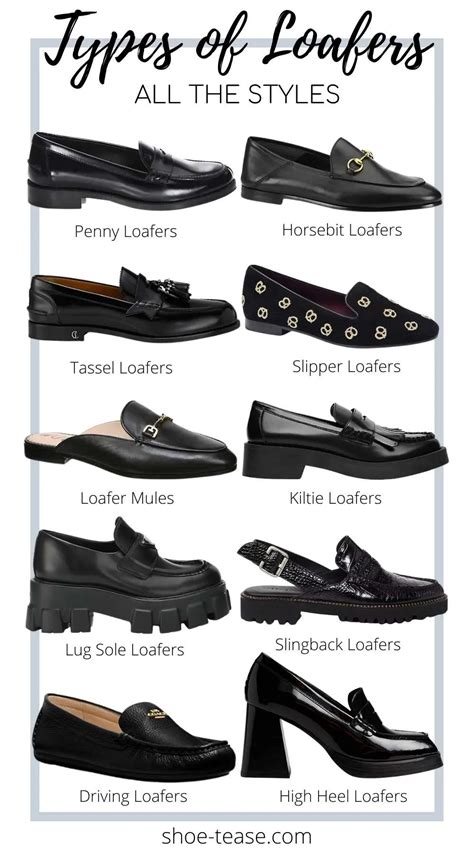
Loafers, or slip-ons, are characterized by their ease of wear and lack of fastenings. They typically have a round toe and are often found in darker colors like black or brown. Traditional styles include the penny loafer, known for its versatility, and the tassel loafer. The horsebit loafer, popularized by Gucci, is another distinct style.
Other Notable Styles
- Chukka boots are ankle-high boots, typically made with two or three pairs of lacing eyelets. Traditionally made from calfskin, suede or black kid leather offer dressier options.
- Chelsea boots are characterized by an elasticated gusset on the side, offering a comfortable and sleek profile suitable for both formal tailoring and casual wear.
- Whole cut shoes are crafted from a single piece of leather, representing the pinnacle of elegant shoemaking and ideal for formal events.
Key Shoe Details
Toe Styles
- Plain toe: The simplest and often most formal style, lacking any toe cap or brogue detail.
- Cap toe: Features an extra piece of leather sewn onto the toe, making the shoe more versatile. A cap-toe Oxford is considered acceptable formal attire.
- Wingtip: Characterized by a pointed toecap with decorative perforations resembling wings. These are a less dressy, though still business-appropriate, variation of Derby and Oxford styles.
- Semi brogue: A Derby or Oxford shoe with a perforated and often serrated toe cap edge, along with decorative perforations in the center of the toe cap.
- Quarter brogue: Similar to a semi-brogue but lacks perforations in the center of the toe cap.
- Longwing brogues: A more elaborate style where the broguing on the pointed toecap extends the full length of the shoe, meeting at the heel seam.
- Round toe: The front of the upper is rounded, offering a classic and balanced appearance.
- Chisel toe: A square-toed shoe that offers a bolder aesthetic.
Decorative Elements
- Tassels: Often found on loafers, these decorative elements can add a touch of flair.
- Kilties: A tongue of fringed leather attached to the vamp of a shoe, adding a unique detail.
Shoe Construction Methods
Goodyear Welt
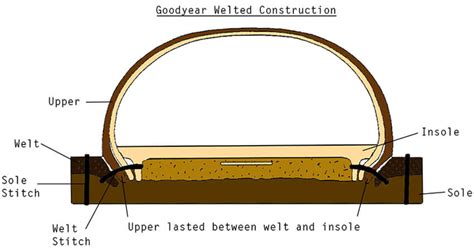
The Goodyear welt construction, invented by Charles Goodyear Jr., involves a strip of leather stitched to the upper and insole, serving as an attachment point for the sole. This method is renowned for its durability and allows for easier sole replacement, making it a cornerstone of traditional shoemaking.
Blake Stitch
The Blake stitch method, common in Italian shoemaking, directly stitches the upper to the sole. This results in lighter, more flexible shoes, though they may wear out quicker and be harder to repair.
Norwegian Welt
Developed in Scandinavia, the Norwegian welt uses a double stitching technique to attach the sole to the upper, ensuring excellent waterproofness and sturdiness. The upper is turned outwards, creating a flush welt with the sole and upper for a distinctive aesthetic, particularly suitable for boots and country footwear.
Sole Materials
- Single leather sole: Offers an elegant and sleek feel, ideal for formal shoes, but can be slippery when wet.
- Double leather sole: Provides more protection and warmth, with a more robust and rustic feel, often used in casual or outdoor boots.
- Rubber sole: Offers superior grip and durability, making it a practical choice for various conditions, though less breathable than leather.
- Crepe sole: A textured rubber, lightweight and often seen on desert boots, though it can wear quickly.
- Dainite sole: A British brand producing durable rubber soles with added protection, suitable for replacing leather soles in inclement weather.
Leather Types
- Patent leather: A super-shiny finish traditionally reserved for formal wear, now seen in more varied contexts. It creases easily and is best kept for special occasions.
- Smooth leathers: Any leather without a noticeable grain or pebbling, which can be easily shined.
- Full grain leather: The most durable leather, taken from just below the hair of the hide. It resists moisture well and develops a patina with age.
- Top grain leather: Similar in appearance to full grain, but the surface has been sanded to remove imperfections.
- Pebble grain leather: Full-grain leather embossed with a textured pattern, often applied to lower-grade hides.
18th-Century Shoemaking at Colonial Williamsburg
Selecting the right dress shoes is crucial for completing any polished outfit. Understanding the nuances of different styles, details, construction methods, and materials will empower you to make informed choices, ensuring you look flawless from head to toe.