The Water-Vapor Transmission Rate (WVTR) is a critical metric for professionals in various industries, including HVAC, packaging, and textiles, aiming to optimize performance and ensure product integrity. In essence, WVTR quantifies the rate at which water vapor passes through a material under specific environmental conditions.
Definition and Measurement of WVTR
WVTR is defined as the steady-state rate at which water vapor permeates through a material. This rate is typically measured in grams per square meter per day (g/m²/day) or grams per 100 square inches per 24 hours (g/100 in²/24 hr). The definition may sound technical, but it essentially quantifies how much water vapor can pass through materials, which is vital for maintaining desired humidity levels and preventing unwanted moisture transfer.
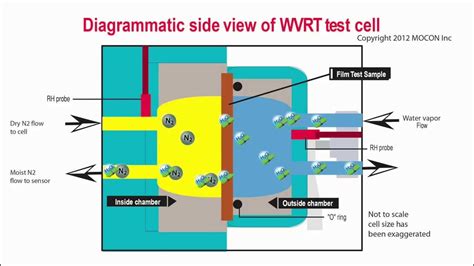
Various standardized tests are employed to obtain WVTR values. These tests are usually conducted in controlled environments that simulate the intended application conditions. Two common and standardized methods for measuring WVTR are ASTM E96 and ASTM F1249. The ASTM E96 standard includes both a desiccant method and a water method, where a dish filled with either desiccant or water is sealed with the test material and placed in a controlled humidity and temperature chamber. The weight change over a predetermined time indicates the amount of moisture that has passed through the barrier.
The ASTM F1249 method is often considered more modern and accurate. It utilizes instruments like MOCON's PERMATRAN-W, which employs a pressure-modulated infrared (PMIR) sensor capable of detecting very low concentrations of water vapor. This method typically involves two chambers: a dry chamber with flowing nitrogen and another chamber with controlled temperature and humidity. The difference in water vapor partial pressure across the material drives the transmission, and an infrared detector measures the rate of vapor transfer to the low-pressure side.
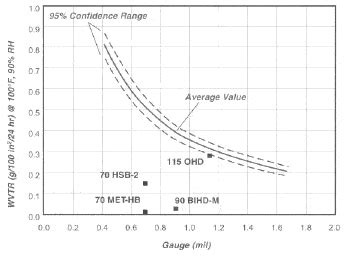
ExxonMobil, for instance, standardizes its WVTR reporting to test conditions of 100°F (37.8°C) and 90% relative humidity (RH), which is a common set of conditions reported in North America. The test is complete when equilibrium, or steady-state, is achieved, meaning the rate of water vapor permeation remains constant.
Factors Influencing WVTR
Several factors significantly influence the WVTR of a material:
Material Properties
- Type of Material: Different materials exhibit varying WVTR values. Porous materials generally allow more vapor to pass through compared to non-porous ones.
- Thickness: Thicker materials typically have lower WVTRs because there is greater resistance to vapor flow. If one film is twice as thick as another of the same type, its WVTR will generally be half the value.
Environmental Conditions
- Temperature: Higher temperatures usually increase WVTR, as warmer air can hold more moisture and water molecules move faster.
- Humidity Levels: The difference in humidity across the material (the humidity gradient) is a primary driving force for vapor transmission. Higher humidity on one side relative to the other will increase the transmission rate.
Relevance of WVTR Across Industries
HVAC Professionals
For HVAC professionals, understanding WVTR is crucial for optimizing building performance and indoor air quality. Managing humidity is essential for comfort, energy efficiency, and preventing mold growth. High humidity can lead to condensation, which can damage buildings and pose health risks. By understanding and measuring WVTR, HVAC professionals can select appropriate building materials and design systems that effectively control moisture levels, ensuring healthier and more energy-efficient indoor environments.
Packaging Industry
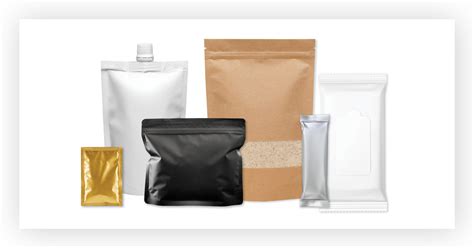
In the packaging sector, WVTR is a critical factor in maintaining product freshness and shelf life. For dry products like chips or cookies, packaging must prevent moisture ingress. Conversely, for moist products such as cheese or chewing gum, packaging needs to prevent moisture loss. WVTR is the standard measurement used to compare films' ability to resist moisture transmission, with lower values indicating better protection. Without adequate moisture barriers, products can quickly reach equilibrium with their surroundings, becoming soggy or hard.
Polypropylene (OPP) films are known for their exceptional moisture barrier properties. However, the WVTR of OPP films can be influenced by several factors:
- Raw Material Differences: Variations in polymer chain length, range of chain lengths, and degree of crystallinity in the base resin can affect WVTR.
- Additives and Copolymer Layers: The inclusion of additives or different copolymer layers can alter the barrier performance.
- Processing Conditions: Differences in manufacturing processes, such as orientation, can align polymer chains and reduce spaces, thereby lowering WVTR. Orientation efficiently "packs" polymer chains, minimizing larger spaces and thus reducing vapor transmission.
- Measurement Variability: Even with precise instruments, minor variations in measurement precision can occur.
The inherent moisture barrier of OPP can be further enhanced through additives, coatings, or metallization. For example, PVdC-coated and metallized films significantly improve the WVTR of OPP and other high-barrier films.
It is important to note that package seal integrity is paramount. Even with a film possessing excellent barrier properties, poor quality seals can negate its effectiveness by allowing vapor transmission through imperfections.
Outdoor Clothing and Textiles
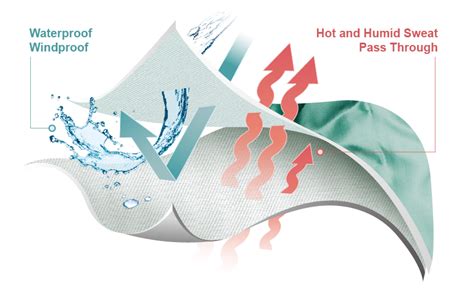
In the realm of outdoor clothing, WVTR is often referred to as Moisture Vapor Transmission Rate (MVTR) and is a key indicator of fabric breathability. MVTR quantifies how effectively a fabric allows moisture vapor (sweat in its gaseous form) to escape from the inside of a garment to the outside environment. A higher MVTR signifies greater breathability.
Understanding MVTR is crucial for comfort during physical activity. When the body generates heat and sweat, trapping this moisture can lead to chill, discomfort, chafing, and reduced performance. High MVTR ratings indicate that clothing is more effective at allowing moisture vapor to escape, keeping the wearer drier and more comfortable during exertion.
Common methods for testing MVTR in textiles include the Upright Cup (Desiccant) Method (ASTM E96/E), the Inverted Cup (Water Method) (ASTM E96/B), and the Sweating Hot Plate (ISO 11092). It's important to note that different test methods and conditions (temperature, humidity) can yield different results, making direct comparisons challenging unless the testing parameters are known.
Generally, MVTR values are categorized as follows:
- Low Breathability: < 5,000 g/m²/24h (suitable for casual use)
- Moderate Breathability: 5,000-10,000 g/m²/24h (good for general outdoor use)
- High Breathability: 10,000-20,000 g/m²/24h (suitable for hiking, backpacking)
- Very High Breathability: > 20,000 g/m²/24h (designed for high-output activities)
However, these numbers are guidelines. Fabric construction, layering systems, ventilation features (like pit zips), and garment fit also significantly impact real-world performance. It is also essential to distinguish MVTR (breathability) from waterproofness (measured in millimeters of hydrostatic head).
Pharmaceutical Packaging
In the pharmaceutical industry, moisture control is paramount due to the sensitivity of many Active Pharmaceutical Ingredients (APIs) to moisture. A very low water vapor permeation rate is essential for pharmaceutical packaging to protect the contents and ensure their efficacy, safety, and shelf life. The characteristics of the raw material and the wall thickness of containers are key factors influencing the WVTR of pharmaceutical bottles.
WVTR in Practice: Examples and Considerations
A practical example of WVTR's importance is a milk jug, typically made of high-density polyethylene, which has a low WVTR to prevent moisture from entering and spoiling the milk.
Conversely, performance or athletic clothing often utilizes fabrics with high WVTR to facilitate rapid moisture transfer away from the body.
The time element in WVTR measurements is relative to the product's purpose, with tests commonly reported in 24-hour terms. The required transmission rate can be very low or very high depending on the specific application.
When evaluating WVTR, it's crucial to consider the conditions under which the measurement was made. Both temperature and humidity gradients across the sample need to be controlled and recorded. An MVTR result without specifying these conditions is often considered meaningless.
While lab tests provide valuable data, real-world variability exists. Factors like high humidity, cold weather, and wind can affect how a material performs. Furthermore, layering systems and mechanical ventilation (e.g., zippers) play a significant role in overall moisture management.
Understanding WVTR Water Vapor Transmission Rate Testing | AMETEK MOCON
tags: #moisture #vapor #transmission #rate