The anticipation for Disney's live-action Mulan has been palpable since its announcement. As the premiere finally arrived, the excitement to see how the beloved animated story was transformed into a grand live-action spectacle was immense. The official trailers, posters, and behind-the-scenes glimpses confirmed that the film would be visually stunning, featuring elaborate hair, makeup, and costume designs.
At the heart of this transformation was Hair and Makeup Designer Denise Kum, who undertook the crucial task of bringing the movie's characters to life. Her preparation involved extensive research into China's rich history and culture, particularly the Tang Dynasty, the period loosely inspiring Mulan's narrative. This historical foundation served as the guiding principle for her hair and makeup decisions.
"We're not trying to be 100 percent historically accurate because we wanted to be able to have a little bit of fantasy in there as well," Kum explained. "You've got at once incredible naturalism and then you've got also this mysterious fantasy element which is much more a mix of incredible traditional elements of makeup and the idea of symbolism in Chinese." Kum elaborated on how she skillfully blended fantasy with Chinese culture and color symbolism to craft each character's unique look, noting a surprising nod to retro Disney characters.
Referencing the Past, Creating the Future
While the 1998 animated film served as a point of reference, the live-action version did not strictly adhere to it. "We weren't really illustrating the original because that exists in its own right," Kum stated. The film cleverly incorporated a cameo from Ming-Na Wen, the original voice of Mulan in the animated features, adding a layer of continuity and sentiment. "When you see the imperial scene where Mulan is being presented to the emperor, you see this beautiful woman come out and what is really quite lovely is it's almost like the voice of Mulan handing over the mantle to the new Mulan," Kum shared.
The Power of Symbolism in Color and Design
Symbolism played a pivotal role in Kum's design choices, especially concerning color. "A lot of Chinese culture uses symbolism when it comes to color and that was the main thing that informed the makeup for me," she revealed. The primary colors featured in the film were intentionally chosen for their resonance with both Chinese culture and early Disney animations, evoking characters like Mickey Mouse and Donald Duck. "I quite like that cross-cultural reference," Kum added.
The color red, a prominent hue in the film, symbolizes good luck and holds significant importance in Chinese culture. The makeup also incorporated white face powder and distinct bluish eyebrows, further enhancing the symbolic visual language of the film. Kum appreciated this blend of cultural depth and modern aesthetic, noting, "The primary colors also being very redolent in animation and early Disney, made very Mickey Mouse and Donald Duck colors. I quite like that cross-cultural reference between something being very essentialist and also something being very modern and very retro at the same time."
Crafting Iconic Characters
The film's larger-than-life characters, including the Matchmaker, the villain Xianniang, and Bori Khan, were brought to life through distinct hair and makeup designs.
The Matchmaker
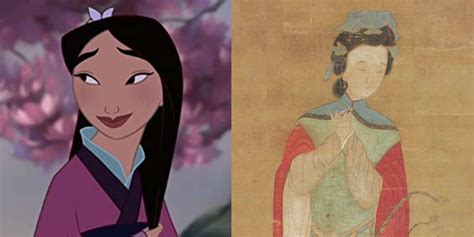
For the Matchmaker, Kum drew inspiration directly from historical artifacts. "The hair ornaments, the size of the hair, and the more extravagant shapes were taken directly from what is replicated in a lot of the sculptures and the scroll paintings of that time," she explained. "The looks are very lush and opulent. The hairstyles have much to do with class and wealth so these were intentionally decorative and very big."
Xianniang, the Shapeshifter
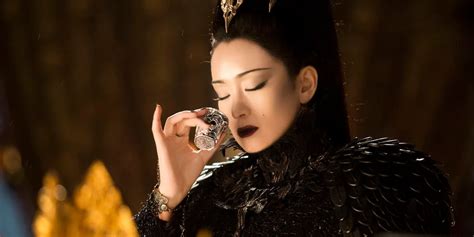
Xianniang's character was heavily influenced by her animalistic nature, specifically her transformation into a hawk. "Because she's a shapeshifter her animal reference is the hawk," Kum stated. The striking white mask across Xianniang's eyes was a historical reference to clay figurines discovered during Kum's research. "I really liked how it was a white mask and, in many cultures, white is revered as something being beautiful. So, it was a bit of a way of a twist on that, layering that over her eyes." This choice also played on the complex symbolism of white in Chinese culture, representing purity, death, and disguise.
The Male Soldiers
In stark contrast, the men in the military were designed for maximum realism. "Throughout Chinese culture, men at that particular period did not cut their hair because that was seen as disrespectful to one's ancestors and the symbolism of power," Kum noted, necessitating the use of wigs for all male characters. To ensure Mulan could blend in seamlessly, Kum differentiated the soldiers' appearances. "I had to make some of them a lot more feminine and some of them look more comedic - for lack of a better description, it's like the Seven Dwarfs," she said. "They all have their own exigencies and quirks and personalities, so there's variation within a strict uniform."
The Artistry of Naturalism and Transformation
The film's narrative journey is mirrored in the evolution of Mulan's appearance. "We have to make her look incredibly natural as a young girl, then obviously there's a really over the top scene of her being presented in the matchmaking ceremony. That really helps us then to pivot to making her look much more androgynous, or boy-like."
Kum's background as a fine artist and conceptual artist significantly influenced her approach to makeup. "For me, makeup is paint. It's also structure to enable the actor to inhabit a certain thing," she explained. The character of Mulan undergoes a profound transformation, from a young child to a teenager, a disguised soldier, and finally, her true self. Kum emphasized that every detail, from hair to eyeshadow, was meticulously crafted to enhance the performance and the character's journey.
The challenge of creating naturalistic looks, especially amidst the demands of battle scenes, was considerable. "The natural makeup is harder to do because the dirt appears, you know. Or, you know, there's certain things I do to flatten her face, to make her look like a boy." The contrast between the extraordinary, colorful matchmaking scene and Mulan's more natural appearance served to heighten the impact of each. "It's actually like choreography," Kum remarked, describing the intricate planning required for scenes involving stunts and dynamic movement.
Color-Coding and Collaboration
"Whenever I break down a script, I color code everything," Kum revealed about her meticulous process. "And I think, okay, if this is their journey, what is the other character doing? Where do they intersect? And that's when I also think about when we change the makeup." The testing and validation process ensured that the makeup not only looked good but also served the narrative effectively.
Kum managed a large team, a necessity due to simultaneous filming across different units. The extensive use of wigs and hair augmentations was a significant undertaking. While some makeup artists specialize, Kum embraced a broader role, encompassing makeup and prosthetics design. "I play to their strengths and carve up the work - what's going to make them be excited about the job? What do they want to contribute?" she said, likening her collaborative approach to that of a sculptor working with a welder.
Key Visual Characters and Their Inspirations
Kum identified four characters as particularly visual anchors for the film's aesthetic: Gong Li (Xianniang), Jason Scott Lee (Bori Khan), Cheng Pei Pei (the Matchmaker), and the Emperor. These characters, she explained, helped broaden the film's visual scope and integrate fantasy elements. Gong Li needed to embody a supernatural presence, Jason Scott Lee a formidable villain, the Emperor a guiding light, and Cheng Pei Pei a vibrant, comedic force.
The collaborative process with the costume designer Bina Daigeler and Production Designer Grant Major was integral. "I had obsessed about it for a year prior to actually starting pre-production proper because, you know, we were pushed because we hadn't found Yifei yet," Kum recalled. The luxury of having initial ideas readily accepted by Disney allowed for a smoother creative flow.
Gong Li's Supernatural Persona
The iconic white mask worn by Gong Li as Xianniang was a concept present from the outset. "It was there from the beginning! It's a risk because everybody thinks, 'Oh, a mask we've seen it before' or they think of Zorro. But she had to be very supernatural." The inspiration for the mask drew from the color palette of a hawk, its hooded eyes, and even the idea of contact lenses. Kum designed prosthetic talons inspired by a hawk's claws, aiming for a naturalistic yet otherworldly effect. A striking image from an Alexander McQueen runway show also influenced the mask's placement, reminiscent of a T-zone application rather than a full face mask.
The symbolism of white in Chinese culture-representing mourning, purity, death, and disguise-added layers of meaning to Xianniang's look. Kum noted its connection to power and its presence in Peking Opera masks, often signifying a cunning and treacherous individual. This multifaceted symbolism, combined with the visual harmony with Gong Li's costume and crown, solidified the choice of white.
Jason Scott Lee's Villainous Scars
The scars on Bori Khan's face were developed through discussions about his character's tribal and nomadic nature. Kum aimed to depict scars that suggested a history of constant healing and resilience. The inspiration for these scars came partly from Jason Scott Lee's practice of a Māori dance called Taiaha, which involves intense facial expressions. Kum would draw directly on his face as he performed these expressions to map out the placement and style of the scars, ensuring they looked like natural nicks and gouges that were integral to his character's narrative of survival and defiance.
Xianniang's Mask: A Blend of Influences
Xianniang's half-painted face was inspired by several sources, including scroll paintings by Zhou Fang and the historical practice of applying rice powder. Kum drew from ancient pottery with bright red cheeks and a white veil, as well as the symbolism of white in Chinese culture. The Qin and Han Dynasties' emphasis on women's morals over physical beauty and the association of white complexion with power also contributed to the concept. The idea of a mask stemmed from a desire for mystery and theatrical disguise, further enhanced by a similar avant-garde design from an Alexander McQueen runway show.
Mulan's Hair: From Natural to Flowing Locks
Mulan's hair transformations were essential to her character arc. Her long locks flowing freely after revealing her true identity were a significant visual moment. The logistics of styling hair for stunts, wirework, and wind machines required meticulous preparation. "All the individual hair pieces had to be set & baked every day," Kum stated. Yifei Liu's own hair was treated to ensure her curls held, with adjustments made for varying weather conditions.
For scenes where Mulan's hair tumbles down, fishing line was used to achieve the desired effect. Kum emphasized the extensive preparation involved: "Yeah, no one wakes up with their hair looking like that." The seamless replication of these looks on stunt doubles and stand-ins was also crucial.
The Personal Significance of Mulan's Story
Showcasing Mulan's story to a new generation held deep personal significance for Kum. "It's really fantastic!" she exclaimed. While inherently Chinese, the story's themes of courage, identity, and honor are universally resonant and particularly timely. Mulan's emotional journey, her fear of discovery, and the potential consequences of betrayal-expulsion or death-highlight the profound pressures she faced. Kum noted that avoiding dishonor to her family was Mulan's primary motivation.
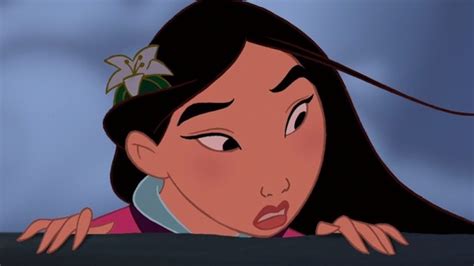
The film incorporated subtle references to the animated version, such as Mulan's hair comb and Ming-Na Wen's cameo. Wen's appearance in the imperial scene, introducing Hua Mulan, served as a poignant handover from the original voice to the new Mulan.
Behind the Scenes: A Collaborative Masterpiece
The scene where Mulan is praised by the Emperor was visually stunning, resembling a painting. The elaborate costumes, hair accessories, and bespoke wigs for every individual contributed to the scene's grandeur. Each person was "fine-tuned" to perfection.
Denise Kum's extensive career spans various genres, from period dramas to fantasy and superhero franchises. Her ability to "genre hop" and her consistent collaboration with directors like Niki Caro, costume designers like Bina Daigeler, and production designers like Grant Major highlight her versatility and the trust she commands in the industry. Her background as a fine artist and conceptual artist provides a unique perspective, allowing her to approach makeup as both an art form and a tool for character development.