Wart remover pens offer a convenient and effective solution for the removal of common and plantar warts. These pens utilize various technologies, such as freezing or acid-based treatments, to target and eliminate wart tissue.
Understanding Warts
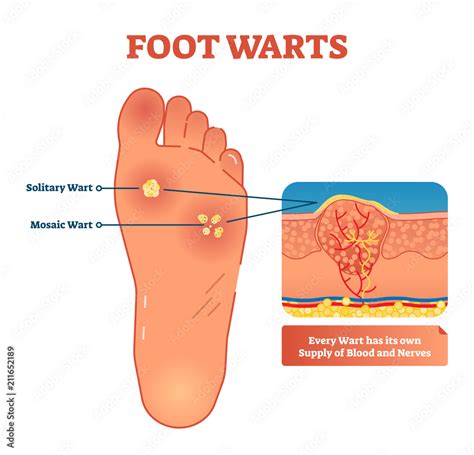
Warts are skin growths caused by the human papillomavirus (HPV). They can appear in various forms:
- Common Warts: Easily recognized by their rough, "cauliflower-like" appearance on the surface.
- Plantar Warts: Located specifically on the bottom of the foot, characterized by tenderness and an interruption of the footprint pattern.
Types of Wart Remover Pens and Their Technologies
Wart remover pens come in different forms, employing distinct mechanisms for wart elimination:
Freezing Technology
Some pens utilize cryogenic (freezing) agents to destroy wart tissue. This method involves rapidly freezing the affected skin, causing a blister to form and the wart to eventually fall off as the skin heals.
- Key Ingredients: Typically contain a blend of 1,1-difluoroethane, propane, and isopentane, which act as a cryogenic agent.
- Mechanism: Creates a rapid freezing action that targets the wart, leading to its removal.
Acid-Based Treatments
Other pens employ acid-based solutions, such as trichloroacetic acid (TCA) gel. These treatments work as a chemical peel, destroying virus-infected cells and causing the dead skin to peel off.
- Active Ingredient: Trichloroacetic acid (TCA) gel is a common active ingredient.
- Mechanism: TCA gel acts as a chemical peel, destroying infected cells and promoting the shedding of dead skin.
How to Use a Wart Remover Pen
While specific instructions may vary between products, general guidelines for using wart remover pens include:
Preparation
- For first-time use of some pens, it may be necessary to activate the mechanism by rotating the cap or pressing a button multiple times.
- For acid-based treatments, soaking the affected area in warm water for approximately 5 minutes before application can enhance results.
- Ensure the skin is dry before application.
Application
The application process typically involves the following steps:
- Assemble (if necessary): For some pens, this may involve installing a brush into the bottle cap.
- Apply the Liquid/Agent:
- For freezing pens: Hold the metal-foam tip directly onto the wart for a specified duration (e.g., 10-20 seconds, or up to 40 seconds for thicker skin on feet).
- For acid-based pens: Dip the applicator (brush or tip) into the liquid and apply it directly onto the wart. Allow the liquid to dry and form a mask.
- Repeat if Necessary: If warts or corns are large, a longer treatment period may be required, or multiple applications may be needed. For acid-based pens, after the initial layer dries, apply the liquid again.
Post-Treatment Care
- After treatment, recap the pen tightly.
- If the wart or corn is large, it may require a longer treatment duration.
- A slight tingling sensation or darkening of the wart may be noticeable, which is a normal and transient reaction.
- Avoid picking at any scab that forms to prevent scarring.
- Protect the treated area from the sun for up to 30 days after treatment to avoid irritation or hyperpigmentation.
- Store the pen at room temperature, away from heat and direct sunlight.
Important Precautions and Warnings
It is crucial to adhere to safety guidelines when using wart remover pens:
- For External Use Only.
- Do Not Use On:
- Irritated skin, or any area that is infected or reddened.
- Moles, birthmarks, warts with hairs growing from them, genital warts, or warts on the face or mucous membranes.
- Skin with dark spots, beauty spots, water warts (mollusca contagiosa), seborrhoeic keratosis, or unusual-looking hairy outgrowths.
- Broken or inflamed skin and open wounds.
- Fast-growing warts.
- Avoid Contact with Eyes: If the product gets into the eyes, flush with water for 15 minutes.
- Avoid Inhaling Vapors.
- Flammability: Keep away from fire, flames, heat, and sources of ignition. Do not smoke near the product. Pressurized containers may burst if heated. Do not expose to temperatures above 50°C.
- Consult a Doctor Before Use If: You have diabetes, poor blood circulation, an immune system disorder, skin conditions, or if you are using anticoagulants.
- Children: Adults should apply the treatment to children. Can be used by children from 4 years old.
- Hypersensitivity: Do not use if you are hypersensitive to the freezing agent or active ingredients.
- Pregnancy and Breastfeeding: Consult your doctor prior to use if you are pregnant, trying to become pregnant, or breastfeeding.
- Storage: Keep out of reach of children. Cap bottle tightly and store at room temperature away from heat.
- Seek Professional Advice: If discomfort persists, stop use and ask a doctor. Consult your doctor or pharmacist if you have underlying medical conditions or are taking other medications.
Key Ingredients
Wart remover pens often contain a blend of ingredients designed to target and eliminate warts. For freezing pens, this typically includes cryogenic agents like 1,1-difluoroethane, propane, and isopentane. Acid-based pens utilize ingredients such as trichloroacetic acid (TCA) gel.
When to Seek Professional Medical Advice
While wart remover pens are designed for at-home use, it is important to consult a doctor or dermatologist in the following situations:
- If you have concerns about a skin growth, especially if it is suspicious or rapidly changing.
- If you have diabetes or poor blood circulation, as this can affect healing.
- If you experience severe irritation, infection, or scarring after using the pen.
- For warts located on sensitive areas like the face, genitals, or mucous membranes.
- If the wart persists after following the instructions for use.