The world of makeup is a diverse landscape, with many embracing it as an art form while others view it with skepticism, considering it a mask that conceals true identity. This creates a fascinating dichotomy between individuals who prefer to present themselves naturally and those who choose to adorn their faces with cosmetics. For many women who opt for a bare-faced look, there's a profound sense of comfort and authenticity. The overarching sentiment is that personal happiness and self-expression are paramount, and feeling your best while staying true to oneself is what truly matters.
Personal Experiences: The Dichotomy of Treatment
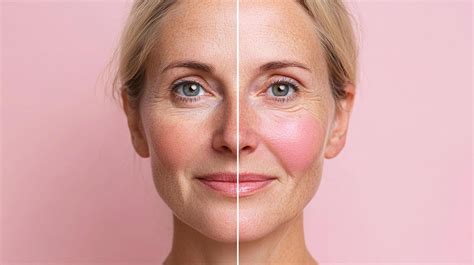
The way individuals are treated can vary dramatically depending on whether they are wearing makeup or not. One personal account illustrates this stark difference: "When people meet me and I'm bare-faced, I'm treated like just another person. Other women approach me for conversation if I'm at the bar, I exchange casual smiles while passing someone in the aisle grocery shopping, all just typical daily scenarios with the average human being. Rarely do I receive compliments on my looks or get hit on. But when people meet me when I'm dolled up, it's a night-and-day difference. As some of my best friends have told me, I come across as “intimidating” and “mean”. I've had people tell me that before they got to know me they thought I’d be stuck up. I've had boys tell me that other boys wouldn't date me in school because they're too afraid, that I'm “too cool”. Girls have walked their boyfriends out of my work because of my looks. Random women have tried to pick fights with me because their husband was looking at me. When I have a full face of makeup on I can walk straight to the front of any VIP line at a night club and get in (even before I was 21.) I get significantly hit on more, even offered a lot of money in exchange for my “time”, and that has never happened without makeup."
This individual also noted professional differences: "People offer me jobs more and try to recruit me to do marketing. Rich men and athletes have taken me out on very luxurious dates, whereas I once did a personal experiment and met up with someone from a dating app bare-faced, and never got a callback." The experience of wearing makeup daily for work was described as "slightly exhausting." Conversely, a period of minimal makeup wear was found to be "amazing," allowing for a focus on inner qualities rather than external appearance.
The Introvert's Perspective: Invisibility vs. Unwanted Attention
For introverts, the experience can be particularly nuanced. One individual shared, "I get treated hugely differently. And it pisses me off. ... When I am normal Dawn, I don't turn heads, I am invisible. Fine by me. I am an introvert. I work from home and don't see many people, and going into busy places makes me anxious. Being invisible suits me down to the ground. On rare occasions, I get dressed up and go out to meet a friend or whatever. Attention embarrasses me. ... To suddenly get attention is uncomfortable, especially when it is unwanted looks-based attention. Staring or leering or grabbing etc, which is what it almost always is, makes me want to run back to what I call my Darkened Room and it's frustrating as hell that I can't make myself look and feel pretty-just because it's nice to sometimes-without suddenly being a target for this sort of thing and it's all so fricking artificial."
This perspective highlights a common dilemma: the desire to feel attractive sometimes leads to unwanted and objectifying attention. The observation of men reacting to a heavily made-up woman in a store, while seemingly ignoring a woman in practical attire, underscores the idea that attention is often directed at the constructed appearance rather than the individual. The comfort found in meeting a partner in a less-than-glamorous environment, like a kitchen, is seen as a strong foundation, as it signifies being valued for more than just looks.
The sentiment is summarized: "It just makes me fucking sigh to see that a woman's choices seem to be invisibility or being leered at. To be ignored or hit on. It's just how the world works, unfortunately."
Subtle Differences in Daily vs. Full Makeup
Even subtle variations in makeup application can influence social interactions. For instance, a person who rarely leaves the house without at least eyebrows and mascara noted: "When I am wearing full/club makeup, complete with dark eyeshadow, eyeliner, and lipstick, I notice that people are very, very nice to me. Men approach me more-even with my husband by my side. Women are generally very nice as well: they compliment my makeup and are friendly. Oftentimes I feel as if I’m being stared at or watched. I’m more easily accepted into groups of friends and made to feel welcome. When I wear full makeup, the compliments are endless; it’s almost as if I can say nothing wrong."
In contrast, "When I am wearing my daily makeup, which consists of lighter eyeshadow with no eyeliner and chapstick opposed to lipstick, people are still very nice to me. I don’t get approached as much-especially if I’m out at night-but I still get compliments and looks; just nothing compared to my full/club makeup. Honestly, I think women give me more attention when I wear my daily makeup."
The "no makeup" look, defined as barely filling in brows and a swipe of mascara, resulted in feeling like an "average person." This brought a sense of peace for an introvert, as there was less need to respond to random conversations, with compliments shifting towards personality rather than appearance.
The Question of Natural Beauty and Societal Norms
The question of whether it's acceptable to wear no makeup is unequivocally answered with a resounding "absolutely!" The emphasis is on personal choice and authenticity, encapsulated by the phrase "You do You." Many opt out of makeup for reasons of comfort or to embrace their natural beauty, recognizing that true confidence stems from being comfortable in one's own skin. Societal beauty standards should not dictate these personal decisions, and everyone has the right to present themselves in a way that feels most authentic.
Perceptions of Age and Appearance
The way makeup affects perceptions of age and maturity is also noteworthy. One individual shared: "When I'm very tidy, so much that people don't consider me a 16-year-old girl and I'm wearing open clothes, guys can come and ask for my phone number, which means they see a woman in me. I can even buy alcohol at a store or bar and not show documents at the same time. And when I'm not wearing makeup, or when I have makeup every day (eyebrow pencil, mascara, blush, and lipstick), nobody notices me. Perhaps people think, 'God, who is this child?'"
The Impact of Specific Features: Eyelashes and Their Significance
For individuals with naturally subtle features, makeup can significantly alter perceived appearance. A person with naturally blonde eyebrows and eyelashes described the struggle: "The one most profound response I usually get is 'Woah, where'd your eyelashes go?' If anyone out there reading this has blonde eyelashes, y'all know the struggle. They're nearly invisible! If I’m not donning mascara, I'm usually asked if I'm feeling okay, if I'm sick, or tired. If I am wearing mascara, people generally think I'm not wearing any makeup and think my eyelashes are naturally black." The addition of eyeshadow or lipstick often prompts questions about special occasions, indicating that makeup is perceived as transformative.
The realization that "eyelashes had such an effect on my appearance" was profound, with mascara being the only makeup worn. The absence of mascara made eyelids appear "bald."
The Seesaw Effect: Parental and Peer Reactions
Reactions to makeup can be polarized, creating a "see-saw" effect. One person noted: "When I have makeup on my parents ask to dial it down since I'm a huge makeup freak. And when I don't have makeup on my friends ask me if I'm sick or high. It's always a see-saw for me, never anything moderate." This highlights how both extremes of makeup application can elicit distinct and sometimes contradictory responses from different social circles.
Scientific Perspectives on Makeup and Attractiveness
Research offers insights into how makeup influences perceptions of attractiveness and other traits. Studies have investigated the link between makeup and sociosexuality, with findings suggesting that women wearing makeup are often perceived as more attractive and, in some studies, as having more unrestricted sociosexuality. However, self-reported sociosexuality did not always correlate with makeup-wearing habits, suggesting that these perceptions are not necessarily reflective of actual behavior or values.
One study found that waitresses received significantly higher tips from male patrons when wearing makeup, and men were more likely to solicit women at a bar who were wearing makeup. This has led to the proposal that makeup may signal availability, in addition to enhancing attractiveness.
Eastern vs. Western Makeup Ideals
Beauty ideals and makeup application vary significantly across cultures. In Eastern cultures, there's often a strong emphasis on skincare, with a preference for undetectable contouring, less bright concealer, and a "makeup no makeup" style. Conversely, Western beauty standards often favor more sculpted features, pronounced contouring, highlighting, and a more glamorous aesthetic.
A makeup artist's role is to cater to individual preferences, ensuring clients feel like themselves. This involves understanding diverse approaches, such as the "natural glam" that enhances features subtly without drastically altering appearance, focusing on skin-like finishes and understated vibes.
The Limited Impact of Makeup on Attractiveness Judgments
Despite common assumptions, scientific research suggests that makeup's contribution to overall attractiveness judgments is relatively small. One study found that makeup accounted for only around 2 percent of the variation in attractiveness ratings. This effect remained consistent regardless of the amount or quality of makeup applied. The study indicated that factors such as facial symmetry, averageness, and skin condition, which are inherent to natural appearance, play a more significant role.
Furthermore, controllable factors like facial expressions, particularly smiling, and even subtle head tilts can influence perceived attractiveness more than makeup. For instance, women are often perceived as more attractive when tilting their heads slightly upwards.
Exploring Cultural Vs Universal Beauty Standards
Beyond Makeup: Other Factors Influencing Attractiveness
Attractiveness is a complex interplay of various factors beyond facial cosmetics. Hormones can influence preferences, with women finding different types of male faces attractive during different stages of their menstrual cycle. Scent also plays a role, with the major histocompatibility complex (MHC) unconsciously guiding judgments of attractiveness based on immune system diversity.
While makeup might offer a small boost to attractiveness, it is not the sole determinant. The type of makeup look, application by a professional, and individual perceptions all contribute to the overall effect.
Facial Contrast and Femininity
Research into facial contrast suggests that the degree of contrast in the eye and mouth regions significantly contributes to the perception of masculinity or femininity. Women naturally exhibit greater contrast in these areas compared to men. By enhancing the color and contrast of the eyes and lips through makeup, women can accentuate these features, leading to a perception of increased femininity. This is rooted in the brain's subconscious assessment of beauty and feminine attractiveness.
Specialists in facial rejuvenation often focus on treatments that optimize the eye and mouth regions, understanding how the brain processes faces. While cosmetic procedures can enhance these areas, makeup provides a more accessible way for individuals to increase facial contrast and appear more feminine.