Recent news has brought increased attention to concerns surrounding sunscreens, particularly aerosol formulations. Several spray sunscreens were recalled last summer due to the detection of benzene, a known carcinogen. Further research indicates that certain sunscreen ingredients may penetrate the skin and enter the bloodstream, prompting the Food and Drug Administration (FDA) to request more safety data from manufacturers. Additionally, environmental concerns have led to bans on specific ingredients in places like Hawaii due to potential harm to ocean reefs.
While these issues raise valid questions, it's important to note that at present, the risks associated with these concerns are largely theoretical rather than definitively proven. Conversely, the regular use of sunscreen is a well-established method for preventing skin cancers and saving lives.
Understanding the Concerns: Benzene and Ingredient Absorption
One of the primary concerns identified is the presence of benzene in some aerosol sunscreens. Benzene is a chemical known for its potential to cause cancer. In 2021, numerous spray or aerosol sunscreens were recalled following reports of benzene concentrations exceeding established safety limits. Long-term exposure to benzene can lead to serious health issues, including a weakened ability to fight infection, fertility problems, anemia, and leukemia. The Centers for Disease Control and Prevention (CDC) notes that benzene is commonly used in industrial applications and is naturally found in substances like gasoline, crude oil, and cigarette smoke.
The FDA has updated its guidance regarding benzene in sunscreens, and ongoing research aims to fully understand its absorption through the skin and potential harm at various levels. Consumers are understandably disappointed when contaminants like benzene are found in personal care products, especially given their potential for harm.
Beyond benzene, research has also investigated the systemic absorption of other sunscreen ingredients. In 2019, the FDA announced its need for more information on the safety of these ingredients, specifically whether they are absorbed into the bloodstream through the skin. While the FDA emphasizes that absorption does not automatically equate to being unsafe, definitive answers may take years to obtain.
Dr. Henry W. Lim, a leading sunscreen researcher, notes that UV filters have been used by millions for years without noticeable systemic effects. However, some chemicals warrant more attention than others. Preliminary animal research suggests that oxybenzone might interfere with hormone production, potentially affecting fertility, puberty, and thyroid function. Although human studies have not raised significant concerns, the American Academy of Pediatrics recommends that parents avoid oxybenzone-containing sunscreens for children. Fortunately, manufacturers are reducing the use of oxybenzone and octinoxate, making it easier for consumers to find products without these chemicals.
A 2019 study, though small and preliminary with only 24 participants, identified four main chemicals of concern: avobenzone, oxybenzone, octocrylene, and ecamsule. Participants applied sunscreen four times a day for four days, and all four chemicals were detected in their blood within one day. After four days, the levels of these chemicals exceeded FDA guidelines. It's important to note that participants applied more sunscreen than the average person typically uses, and the study was conducted indoors, without the influence of sunlight, heat, and humidity.
This research has prompted the FDA to review its guidelines and regulations concerning the benefits and risks of sunscreen ingredients. However, experts stress that this is not a reason to stop using sunscreen altogether.
Environmental Concerns: Reef Safety
Some research indicates that oxybenzone and octinoxate may pose a threat to coral reefs and other marine life. To date, this connection has primarily been studied in laboratory settings with high doses, rather than in real-world conditions. In response to these concerns, regions such as Hawaii, the U.S. Virgin Islands, and others have banned sunscreens containing these ingredients. Many sunscreen manufacturers now label their products as "reef safe," typically meaning they do not contain oxybenzone or octinoxate.
Aerosol Sunscreens: Application and Inhalation Risks
While convenient, spray or aerosol sunscreens present unique challenges regarding application and potential health risks. Dr. Lim points out that droplets from sprays can disperse into the air, making it easy to miss areas of the skin, thus compromising protection. To mitigate this, it is recommended to spray sunscreen onto the palm of your hand and then apply it to your skin. It is also crucial to avoid inhaling the spray, as the ingredients may irritate or harm the lungs. For this reason, experts advise against using sprays on children.
Furthermore, spray sunscreens can be inefficient in providing adequate and full coverage. Environmental factors, packaging issues, and insufficient application can all contribute to an increased risk of sun overexposure. Some aerosol sunscreens also contain propellants that may contribute to global warming and air pollution.
Spray sunscreens may also contain nanoparticles, which are extremely small particles found in mineral sunscreens containing zinc oxide or titanium dioxide. While mineral sunscreens are generally considered safer than chemical sunscreens, when inhaled, these nanoparticles can potentially enter the bloodstream through the lungs, leading to adverse health effects. When applied directly to the skin in lotions or creams, nanoparticles pose minimal risk as they typically remain on the skin's surface.
Additionally, some spray sunscreens contain alcohol and other flammable components that linger until the product is completely dry, which could be a fire hazard.
The Importance of Sunscreen Use and Safer Alternatives
Despite the concerns, the consensus among dermatologists and experts is that the benefits of using sunscreen far outweigh the potential risks. The adverse effects of sun exposure, including skin cancer, premature aging, and pigmentation changes, are well-established. Daily sunscreen use is recommended to lower the risk of skin cancer and maintain youthful-looking skin, as well as to prevent sunburns.
When applying sunscreen, it is essential to be generous, using about an ounce (the size of a shot glass) to cover all exposed skin, including often-overlooked areas like the ears, eyelids, lips, tops of the feet, and scalp. All sunscreens, regardless of their form (gel, cream, lotion, or powder), are regulated by the FDA to ensure their safety and effectiveness. Opting for a sunscreen with a Sun Protection Factor (SPF) of 30 or higher is recommended.
What are the Safest Sunscreen Options?
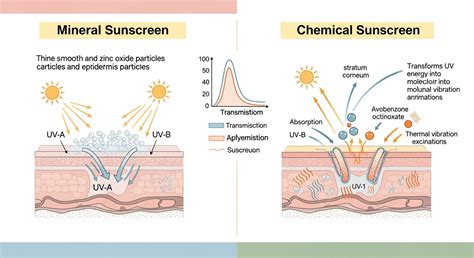
Until more is understood about the long-term effects of certain chemicals, it is advisable to avoid spray-style or aerosol sunscreens. The safest choice, according to Dr. Vij, is a mineral-based sunscreen (also known as physical sunscreen) that contains ingredients like titanium dioxide or zinc oxide. These should be broad-spectrum sunscreens, offering protection against both UVA and UVB rays.
Consumers looking to avoid specific chemicals such as avobenzone, oxybenzone, octocrylene, and ecamsule can easily do so by checking product labels. While innovations are being developed for mineral sunscreens, such as spherical silica particles combined with zinc oxide to improve UV deflection, and the potential approval of European and Canadian sunscreen ingredients that may offer more effective UVA filtering with less skin penetration, the current recommendation for safety remains with mineral-based formulations.
Covering up with protective clothing, such as long-sleeved swim shirts or rash guards, can significantly reduce the amount of sunscreen needed. Dermatologists emphasize that sunscreen should not be the sole method of sun protection; it should be part of a comprehensive sun-safety strategy.
To ensure adequate protection and minimize potential risks, consider the following:
- Choose mineral-based sunscreens with titanium dioxide or zinc oxide.
- Opt for broad-spectrum protection (UVA/UVB).
- Ensure an SPF of 30 or higher.
- Avoid aerosol or spray sunscreens due to inhalation and coverage concerns.
- Apply sunscreen generously and reapply as needed, especially after swimming or sweating.
- Supplement sunscreen use with protective clothing, hats, and seeking shade.