The art of collage, with its ability to recontextualize, reimagine, and remake existing material, has been a powerful medium for Black artists to rewrite and subvert histories and challenge longstanding archetypes. This technique, recorded as early as 200 BCE in China, has a rich history spanning diverse art movements from Cubism to Pop Art, remaining prevalent in contemporary art practice today.
Pioneering Figures in Black Collage
Romare Bearden stands as a foundational figure in the history of Black collage artists. For Bearden, collage was more than an artistic technique; it was a profound method of storytelling and a tool for social commentary. In an era marked by displacement, migration, systemic racism, and cultural transformation, Bearden utilized scissors and paper to reassemble fragmented realities, turning collage into a powerful engine of cultural critique and historical reconstruction.
Bearden's artistic philosophy was deeply influenced by modernist techniques, particularly Cubism and Dadaist photomontage. Like Picasso, he fractured the human figure into geometric forms, allowing multiple perspectives to coexist. However, Bearden infused these forms with the profound weight of the Black experience. His collages often mirrored the African American experience: one of displacement met with reformation, of identities formed under constraint yet bursting with creativity.
His work, such as “The Block” (1971), transforms everyday Harlem street life into an epic narrative. Layered storefronts, barbershops, tenement windows, and church steps form an urban symphony, with each panel resembling a stanza in a long poem. In series like “Prevalence of Ritual” (1964), Bearden drew upon biblical imagery, African traditions, and Black American history to create archetypal scenes that echoed the rhythms of the rural South and the pulse of Northern cities.
The fragmentation that became a dominant visual and cultural motif after WWII was not merely a stylistic choice for Bearden but a lived reality. His collages, like “Train Whistle Blues” (1964), a monochrome photostat collage, captured Black figures in transit-physically, emotionally, and historically. The train motif symbolized both escape and exile, migration and loss. Through such works, Bearden transformed fragmentation into form, demonstrating that his collages were not about restoration to a pre-broken state.
Bearden's art was also quietly but profoundly political. Without overt slogans, he offered visual resistance to dominant narratives that excluded or distorted Black life. His use of collage itself was radical, signaling that Black identity, like the medium, is constructed, layered, and constantly evolving. He refused to present his subjects as static stereotypes or idealized icons. In “Baptism” (1964), the central figure is assembled from fragments, each speaking to ancestral memory, bodily presence, and spiritual awakening.
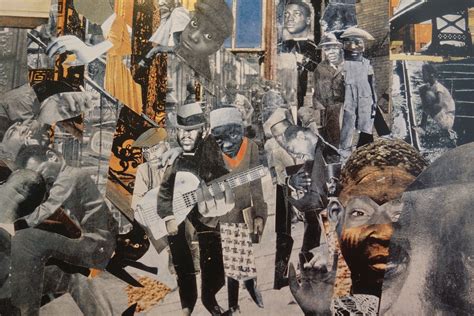
Bearden's “Profile Series”, first presented in 1979, was significant for being the first time he arranged memories from his life in serial form and used captions to amplify the visual and emotional experience of his work. This series, which features works like “Profile/Part I, The Twenties, Pittsburgh Memories, Farewell Eugene” (1978) and “Profile/Part I, The Twenties, Pittsburgh Memories, Mill Hand’s Lunch Bucket” (1978), draws on personal memories, offering impressions and snippets rather than a single, linear storyline. As Stephanie Heydt, Margaret and Terry Stent Curator of American Art at the High Museum of Art, notes, “Bearden is pushing back against the narrative conventions of autobiography and asking us to consider how memory actually works.”
The exhibition “Something Over Something Else: Romare Bearden’s Profile Series” at the High Museum of Art in Atlanta reunited more than 30 of these collages for the first time in nearly 40 years, arranged as Bearden originally intended.
Contemporary Black Collage Artists and Their Techniques
The legacy of artists like Bearden continues to influence contemporary Black collage artists, who are exploring the medium in diverse and expansive ways to address modern issues of systemic racism, identity, and cultural hybridity.
"Multiplicity: Blackness in Contemporary American Collage" Exhibition
The exhibition “Multiplicity: Blackness in Contemporary American Collage” at the Frist Art Museum in Nashville, Tennessee, highlights the rich yet understudied subject of collage by Black artists. Featuring approximately 80 works by 52 intergenerational living artists, the exhibition explores the breadth and complexity of Black identity and experiences in the United States.
The artists in “Multiplicity” utilize collage to express the endless possibilities of Black-constructed narratives, despite a fragmented society. By assembling pieces of paper, fabric, and other often-salvaged or repurposed materials, they create unified compositions. The exhibition is structured around seven themes, including personal and collective history, regional or national heritage, and gender and sexual orientation, in addition to racial constructs.
“Although it is a nearly ubiquitous art form used by elementary school students to the biggest names in modern art history-Pablo Picasso, Georges Braque, Hannah Höch, Max Ernst, and Robert Rauschenberg-twenty-first-century collage is an arguably understudied and undervalued medium, especially in museum exhibitions,” notes Delmez in the exhibition catalogue introduction.
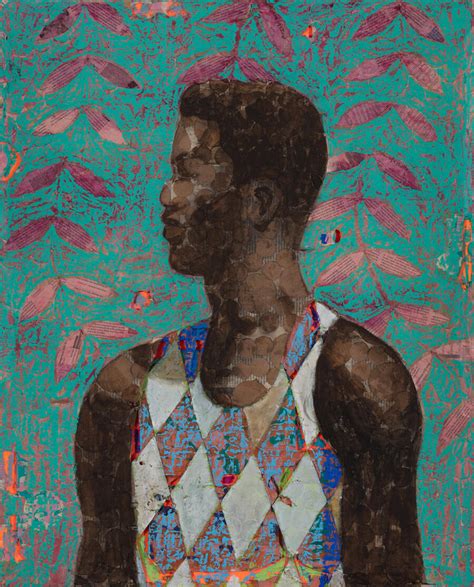
Themes and Techniques Explored in Contemporary Collage
- Fragmentation and Reconstruction: Many artists gather existing materials-magazines, photographs, books, newspapers, and maps-to form their compositions.
- Excavating History and Memory: Artists use historic photographs and publication clippings to highlight overlooked or lost narratives and link them to the present.
- Cultural Hybridity: Works explore the blending of different cultural influences.
- Notions of Beauty and Power: Artists challenge traditional ideals of beauty by inserting bold Black women into their compositions.
- Toward Abstraction: Some artists create layered and deeply personal abstractions with various materials, sometimes incorporating personal documents like birth certificates.
- Digital Collage: The exhibition also expands the definition of collage to include digital stitches, reflecting the evolution of the medium in a digitally saturated environment. Artists like Kahlil Robert Irving piece together hundreds of digital images for large-scale wallpaper installations.
The artists featured in “Multiplicity” build upon the legacy of African American artists such as Romare Bearden. Contemporary artists employ a range of techniques, from traditional cutting and pasting to complex layering of materials and digital creation. For some, collage is their principal strategy; for others, it represents a branch or chapter in their wider practice.
Artists and Their Contributions
- Deborah Roberts uses collage and mixed media to depict the complexity of Black subjecthood, exploring themes of race, identity, and gender politics. Her work reflects the challenges young Black children face in building identity against social constructs.
- Lorna Simpson examines Black womanhood through her distinctive approach to conceptual photography and film, combining images and text. Her collages often feature portraiture, tableau, and repetition, subverting traditional artistic techniques to underline the objectification of Black bodies throughout history.
- Wangechi Mutu reflects on sexuality, femininity, ecology, and politics. Her work often features hybridised female figures, exploring and subverting cultural preconceptions of the female body.
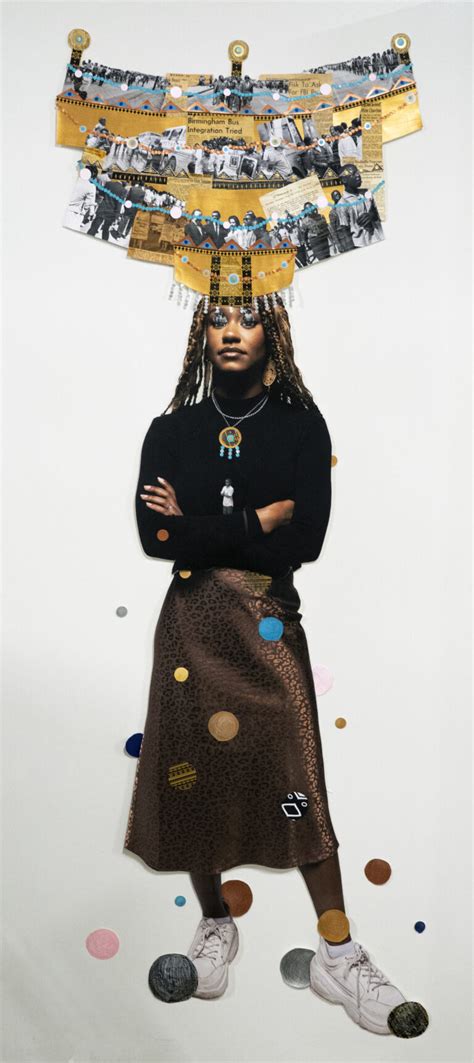
- Helina Metaferia incorporates newspaper clippings, including headlines about integration efforts and demonstrations following the assassination of Martin Luther King, Jr., into her collaged headdresses.
- Narcissister’s untitled Kingston NY Collage Series uses cutouts from magazines and art catalogs to create dizzying arrays of facial features, hiding the person’s face beneath.
- Kandis Williams creates collages composed of appropriated images of Black dancers, exploring “anti-Black sentiments” within dance in Europe.
- Lester Julian Merriweather in his “#BetterGardensandJungles” series, presents dense agglomerations of cut-up images of trees and ferns, with tiny Black heads and body parts visible, critiquing the willful ignorance of realities beyond idealized domesticity.
- Tay Butler in “Hyperinvisibility” (2022), remixes shots of Black basketball players, fragmenting them into dismembered limbs to comment on representation.
- Jamal Cyrus’s “Jet Auto Archive-April 27, May 11, May 25, 1992 (Medicated L.A. Kente)” (2018) intersperses strips from ads and articles from Jet magazine, weaving them together and adding his own texts as a form of “medication” for the mined archive.
- Frida Orupabo synthesizes fragments of bodies to reconstruct narratives and imagine new configurations of subjectivity, often focusing on Black women.
- Raphaël Barontini combines photography, silkscreen printing, painting, and digital prints to pay homage to legacies of liberation movements, challenging postcolonial history.
Black Art: A Brockman Gallery Legacy | Artbound | Season 15, Episode 4 | PBS SoCal
Historical Context and Influence
Historically, the Western art canon has often overlooked the contributions of Black artists working in collage. White Cubist artists like Georges Braque and Pablo Picasso were inspired by African tribal art, a fact that highlights the global and cross-cultural influences on the medium.
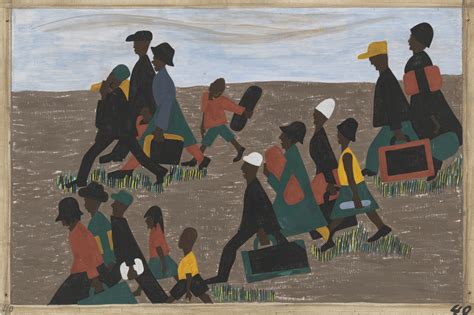
The Federal Art Project (FAP) in the mid-1930s played a role in art education, with artists like Jacob Lawrence attending classes at the Harlem Community Art Center. Lawrence, who pictorialized the history of Black people in America, found the cubist collage aesthetic fitting for epic narratives. He noted that cubism, developed after French artists discovered African art, possessed "strength without being brutal, sentiment without being sentimental, magic but not camouflage, and precision but not tightness."
Lawrence’s work, like his series on Harriet Tubman, employed a rhythm of images and captions drawn from history and anecdotes, suggesting "cause and effect" and the "call and response" traditions of the Black church. His nonacademic method of conceiving pictures as design structures, using descriptive lines, patterns of light and dark, and a limited palette, influenced his expressive cubism.
The legacy of Bearden and other foundational figures like David C. Driskell and Sam Middleton continues to inspire contemporary artists. A related exhibition of African American artists working in collage during the mid-twentieth century, including Bearden and Driskell, was presented at Fisk University’s Carl Van Vechten Art Gallery.
Artists Ben Jones and Amani Lewis, showcased at the August Wilson African American Cultural Center, represent an intergenerational legacy of Black collage artists. Jones, whose practice spans fifty years, draws from the Black Arts Movement, socialist theory, and African spirituality. Lewis, an emerging artist, explores Black humanity in the age of social media, inspired by her generation's experiences.
Both Jones and Lewis cite Romare Bearden's work in collage as a significant source of inspiration. Bearden's "Black Venus" (1968) afforded him creative freedom from figuration while reconstructing a counternarrative of Black subjectivity during the Civil Rights era. Lewis's "millennial collage" intimately portrays the Black millennial generation's story, while Jones's “Resurgence - Rise Again” series aims to catalyze action against ecological disaster, racism, and late-stage capitalism.
The medium of collage provides Black artists with a framework to interpret and interrogate Black life, following the layering process pioneered by Bearden. Tracing their work back to Bearden situates their own voices within a larger historical lineage.
Collage as Resistance and Identity Formation
For contemporary Black artists, collage art is not only a medium for artistic expression but also a form of resistance and a tool for shaping identity. Dakarai Akil, a Los Angeles-based collage artist, emphasizes that Black resistance is inherent in his artwork and his identity as an artist. He resists the notion of a monolithic Black experience, stating, "We are not a monolith."
Akil's process is intuitive, describing it as a relationship between him and the paper, building the composition as he goes. He notes, "In every other medium, you can come with an idea in mind and translate it through what you’re doing... When I sit down at my desk, I have no idea what the end result is going to look like."
Collage art, defined as combining various colors, textures, shapes, photographs, text, or other materials to create a new concept, can implicate copyright rights when incorporating preexisting materials. However, artists are actively using this medium to challenge stereotypes and assert their narratives.
The Copyright Office recognizes the impact of Black artists and the role of copyright in protecting their creations. They aim to make the copyright system accessible, especially to historically underserved communities, promoting "copyright for all."
Artists like Frida Orupabo and Raphaël Barontini use collage to explore themes of identity, history, and resistance. Orupabo synthesizes body fragments to reconstruct narratives and imagine new configurations of subjectivity denied by colonial legacies. Barontini pays homage to liberation movements, challenging postcolonial history through a blend of collage techniques.
Deborah Roberts' figurative works explore the complexity of Black subjecthood, while Lorna Simpson's conceptual photography and film, combined with collage, interrogate Black womanhood and the nature of representation. Wangechi Mutu's work reflects on a wide range of societal issues, often featuring hybridised female figures.
The exhibition “Multiplicity” demonstrates how contemporary Black collage artists are not only engaging with historical legacies but also forging new paths, using the medium to express the multifaceted nature of Black identity and experiences in the 21st century. Their work serves as a powerful testament to the enduring spirit of creativity and resistance within the Black community.