The history of face cream is a fascinating journey that spans millennia, reflecting humanity's enduring desire for beauty, hygiene, and protection. While the concept of cosmetics likely predates written records, the earliest concrete evidence of their use dates back approximately 6,000 years to Ancient Egypt.
Ancient Origins: Egypt, Greece, and Rome
In Ancient Egypt, around 6000 BC, ingredients like aloe, myrrh, and frankincense were commonly used. The Egyptians held a strong belief in the anti-aging properties of these substances, particularly frankincense, which they incorporated into early forms of anti-wrinkle creams. Beyond aesthetics, ancient Egyptians understood the importance of scented oils and ointments for cleansing, smoothing the skin, and masking body odor. As early as 10,000 BC, both men and women utilized these products, viewing hygiene and well-being as intrinsically linked to cosmetics. To combat the harsh effects of the hot sun and dry winds, oils and creams were essential for skin protection.

The cosmetic customs originating in Egypt were subsequently adopted and adapted by the Greeks and Romans. Ladies in these civilizations employed a variety of substances to enhance their skin's appearance, including crocodile excrement, white lead, and chalk. They also created face masks from starch and eggs, which were believed to tighten the skin, reduce wrinkles, and maintain a youthful complexion.
The very term "cosmetic" itself is derived from the Greek word "kosmetos," meaning "adornment" or "ornament." In Rome, ointments containing resins from cypress, cedar, and incense were applied at night. For skin treatments, lead acetate (white lead) and cinnabar (a mercury compound) were utilized. Following the conquest of Carthage, figs became a popular ingredient in Rome. They were combined with banana, oats, and rose water to formulate facial creams. A significant figure in Roman skincare was Galen, who is credited with inventing the "Frigus crepito," a precursor to modern cold cream. This formulation, composed of almond oil, rose water, and beeswax, served as a skin protector.
Early Formulations and Global Spread
In China, during the Shang Dynasty (1760 BC), gels and salves were used to lighten the skin. As skincare practices migrated to Europe and the Middle East, new ingredients and techniques were developed. Early creams were often made by combining rose oil and water with liquefied beeswax. Alum was used to treat scabs, and lead acetate was employed for skin inflammation.
Creams, also referred to as topical formulations, have been a fundamental element of cosmetics since ancient times. These products are based on the techniques used in their application. Unmedicated creams are widely applied in managing various dermatological conditions. In antiquity, creams were typically prepared by mixing two or more ingredients with water as a solvent. The evolution of these formulations continued, with new fixings and techniques emerging as skincare moved across continents.
The Dawn of Modern Skincare and "Cosmeceuticals"
The concept of "moisturizer" as we understand it today is relatively modern. The term itself is a neologism coined by Madison Avenue advertisers to promote the idea that these products specifically moisturize the skin. However, the inclination to apply oily materials to the skin is an innate, almost instinctive behavior that likely dates back to the dawn of humanity. Natural substances such as honey, oils, lipids, and fibers have been used in topical treatments for wound healing since the time of the ancient Egyptians.
Initially, moisturizers were believed to prevent transepidermal water loss (TEWL) through occlusion, thereby preventing dryness and maintaining skin smoothness and elasticity. The "bricks and mortar" model of the stratum corneum (SC) explains this function: corneocytes (dead skin cells) act as bricks, while the lipid layers between them serve as mortar. The loss of these crucial intercellular lipids, including ceramides, cholesterol, and fatty acids, compromises the skin's water barrier, leading to dryness.
In 1984, Albert Kligman coined the term "cosmeceuticals"-a blend of "cosmetics" and "pharmaceuticals"-to describe products possessing both cosmetic and therapeutic benefits. As technology advances, newer approaches to cream formulation are continuously being developed, making the modern cosmetics industry vastly different from its ancient predecessors.
Categorization and Formulation of Modern Creams
Modern moisturizers can be broadly categorized into two main types based on their dispersed phase: oil-in-water (o/w) and water-in-oil (w/o) emulsions.
Oil-in-Water (o/w) and Water-in-Oil (w/o) Emulsions
- Oil-in-Water Emulsions: In these formulations, oil droplets are dispersed in a continuous water phase. They are typically lighter and easier to spread, making them suitable for oily or combination skin types.
- Water-in-Oil Emulsions: Here, water droplets are dispersed within a continuous oil phase. These creams are generally richer and provide more intense hydration and occlusion, making them ideal for dry or very dry skin.
The preparation of these emulsions involves precise steps, often requiring heating the oil and water phases separately before combining them with the aid of emulsifiers. For instance, in one method, the emulsifier and oil-soluble components are melted together at 75°C, while water and water-soluble materials are heated in a separate beaker to the same temperature. The oil phase is then gradually added to the water phase in a mortar and pestle, with trituration until a creamy consistency is achieved. Perfuming agents and preservatives are added as the mixture cools.

Quality Control and Stability Testing
The efficacy and safety of face creams are ensured through rigorous quality control and stability testing. Key parameters evaluated include:
Physical and Chemical Properties
- pH Measurement: The pH of a cream is crucial for skin compatibility. A standard digital pH meter is used, and the pH is typically calibrated with buffer solutions. Ideally, the pH of a topical preparation should align with the skin's natural pH, generally between 4.5 and 6.5.
- Organoleptic Evaluation: This involves assessing the cream's physical characteristics such as clarity, color, odor, texture, and the presence of foreign particles. Grittiness and stickiness are evaluated by rubbing the cream between fingers.
- Centrifugation Test: This test assesses the formulation's stability under centrifugal force to detect phase separation, an indicator of instability.
- Mechanical Vibration Test: Similar to centrifugation, this test evaluates stability when subjected to mechanical vibration, which can also lead to phase separation.
- Spreadability: This measures how easily a cream spreads on the skin, with shorter intervals indicating better spreadability. It is typically assessed by applying the formulation between two glass slides and measuring the area it covers under a specific weight.
- Saponification Value: This value indicates the saturation of fatty acids in the glycerol bond. An appropriate saponification value is important for formulation stability, pH, and cleaning properties. High fat content can lead to hydrolysis and rancidity.
- Density: The apparent density of a formulation is determined to assess air incorporation or the loss of volatile ingredients.
- Photostability Test: Formulations are exposed to intense light to observe any changes in physical properties like clarity, appearance, or color, and to check for liquefaction.
- Acid Value: This measures the amount of free acid, which can cause rancidity when exposed to heat or light.
- Viscosity: Viscosity is a key indicator of a cream's consistency and stability over time. It is often measured using a Brookfield Viscometer.
- Homogeneity: This assesses the uniform distribution of ingredients. It can be evaluated by visual appearance and touch, ensuring the absence of coarse particles.
- Emulsion Type Determination: Tests, such as using a dye and observing under a microscope, help determine whether the cream is an oil-in-water or water-in-oil emulsion.
Safety and Efficacy Testing
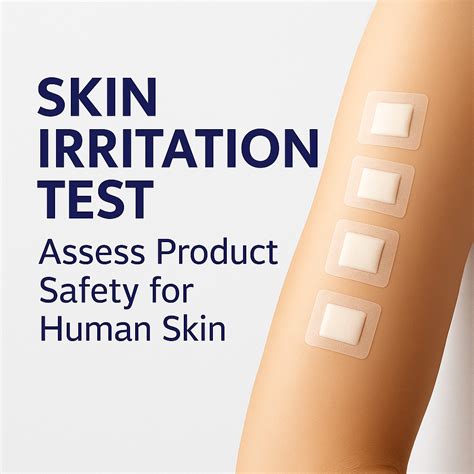
- Skin Irritation Tests: These tests are conducted to assess the potential for a formulation to cause skin irritation. They can involve applying the cream to a designated area on the skin and monitoring for erythema (redness), irritation, and edema (swelling) over a period. Animal testing, particularly on rabbits, is often performed before human trials to evaluate erythema and edema.
- Spectrophotometry: This method involves diluting formulations and analyzing them using spectrophotometry to detect instability as variations in intensity or wavelength of absorption bands.
- Microbial Contamination Test: This test assesses the microbial stability of formulations by inoculating them with bacteria and yeast cultures and incubating them to check for growth.
- Occlusivity Testing (Occlusion Factor): This measures the formulation's ability to prevent water loss from the skin. A higher occlusion factor indicates more effective moisturization and pliability of the skin. This is often assessed in vitro by measuring water flux through a filter paper on which the sample is applied.
- Accelerated Stability Testing: Following ICH guidelines, formulations are subjected to various temperature and humidity conditions over a set period to predict their shelf life and observe any changes in organoleptic characteristics and pH.
- Preference Tests: These tests focus on sensory assessment, evaluating criteria such as color, scent, and skin sensation to gauge consumer preference.
Benefits and Modern Applications of Moisturizers
Moisturizers offer a range of benefits supported by scientific evidence:
- Anti-inflammatory Action: Many moisturizers can calm inflamed skin by blocking cyclooxygenase activity, which inhibits the development of proinflammatory proteinoids. Mineral oil-based moisturizers have a mild antimitotic effect on the epidermis, beneficial for inflammatory dermatoses like psoriasis.
- Soothing and Cooling Effect: Emollients reduce itching by inhibiting cytokine development. The evaporation of water from the skin surface after applying water-based moisturizers provides a cooling sensation, contributing to an antipruritic (anti-itch) effect.
- Sun Protection: Moisturizers often incorporate sunscreens with varying Sun Protection Factors (SPF), offering photoprotective action against UV radiation.
- Improved Skin Properties: Moisturizers positively impact skin hydration, reduce friction, minimize scaling, and enhance mechanical properties.
Initial changes after applying a moisturizer are often related to its water content, leading to increased surface evaporation, decreased skin temperature, and softening. With repeated applications, changes are attributed to the lipid phase, resulting in reduced scaling, increased hydration, and subtle color alterations. Moisturizers are frequently prescribed as preventative measures and adjunct therapies for various dermatological conditions, including atopic dermatitis, where they can help reverse barrier defects and improve disease control.
Understanding Skin Moisturization by Dermatologist Angela Casey MD
The journey of face cream from ancient balms to sophisticated cosmeceuticals highlights a continuous quest for solutions that enhance skin health and appearance. Today's products are designed to meet the specific needs of diverse skin types, emphasizing transparency and sustainability, a modern evolution of an age-old practice.