In the realm of advanced skincare, Precision Skin & Body Institute offers a variety of treatments designed to help patients achieve their best look and feel. Among these is the chemical peel, a versatile procedure that addresses the skin's overall appearance rather than targeting a single area.
What is a Chemical Peel?
A chemical peel is a professional skin treatment that exfoliates and resurfaces the skin using safe, targeted acids and botanicals. Colloquially referred to as chemoexfoliation, it is a method of controlled cutaneous ablation induced by specific caustic agents. This process allows for rapid, predictable, and uniform thickness of chemoablation to a desired cutaneous depth, ultimately resulting in an improved clinical appearance of the skin.
The caustic agents used in chemical peels cause controlled keratocoagulation and denaturation of proteins within the epidermis and dermis. This triggers a cascade of normal healing signals, including the stimulation, development, and deposition of new dermal collagen and elastin, reorganization of structural scaffold proteins and dermal connective tissue, and regeneration of new keratinocytes. The outcome is a rejuvenated and thickened epidermis, along with an increase in dermal volume. Simultaneously, the keratocoagulation and subsequent exfoliation lead to the improvement of superficial and medium-depth dyspigmentation.
At Precision Skin & Body Institute, a chemical peel can be applied to the face, neck, or hands. A fruit acid solution is applied to the skin, prompting the top layer to react and reveal a fresh layer of healthy, glowing skin underneath.
How Chemical Peels Work
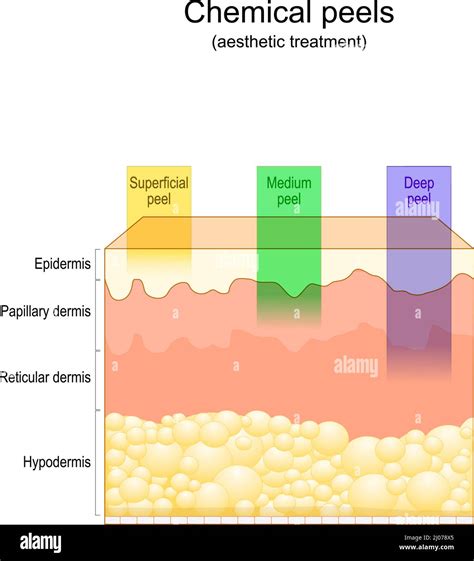
The core principle behind chemical peels is the controlled injury to the skin's outer layers using a chemical solution. This process causes the skin to shed dead cells, revealing newer, healthier skin cells beneath. The depth of the peel determines the extent of the exfoliation and the types of concerns it can address.
Types of Chemical Peels by Depth
Chemical peels are categorized into three main types based on the depth of the wound created:
Superficial Peels
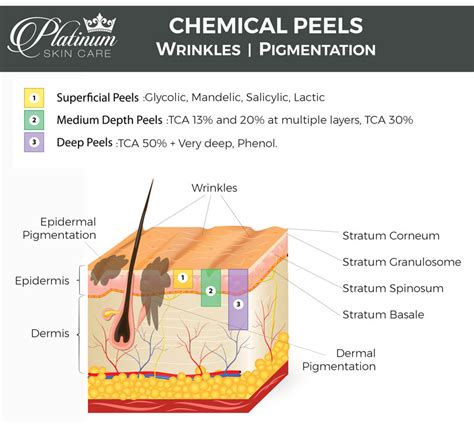
Superficial peels penetrate only the epidermis. The goal of these peels is to treat conditions confined to the epidermis, while minimizing recovery downtime and the risk of side effects. They result in controlled keratocoagulation and liquefaction of cells within the epidermis, ranging from mild exfoliation of the corneal cell layer down to the basal cell layer.
- Indications: Mild hyperpigmentation, mild-to-moderate chrono- and photoaging, fine rhytides, melasma.
- Downtime: Little to no downtime required.
- Common Agents: Glycolic acid, lactic acid, mandelic acid, and over-the-counter formulations with mild fruit-derived acids.
Medium-Depth Peels
Medium-depth peels affect the entire epidermis and the papillary dermis. These peels allow for controlled keratocoagulation through the dermis and into the papillary dermis, resulting in deeper regenerative changes that can target pathology within both the epidermis and the superficial dermis. They can often be performed in a single setting.
- Indications: Fine rhytides, chronic actinic photodamage, superficial hyperpigmentary disorders (e.g., melasma), superficial acne scars, and actinic premalignant changes.
- Downtime: Requires more careful recovery and healing compared to superficial peels.
- Common Agents: Trichloroacetic acid (TCA) at specific concentrations, often in combination with other agents.
Deep Peels
Deep peels allow for controlled tissue injury to the level of the midreticular dermis, and sometimes the subcutis if not used properly. These peels can support dramatic results but are associated with greater risks of side effects and complications, as well as special needs for recovery and healing.
- Indications: More severe skin concerns such as scars, deeper wrinkles, and stubborn pigmentation.
- Downtime: Significant recovery and healing period.
- Common Agents: Phenol is typically used for deep peels.
Factors Influencing Peel Depth
The depth of a chemical peel is dictated by several factors:
- Type of caustic chemical used
- Concentration of the chemical agent
- Mode and number of applications (layers or "passes")
- Skin type of the patient
- Dermatologic condition being treated
- Duration of exposure
Depth of chemoexfoliation is cumulative dose-dependent; a single application allows for a more superficial level of exfoliation, while subsequent multiple layers or "passes" result in deeper peeling. It's important to note that multiple applications of a superficial peel do not equate to a single application of a medium-depth peel.
Commonly Used Chemical Peeling Agents
Various chemical agents are used for peels, each with unique properties and indications:
Alpha Hydroxy Acids (AHAs)
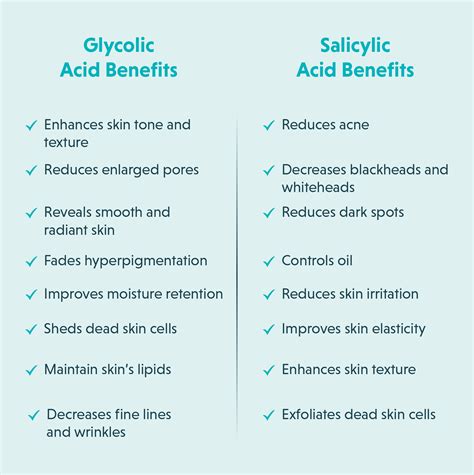
- Glycolic Acid: Derived from sugar cane, it is the smallest and simplest AHA. When used appropriately, superficial exfoliation with glycolic acid at concentrations of 30-50% is effective for superficial hyperpigmentation, mild-to-moderate aging, and fine rhytides. It's often a first-line choice for melasma. Concentrations typically range from 20-50%, with higher concentrations (70%) entering the medium-depth category. Glycolic acid is non-self-neutralizing and requires neutralization with an alkaline agent.
- Lactic Acid: Structurally similar to glycolic acid but with a lower pKa and pH, allowing for efficient chemoexfoliation at lower concentrations. It demonstrates comparable efficacy in treating photodamage, superficial hyperpigmentation, and fine rhytides. Its lower pH allows for favorable side effect profiles and recovery times.
- Mandelic Acid: Similar to lactic acid, it offers effective exfoliation with a favorable side effect profile.
Beta Hydroxy Acids (BHAs)
- Salicylic Acid: A lipophilic agent that penetrates easily through the lipid barriers of the epidermis. It is highly effective for treating cutaneous disorders involving excess sebum production, such as acne vulgaris. 30% salicylic acid is considered a gold standard superficial peel for acne. It exhibits a potent cumulative dose effect, meaning multiple layers can lead to deeper penetration. Salicylic acid is self-neutralized by the skin's own lipoproteins.
Other Agents
- Pyruvic Acid: The smallest alpha-keto acid, possessing both lipophilic and keratolytic properties. It has similar applications to salicylic acid for acne and photoaging but is generally not as efficacious for acne due to lower lipophilicity. Pyruvic acid is not self-neutralizing and requires alkaline neutralization.
- Trichloroacetic Acid (TCA): A common agent for medium-depth peels. When used appropriately, it is effective for fine rhytides, photodamage, hyperpigmentation, and actinic premalignant changes.
The Chemical Peel Procedure
The chemical peel process at Precision Skin & Body Institute typically involves several key steps:
1. Consultation
This is the initial and most crucial step. You will meet with a skincare professional to discuss your skin goals, concerns, and medical history. Based on your specific needs, skin type, tone, and desired outcomes, the provider will recommend the most suitable type of peel (light, medium, or deep).
2. Pre-Peel Preparations
Your provider may recommend specific skincare steps to prepare your skin for the peel. This could include avoiding sun exposure, certain exfoliating products, and retinoids for a few days prior to your appointment.
3. Treatment
During the procedure, a chemical solution is applied to your skin. You might experience mild tingling or a slight burning sensation, which is common and usually lasts for a short duration during the treatment. The solution works by exfoliating and sloughing off the outer layers of your skin. Treatment times vary depending on the depth of the peel, typically ranging from ten minutes for lighter peels to two hours for deeper treatments.
A key indicator of peel depth during the application is "frosting," where the skin turns white. Level I frosting appears as erythema with a stringy or patchy light frosting, while Level II frosting presents as a uniform, white-coated frosting with underlying erythema. For medium-depth peels, Level II to III frosting is often the goal.
4. Post-Treatment Care
Immediately following the peel, your skin may appear red and feel sensitive, which is a normal sign that the process is working. You will receive detailed aftercare instructions from your skincare specialist. This typically includes moisturizing the skin, avoiding direct sunlight, and applying SPF daily. For deeper peels, a thick coat of heavy moisturizer may be applied and left on for a couple of days to protect the fresh, sensitive new skin.
5. Peeling and Healing
Over the next few days, your skin will begin to peel as the outer layers shed, revealing smoother, brighter skin underneath. It is important not to pick or peel at your skin, allowing it to heal naturally for the best results. This peeling phase usually involves redness followed by scaling that ends within three to seven days for superficial peels.
6. Radiant Results
Once your skin has fully healed, you will notice a fresh, glowing complexion. Whether you were treating stubborn spots, fine lines, or dull skin, the results can significantly boost your confidence.
Chemical Peel Aftercare: Care For Your Skin To Ensure Best Results
Chemical Peels vs. Laser Resurfacing
While both chemical peels and laser resurfacing aim to rejuvenate the skin, they employ different mechanisms and yield distinct outcomes:
| Feature | Chemical Peel | Laser Resurfacing |
|---|---|---|
| Method | Exfoliates skin using a chemical solution. | Uses light energy to precisely remove the top layer of skin. |
| Primary Uses | Treat sun exposure, acne, fine wrinkles, freckles, irregular textures, and blemishes. | Reduce wrinkles, scars, improve skin tone and texture, treat acne scars, blotches, and dark spots. |
| Procedure | Chemical solutions applied and washed off; often performed by a medical aesthetician. | Laser precisely removes skin layer by layer; typically done by a dermatologist. |
| Side Effects | Redness, swelling, burning. Dry, flaky peeling for 1-2 weeks. | Redness, swelling, itching. |
| Average Cost | $150 - $300 | $500 - $1,500 |
Laser skin resurfacing is ideal for patients looking to address acne scars, wrinkles, and textural irregularities with precision. Chemical peels, on the other hand, are versatile for improving overall skin clarity, smoothness, and luminosity by shedding dead skin cells responsible for dullness.
Important Considerations
It is crucial to protect your skin from the sun following either a chemical peel or IPL treatment. Staying out of direct sunlight for one to two weeks (depending on treatment intensity) is highly recommended to prevent complications and ensure optimal healing.
"Chemical peel" does not imply harmful or synthetic substances; they are powerful, safe, and restorative treatments when performed correctly by qualified professionals.
The effectiveness of a chemical peel depends on tailoring the treatment to each patient's specific concerns, their ability to tolerate the recovery period, and their Fitzpatrick skin type. Realistic expectations should always be discussed with your provider.
For instance, while chemical peels can improve superficial and medium-depth issues, deep rhytides, laxity of the jowls, and actual ptosis are unlikely to respond well to chemical peeling and may require surgical intervention.
Meet Our Experts
At Precision Skin & Body Institute, our team of board-certified dermatologists brings extensive expertise to skincare treatments:
- Dr. Lesley Clark-Loeser, MD, FAAD: Co-founder, with extensive training in dermatology and dermatopharmacology.
- Dr. Marianna Blyumin-Karasik, MD: Co-founder, specializing in cosmetic, medical, and integrative dermatology, and creator of StaminaÂ®ï¸ Cosmetics.
- Dr. Jordan D. Rosen: Board-certified dermatologist with a passion for medical, surgical, and cosmetic dermatology.
These professionals are dedicated to providing personalized care and utilizing the most effective treatments, including a wide array of chemical peels, to help you achieve your desired aesthetic improvements.
Patient Testimonial
Chelsea, a patient who has undergone regular chemical peels for acne, shared her transformative experience: "I have always suffered from spots, and nothing I was doing was really making a difference... a skincare regime which includes regular chemical peels, that have made a HUGE difference - the change is phenomenal. I am so chuffed with how my skin looks now. I feel so much better mentally as well as looking better. It's changed my life."
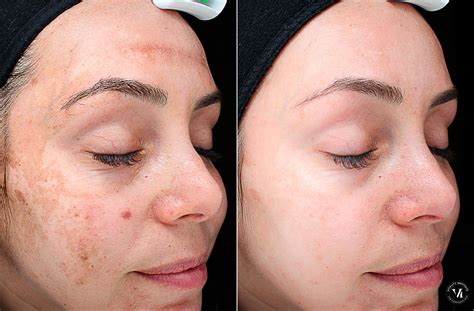
Chelsea's positive experience highlights the significant impact chemical peels can have on both skin appearance and self-confidence. She later pursued other aesthetic treatments, emphasizing the importance of trusting a medically qualified and well-trained practitioner.
Are you ready to achieve glowing, rejuvenated skin that feels as amazing as it looks? A chemical peel might be the way to go! At Precision Skin & Body Institute in Davie, Florida, we tailor treatments to your unique needs. Call us at (954) 998-0345 to schedule your consultation today.