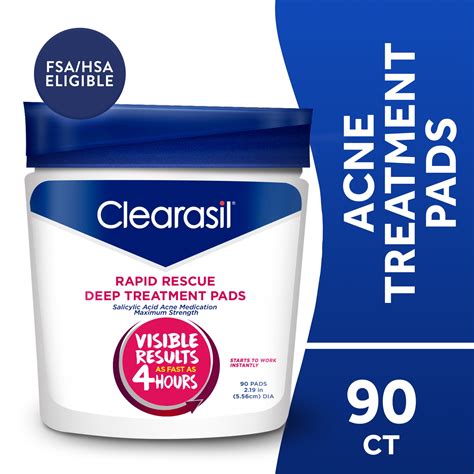
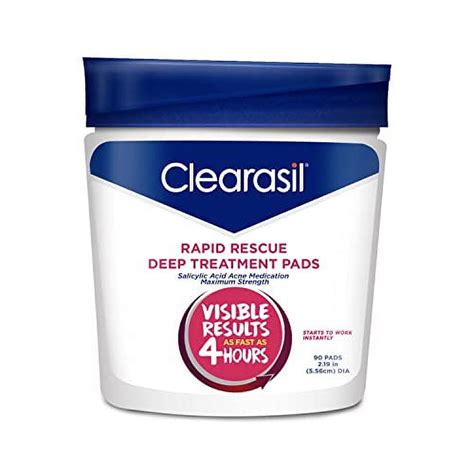
Clearasil Pads are a popular skincare product that has gained significant positive feedback for its effectiveness against common skin problems. The active ingredient in most Clearasil pads is salicylic acid, a well-known exfoliant and anti-inflammatory agent.
Understanding Clearasil Pads and Their Benefits
Clearasil offers several types of pads, each designed with specific benefits:
- Clearasil Deep Cleansing Wipes: These are designed to lift away impurities and make-up from the skin, providing a thorough cleanse.
- Rapid Action Pads: As the name suggests, these are known for their fast-acting properties, aiming to deliver quick results.
- Deep Pore Cleansing Pads: These are specifically formulated to reduce the size and redness of pimples within a 4-hour timeframe.
- Pore Cleansing Pads: Geared towards achieving clearer and smoother facial skin, these pads also offer an exfoliating action that helps to banish dead skin cells and impurities.
Key Ingredient: Salicylic Acid
The chief ingredient in Clearasil pads is salicylic acid, typically at a 2% concentration. Salicylic acid is a beta-hydroxy acid (BHA) that is oil-soluble, allowing it to penetrate deep into the pores to dissolve sebum and dead skin cells. This action helps to prevent clogged pores, which are a primary cause of acne. Furthermore, salicylic acid possesses anti-inflammatory properties that can help reduce redness and swelling associated with breakouts.
Active Ingredients: Salicylic Acid (2% or 1.9%)
Purpose: Acne Medication
How to Use Clearasil Pads Effectively
To maximize the benefits of Clearasil pads, follow these usage instructions:
- Cleanse Thoroughly: Begin by cleaning your skin thoroughly before applying the product.
- Application: Wipe a pad over the affected area, ensuring that the entire area is covered with a thin layer of medication. It is important to wipe the entire affected area to ensure the pad's medication is evenly distributed.
- Frequency: Start with one application daily. Because excessive drying of the skin may occur, gradually increase to 2 or 3 times daily if needed, or as directed by a doctor. If bothersome dryness or peeling occurs, reduce the application to once a day or every other day.
- Drying: Allow the skin to dry completely after application.
- Post-Application: Always let Clearasil fully absorb into your skin before applying any moisturizers.
- Disposal: Clearasil pads are intended for single use only, so make sure to throw used pads away. After use, wash your hands to remove any acne medication from your hands.
Important Warnings and Precautions
When using Clearasil pads, it is crucial to be aware of the following warnings:
- External Use Only: Clearasil pads are for external use only.
- Avoid Eye Contact: Avoid allowing the pads to come in contact with the eyes. If product gets into the eyes, rinse thoroughly with water.
- Sun Sensitivity: Salicylic acid can make your skin more sensitive to the sun. Keep out of the sun and avoid using sun lamps or tanning beds/booths. If you cannot avoid sun exposure, wear protective clothing and sunscreen.
- Drug Interactions: It is advisable to use only one topical acne medication at a time. If you are using Clearasil pads concurrently with other anti-acne medications, you may experience negative side effects, such as increased skin irritation and dryness. If irritation occurs, limit use to one topical acne medication at a time.
- Discontinue Use If Necessary: If Clearasil makes your acne worse or irritates your skin, you should stop using it immediately and consult your doctor.
- Flammability: The product is flammable until dry. Keep away from extreme heat or open flame.
- Keep Away From Children: Keep Clearasil Pads out of reach of children.
Storage and Disposal
Storage: Clearasil Pads should be stored at room temperature, away from direct sunlight and moisture. Keep the container tightly closed.
Disposal: Get rid of medications that are no longer needed or have expired by taking them to a medication take-back program. Check with your pharmacy or law enforcement to find a location. If a take-back program is not available, mix the medication with undesirable substances like cat litter, dirt, or coffee grounds, seal the mixture in a bag or container, and then dispose of it in the trash. Do not flush down the toilet unless specifically instructed to do so.
Understanding Potential Side Effects
While Clearasil pads are generally safe for use, some side effects may occur:
- Side effects to report to your care team: Allergic reactions (skin rash, itching, hives, swelling of the face, lips, tongue, or throat), burning, itching, crusting, or peeling of treated skin.
- Side effects that usually do not require medical attention: Mild skin irritation, redness, or dryness. If these symptoms continue or are bothersome, report them to your care team.
This list may not describe all possible side effects. Call your doctor for medical advice about side effects.
Inactive Ingredients
The inactive ingredients in Clearasil pads can vary slightly depending on the specific product formulation. Common inactive ingredients include:
- Water
- Alcohol Denat.
- Glycerin
- Isoceteth-20
- Hydrogenated starch hydrolysate
- Sodium Hydroxide
- Fragrance
- Various plant extracts (e.g., Lavandula Stoechas Extract, Helichrysum Italicum Extract, Cistus Monspeliensis Extract)
- Disodium EDTA
- Aloe Barbadensis Leaf Juice
- Triethanolamine
- Allantoin
- Menthol
- Potassium Sorbate
- Sodium Benzoate
- Citric Acid