What is Hyperpigmentation?
Disorders of skin darkening, also known as hyperpigmentation, are one of the most common complaints in dermatology offices. Hyperpigmentation refers to skin that darkens in comparison to its natural color. Based on your skin complexion, these areas can appear brown, tan, pink, gray, black, or even purple.
This may occur due to hereditary factors, medical conditions, medications, and external influences. If you have any areas of hyperpigmentation that are more than one color, or that do not respond to treatment, make an appointment with a dermatologist.
Common Causes of Hyperpigmentation
The most common cause of hyperpigmentation is sun exposure. The body darkens the skin to protect it from harmful ultraviolet radiation.
Other causes can include:
- Hereditary factors
- Medical conditions
- Medications
- External influences
- Previous skin trauma (such as burns, wounds, acne, or skin rashes)
Types of Hyperpigmentation
The most common types of hyperpigmentation are harmless skin spots that can occur during childhood, pregnancy, or develop with age. Other types can be due to underlying disorders or previous skin trauma.
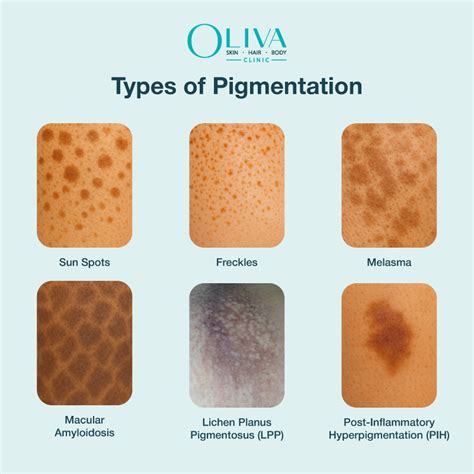
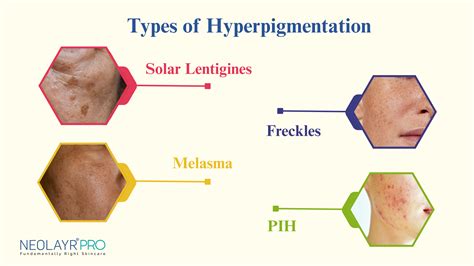
Freckles (Ephelides)
Also called ephelides, these are small tan or brown spots that usually develop in childhood on sun-exposed skin.
Age Spots (Solar Lentigines)
These spots vary from tan to dark brown and are larger than freckles.
Melasma
Usually occurring in females in their 20s and 30s, this condition causes irregular dark patches to occur on the face.
Maturational Hyperpigmentation
Usually affecting the sides of the face, this type of hyperpigmentation refers to gradual darkening of sun-exposed skin in people with darker skin complexions.
Periorbital Hyperpigmentation
This term refers to dark circles or discoloration around the eyes.
Acanthosis Nigricans
A condition that causes darkening of the skin in areas that rub together, such as the armpits, groin, and back of the neck.
Post-Inflammatory Hyperpigmentation (PIH)
Discoloration due to skin inflammation or injury, such as burns, wounds, acne, or skin rashes.
Treatments for Hyperpigmentation
The face is one of the most common areas in which hyperpigmentation occurs. The specific location depends on the type of hyperpigmentation.
Topical therapies (creams and lotions applied to the skin) are the most common treatment option for hyperpigmentation.
Certain vitamins and antioxidants can also be helpful for hyperpigmentation. These include vitamins A, B, C, and E, obtained either from food or supplements.
If your hyperpigmentation is due to a medical condition, your doctor may be able to prescribe medications to help.
Always contact your doctor before beginning any new medication or treatment.
When to See a Dermatologist
A dermatologist is a medical doctor who specializes in treating the skin, hair, and nails. You should make an appointment with a dermatologist if you have any areas of hyperpigmentation that are:
- More than one color
- Do not respond to treatment
Dermatologists can help diagnose the cause of hyperpigmentation and recommend the most effective treatment plan. You can search by location, condition, and procedure to find the dermatologist that’s right for you.