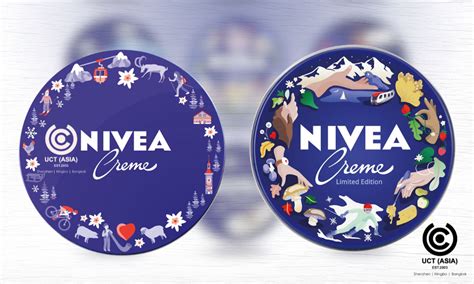
NIVEA is a distinguished German personal care brand, specializing in skin and body care products. It is a subsidiary of the Hamburg-based company Beiersdorf Global AG, which also owns the Eucerin brand. The origins of NIVEA trace back to the late 19th century and the pioneering work of Paul Beiersdorf.
Foundations of Beiersdorf AG
Paul Beiersdorf established Beiersdorf AG on March 28, 1882. His initial venture involved collaborating with dermatologist Paul Gerson Unna to produce gutta-percha plasters based on Unna's patent. This collaboration laid the groundwork for modern plaster technology.
In 1890, pharmacist Oscar Troplowitz took over the company. He continued the collaboration with Unna, who recommended Isaac Lifschütz, the inventor of the lanolin-based emulsifier Eucerit. This innovative emulsifier was patented in 1900.

The Birth of NIVEA Creme
The year 1911 marked a pivotal moment with the introduction of NIVEA Creme. This product was the world's first stable water-in-oil emulsion. The development of NIVEA Creme was made possible by the invention of Eucerit, a groundbreaking emulsifier developed by Dr. Isaac Lifschütz. Eucerit possesses the remarkable ability to create a stable mixture of oil and water. Pharmacist and entrepreneur Dr. Oscar Troplowitz recognized its immense potential and, in collaboration with dermatologist Prof. Paul Gerson Unna, developed what is often referred to as "the mother of all creams."
The name "NIVEA" itself is derived from the Latin words "nix" and "nivis," meaning "snow," a nod to the cream's snow-white color. Following the immense success of NIVEA Creme, the product range rapidly expanded to include talc, soap, and hair milk.
The stable formula of NIVEA Creme proved ideal for long-distance travel, enabling its expansion into international markets. Just three years after its launch, NIVEA Creme was available on every continent, with 42 percent of its sales generated abroad.
Expansion and Diversification
Throughout the early to mid-20th century, Beiersdorf continued to innovate and expand its product offerings. In 1909, the company launched Labello, the first lip care product presented in a sliding tube. By 1922, Willy Jacobsohn assumed leadership as the chairman of the executive board of the newly formed stock corporation.
The company's shares were first listed on the Hamburg stock exchange in 1928. However, the Nazi era presented challenges. In 1933, under pressure from Nazi propaganda, Jewish members of the executive board stepped down. The company navigated the Nazi period by adopting a policy of "honorable tactics" under the leadership of Carl Claussen.
The aftermath of World War II saw Beiersdorf facing significant losses. The "NIVEA" trademark was expropriated in many countries, and the company lost most of its affiliates and international trademarks, particularly in the US, the UK, the Commonwealth, and France. Beiersdorf gradually repurchased these rights after the war.
The post-war years were marked by the introduction of new products. In 1950, ph5 Eucerin was launched, followed by the first deodorizing soap, 8x4, in 1951. Beiersdorf further diversified its business in 1974 by introducing a divisional structure.
Marketing and Advertising Milestones
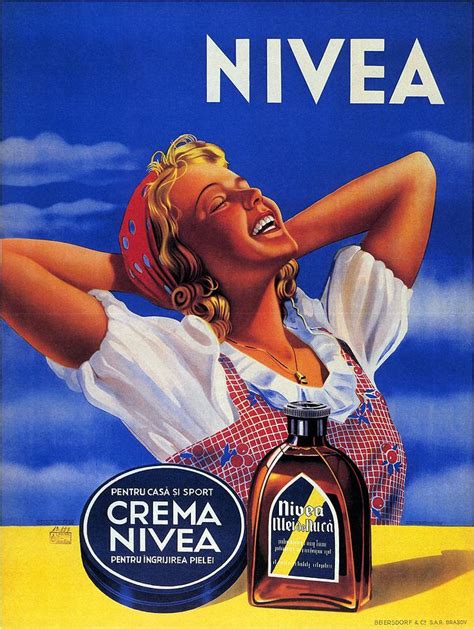
NIVEA's advertising campaigns have played a crucial role in its brand recognition. In 1924, the NIVEA Boys, three young brothers, became the new stars of NIVEA advertising, embodying a cheerful and fresh image. Later, in 1925, NIVEA launched a nationwide search for the "NIVEA Girls," seeking healthy, natural, and fresh-faced young women, which generated significant public interest.
The brand continued to evolve its advertising to reflect societal changes. In 1992, NIVEA launched its influential "Blue Harmony" advertising campaign. The company also expanded its brand portfolio through acquisitions, such as the Futuro brand in 1995 and Florena in 2002.
Adapting to Changing Needs and Controversies
NIVEA has consistently adapted its product development and marketing to meet evolving consumer needs. Recognizing the growing popularity of sports and leisure activities, and a shift away from the traditional pallid complexion towards a desire for vitality and a light tan, NIVEA developed products like the Ultra-Oil Spray in the 1950s.
The brand also addressed the increasing assertiveness of women in the 1960s by introducing NIVEA Milk, a revolutionary "liquid cream" that was easily absorbed and provided intense moisturization. The launch of the "Baby Fine" range catered to the needs of delicate baby skin during the baby boom.
In 1980, NIVEA set a trend with its alcohol-free Aftershave Balm, catering to the growing demand for men's grooming products. This was followed by the establishment of the NIVEA MEN line in 1986, offering the first comprehensive skincare range specifically for men.
As society aged and emphasized quality of life, NIVEA responded by developing skincare lines for mature skin, specifically addressing the needs of women over 50. The brand also embraced technological advancements, using computer and imaging techniques to gain deeper insights into skin structure and function, leading to the development of creams with ingredients found in the skin itself.
In recent decades, NIVEA has focused on convenience and addressing modern lifestyle demands. Innovations like NIVEA Invisible Black & White deodorant (launched in 2011), which minimizes residue on clothing, and the In-Shower Body Lotion (introduced in 2014) exemplify this focus.
NIVEA has also faced controversies. In 2011, the brand was fined $900,000 by the US Federal Trade Commission for making false claims about its "NIVEA My Silhouette!" product's ability to help consumers slim down. More recently, in 2019, NIVEA's long-time advertising agency, FCB, ended its relationship with the company, reportedly due to NIVEA's rejection of an advertisement featuring two men's hands touching, with a NIVEA executive allegedly stating, "we don't do gay at NIVEA."
A Brief History of Advertising by ABF Pictures
The Enduring Legacy of NIVEA Creme
Today, NIVEA has evolved into a vast brand family with over 500 products. However, the iconic NIVEA Creme tin remains a symbol of the brand's heritage. While formulations may vary by region, with some consumers expressing a preference for the original German-made version due to its texture and scent, the core moisturizing properties of NIVEA Creme continue to be valued worldwide for its versatility in addressing various skin needs, from chapped hands and lips to after-sun soothing.
The brand's commitment to research and development continues, with ongoing exploration of new ingredients and product innovations, such as the "Natural Balance" range featuring natural and organic ingredients, and the NIVEA Q10plus anti-wrinkle serum active beads.