This spring, I acquired a dozen or so products, including new discoveries and refills of existing favorites. Among these, three new products have brought me immense joy over the last couple of weeks, standing out as my favorite product discoveries of 2021. One of these was an incredible toning mist powered by CoQ10, a potent antioxidant. Another exciting addition was Drunk Elephant’s Protini Powerpeptide Resurfacing Serum, an extension of their popular Protini Polypeptide Moisturizer, which remains a top-seller at Sephora.
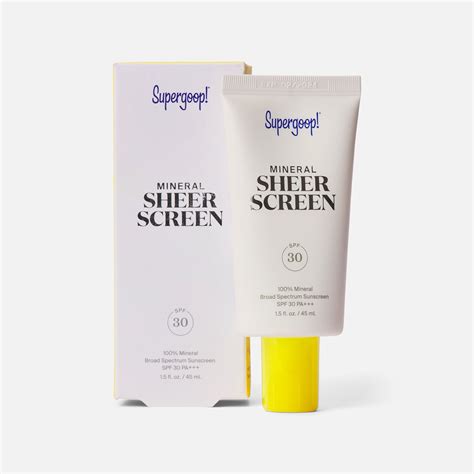
The third new product that captured my attention was a mineral sunscreen from one of my preferred brands, Supergoop! The Supergoop! Mineral Sheerscreen SPF 30 PA+++ boasts an incredible texture and has rightfully earned its place as one of my favorite daily sunscreens.
Supergoop!'s Commitment to Sun Protection
Supergoop! strongly advocates for daily sunscreen use, with their brand tagline, “Every. Single. Day.”, emphasizing the vital importance of sun protection. It is widely recognized that the best anti-aging cream is a well-formulated sunscreen.
Among Supergoop!'s offerings, two sunscreens stand out as personal favorites. The Supergoop! Bright-Eyed 100% Mineral Eye Cream SPF 40 is used daily around the eye area. Its subtle peachy hue and non-migrating texture make it an excellent choice for eye protection.
More recently, Supergoop! introduced the innovative Daily Dose Vitamin C + SPF 40 Sunscreen Serum PA+++. This product distinguishes itself with its milky serum texture, a convenient palm-sized bottle, and its infusion of 10% Vitamin C in the form of 3-O-Ethyl Ascorbic Acid. Its unique transformation on the skin gives it an otherworldly feel, reminiscent of J-Beauty, and imparts a noticeable glow.
Review of Supergoop! Mineral Sheerscreen SPF 30 PA+++
Given the brand's reputation, any new sunscreen, especially a mineral one, from Supergoop! is met with enthusiasm. The latest introduction, Mineral Sheerscreen SPF 30 PA+++, shares the exceptional texture of the Daily Dose. It is surprisingly light, offers a slight mattifying effect, and, importantly, leaves no white cast on relatively fair skin.
The Supergoop! Mineral Sheerscreen is formulated with a single mineral filter, Zinc Oxide, at a concentration of 17.5%, providing a solid SPF 30 protection. For context, SPF ratings indicate the following protection levels:
| SPF Level | UVB Ray Protection |
|---|---|
| SPF 15 | 93% |
| SPF 30 | 97% |
| SPF 50 | 98% |
In addition to Zinc Oxide, Mineral Sheerscreen includes other beneficial ingredients for skin health, such as the humectant Glycerin and the moisturizers Squalane and Caprylic/Capric Triglyceride, all of which are prominent in the formula.
A notable absence in this formula is significant antioxidant potency. Unlike the Supergoop! Daily Dose, which contains extracts like Rosa Centifolia Flower Extract, Jasmine Flower Extract, Daisy Flower Extract, and Terminalia Ferdinandiana Fruit Extract, Mineral Sheerscreen lacks these added antioxidant benefits. While it does contain Lespedeza Capitata Leaf/Stem Extract (Bush Clover Extract), claimed to protect against free radicals and oxidative stress from blue light, there is currently no definitive scientific evidence supporting the need for blue light protection from technology devices. Furthermore, this ingredient is listed very low in the INCI list.
Despite this, the Supergoop! Mineral Sheerscreen is considered a very good mineral sunscreen, offering excellent texture, ease of application, and reliable protection against the sun's aging UV rays.
*NEW* Swatching Supergoop! Mineral Sheerscreen SPF 30 & Setting w/ (Re)setting Mineral Powder SPF35
Understanding Mineral vs. Chemical Sunscreens
The conversation around sunscreen can be particularly complex for those prioritizing clean beauty, raising questions about filter safety and brand transparency. Sunscreens generally fall into two categories: mineral and chemical. At goop, the preference is for mineral SPF.
How They Work
Mineral SPF, also known as physical sunscreen, works by sitting on the skin's surface and blocking UV rays upon contact. Dermatologists often recommend mineral sunscreens for sensitive skin due to their lower likelihood of causing irritation and their reduced tendency to clog pores, making them suitable for oily or acne-prone skin types.
Chemical sunscreens, on the other hand, function by absorbing UV rays and are absorbed into the skin. They work by converting UV rays into heat, which is then released. Mineral sunscreens offer protection against the full UVA and UVB spectrum, a comprehensive coverage that no single chemical sunscreen ingredient can match.
Key Differences and Considerations
The primary distinction between mineral and chemical SPF lies in their mechanisms of action. Mineral sunscreens act as a physical barrier, while chemical sunscreens absorb UV rays. The active ingredients in mineral sunscreens are limited to titanium dioxide and zinc oxide. Chemical sunscreens utilize a broader range of ingredients, including potentially problematic ones like oxybenzone, octinoxate, homosalate, and avobenzone, which can cause skin irritation and may act as endocrine disruptors.
For consumers, the simplicity of mineral SPF is a significant advantage. Identifying active ingredients like zinc oxide or titanium dioxide on the label is straightforward. However, caution is advised with terms like "mineral-based," as they might indicate the presence of other non-mineral ingredients.
Understanding UVA and UVB Rays
UVA and UVB rays, both originating from the sun, affect the skin differently. UVA rays penetrate deeper, contributing to collagen and elastin breakdown, leading to fine lines, wrinkles, and age spots. UVB rays are responsible for sunburns and increase the risk of skin cancer.
Sun Protection Factor (SPF) ratings primarily indicate a sunscreen's protection against UVB rays. Higher SPF values offer greater sunburn protection. It is important to note that SPF ratings do not correlate with the duration of sun exposure but rather the overall amount of sun exposure. Recent studies suggest that many US sunscreens offer less UVA protection than their SPF rating implies. Therefore, dermatologists recommend choosing products with at least SPF 30 and the label "broad-spectrum."
Advancements in Mineral Sunscreen Formulas
Modern clean mineral sunscreen formulas have evolved significantly, offering lighter textures that blend better and do not leave a chalky white cast. It is now possible to find broad-spectrum, all-mineral sunscreens that are pleasant to wear.
Proper Sunscreen Application
Generous application of sunscreen is crucial, covering the entire body. The recommended amount is approximately a shot glass for the entire body, translating to about two milligrams per square centimeter of skin. Reapplication every two hours is essential, especially after swimming, sweating, or engaging in outdoor activities. Subsequent applications are as important as the initial one, as sunscreen can break down or rub off.
Breakouts and Sunscreen
While mineral filters themselves are generally not to blame for breakouts, some sunscreen formulations contain oils, waxes, or silicones that can clog pores. Choosing formulations that avoid these pore-clogging ingredients can help prevent acne.
Micronized vs. Nanoparticle Ingredients
Manufacturers can reduce the particle size of zinc oxide and titanium dioxide to create smoother, more transparent formulas. However, concerns exist regarding the systemic absorption of micronized and nano-mineral particles, with ongoing research needed in this area. While some studies suggest potential ecotoxicity of zinc oxide nanoparticles, others have found no cause for concern.
Concerns with Chemical Sunscreen Ingredients
Some chemical sunscreen ingredients have been linked to endocrine disruption, meaning even small amounts can potentially cause health issues. Oxybenzone, in particular, has demonstrated endocrine-disrupting potential, can penetrate the skin, and has been associated with an increased risk of breast cancer, endometriosis, and thyroid dysfunction. Other chemical SPF ingredients have been linked to allergic reactions and tumor growth. While trace amounts of chemical filters have been found in human blood, breast milk, and urine, indicating some systemic absorption, the clinical implications remain unclear, and findings from animal studies do not always translate to human health.
Reef Safety
Certain chemical sunscreen ingredients, such as oxybenzone and octinoxate, have been shown to contribute to coral reef bleaching and are banned in some regions like Australia and Hawaii. For reef-safe options, sunscreens using only zinc oxide as an active ingredient are recommended.
Supergoop! Sunscreen Reviews and Comparisons
A review of Supergoop! sunscreens highlights specific product details:
- Price Range: $$$$ (tube), $$$$ (stick)
- EWG Rating: 1 (stick), 3 (tube)
- SPF: 30
- Active Ingredients (Stick): Titanium dioxide (10%) and Octinoxate (7.5%)
- Active Ingredients (Tube): Homosalate, Octisalate, Avobenzone, Octocrylene
- Other Ingredients (Tube): Water (Aqua), Isododecane, Isodecyl Neopentanoate, Diisopropyl Sebacate, Lauryl Lactate, Glycerin, Cetyl Alcohol, Isostearyl Isostearate, Potassium Cetyl Phosphate, Cetyl Behenate, Behenic Acid, Beta Glucan, 1,2 Hexanediol, Caprylyl Glycol, Thermus Thermophilus Ferment, Acrylates Copolymer, Glyceryl Stearate, Behenyl Alcohol, Palmitic Alcohol, Stearic Acid, Lecithin, Lauryl Alcohol, Myristyl Alcohol, Nylon-12, Xanthan Gum, Ammonium Acryloyldimethyltaurate/VP Copolymer, Caprylyl Glycol, Maltodextrin, Cassia Alata Leaf Extract, Panthenol, Disodium EDTA, Allantoin, Citrus Aurantium Dulcis (Orange) Peel Oil, Eucalyptus Globulus Leaf Oil, Citrus Limon (Lemon) Peel Oil, Geraniol, Geranium Maculatum Oil, Pogostemon Cablin Oil, Aniba Rosaeodora (Rosewood) Wood Oil, Ocimum Basilicum (Basil) Oil, Glucose, Lactoperoxidase, Glucose Oxidase
- Antioxidants Added: Vitamin E (stick); Retinyl Palmitate (Vitamin A) in older tube versions (now updated).
- Ease of Application: The stick is convenient for faces but may not rub in perfectly.
- Scent: Neutral.
- Water Resistant: Yes.
The reviewer advises against recommending the tube version due to its chemical sunscreen ingredients and the inclusion of Vitamin A in older formulations, though newer versions may have omitted it. The stick is considered a decent option if a chemical sunscreen is necessary, but other brands might be preferable.