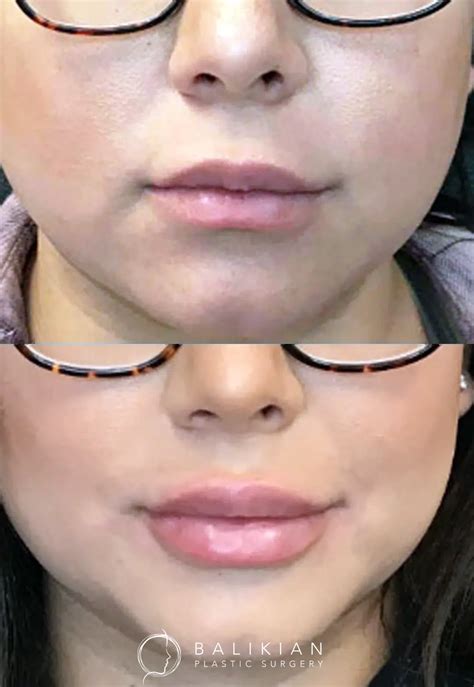
Lip augmentation is a cosmetic procedure that modifies the shape of the lips using fillers, such as collagen or implants. The procedure may be performed to increase lip size, correct asymmetry, create protrusion, or adjust the ratio of the top and bottom lips.
Eligibility and Pre-Procedure Consultation
The Food and Drug Administration (FDA) has established an age requirement for lip fillers, stipulating that individuals must be at least 21 years old to receive FDA-approved lip fillers. Before undergoing a lip filler procedure, a consultation with a healthcare provider is essential. During this meeting, your provider will assess various factors, including your mental health and any social conditions that might influence your decision.
Key Questions During Consultation
Your healthcare provider may ask several questions to understand your motivations and expectations:
- Why do you want lip fillers?
- What are your expectations for the procedure?
- Do you often focus on perceived minor flaws or imagined defects in your body?
- Is a spouse, partner, or friend encouraging you to get lip fillers?
Physical and Medical Assessment
Your physical health and facial structure are also critical considerations. Your healthcare provider will evaluate your general health, identifying any pre-existing health conditions or risk factors. It is crucial to discuss any allergies you may have and to inform your provider about all medications you are currently taking, including prescription drugs, over-the-counter (OTC) medications, and herbal supplements.
Your healthcare provider will then examine and measure your face, documenting their findings with photographs of your face and lips for your medical records.
Setting Realistic Expectations
When considering lip size, it's important to visualize the potential outcome. This process can be compared to getting a new haircut; you might show your hairstylist a photograph for inspiration. However, your hairstylist may advise that achieving the exact look from the photograph might be challenging due to your hair's texture, hairline, volume, or length. Similarly, while you may desire lips that resemble those of a celebrity, this might not be entirely achievable due to the unique shape and features of your face.
You can ask your healthcare provider if bringing in a reference picture would be helpful. However, be prepared to articulate your desired lip appearance thoroughly if your provider prefers not to use photographs, ensuring a clear understanding of your goals.
The Lip Filler Procedure
Anesthesia and Numbing
During the lip filler procedure, a topical anesthetic will be applied to your lips. This anesthetic, often a combination of benzocaine, lidocaine, and tetracaine (commonly known as BLT cream), works to numb your lips, ensuring a comfortable experience and minimizing any pain. The numbing process typically takes about 15 to 30 minutes.
In cases of BLT allergy, your healthcare provider may administer a nerve block injection to achieve numbness. This injection also requires approximately 15 to 30 minutes to take full effect.
Injection Process
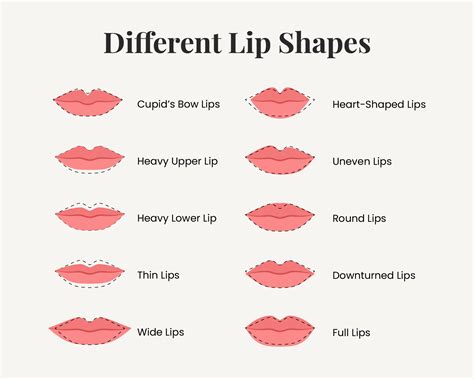
Once your lips are numb, your healthcare provider will use a thin needle to inject the lip filler into specific areas of your lips. These areas can include the edges of your lips (vermillion border), the distinctive curve in the center of your upper lip (Cupid's bow), and the corners of your mouth (oral commissures). While you should not feel pain, you might experience a pinching sensation, and your eyes may water.
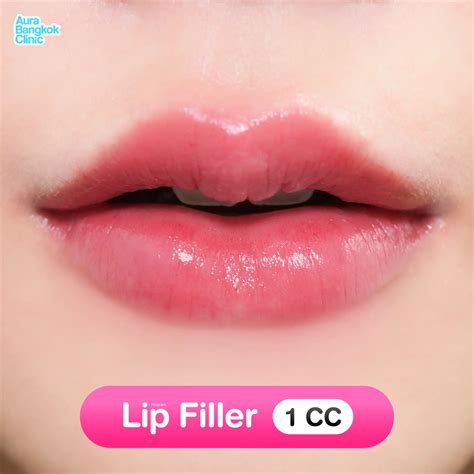
On average, about 1 milliliter (mL) of lip filler, equivalent to approximately one-fifth of a teaspoon, is injected. The needle is inserted no deeper than 2.5 millimeters (mm) into the skin.
Minimizing Discomfort and Swelling
Throughout the procedure, your healthcare provider may apply an ice pack to your lips to help minimize swelling and bruising. The entire procedure can range in duration, from as little as 30 minutes to as long as two hours.
Post-Procedure Care and Recovery
Immediate Aftercare
Upon completion of the procedure, your healthcare provider may gently massage your lips to help distribute and absorb the filler. Continued application of ice to the lips may also be recommended.
Your healthcare provider will monitor you for up to 15 minutes to check for any immediate side effects, such as dizziness, nausea, or significant bleeding. Once you are cleared, you will be discharged. Since local anesthetics typically do not cause drowsiness, you can usually drive yourself home. However, it is advisable to have a family member or friend accompany you for transportation as a precautionary measure.
Expected Swelling and Bruising
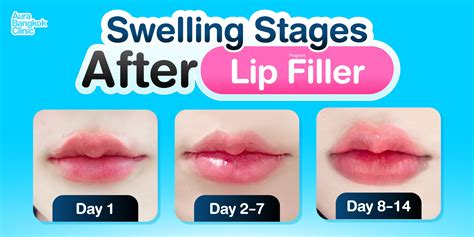
It is common for your lips to be swollen, sensitive, and bruised following the procedure. Swelling typically subsides within 24 to 48 hours, though it may take up to a week for complete resolution.
Follow-Up Appointment
Your healthcare provider will schedule a follow-up appointment, usually around two weeks after the procedure, to monitor the results and ensure your lips are healing properly.
Types of Lip Fillers
A variety of materials are used for lip augmentation, each with its own characteristics and duration of effect:
Hyaluronic Acid-Based Fillers
- Restylane: This is a non-animal, clear gel that closely mimics the hyaluronic acid naturally found in the body. Statistics from the American Society of Plastic Surgeons indicate that in 2006, there were 778,000 cases of Restylane injections. The effects of Restylane typically last for six months or sometimes longer.
- Juvederm: Chemically very similar to Restylane, many surgeons find Juvederm to be slightly smoother to inject.
Collagen-Based Fillers
- Autologen: An injectable dermal material derived from the patient's own skin.
- Collagen: This material, extracted from bovine hides, requires an allergy test prior to use. It generally lasts between four weeks and three months as it is absorbed by the body.
- Dermalogen: Processed from the patient's own skin in a laboratory to create a highly concentrated collagen that can be injected.
Other Injectable Materials
- Alloderm: This is donor tissue obtained from cadavers, which is then denatured, purified, and treated to eliminate any viable cells that could transmit disease. Under local anesthesia, Alloderm is carefully placed into the mucosa or body of the lips in small rolls to enhance volume.
- Radiance: A synthetic filler produced in a laboratory, containing calcium hydroxylapatite (a bone component) suspended in a gel. Radiance has been used safely in medicine for years, with some studies suggesting its effects can last between three and five years. One study by Tzikas involving 90 patients indicated that while 59 percent experienced moderate to severe pain upon injection (which subsided within minutes), the plumping effects lasted an average of two years, with some patients reporting sustained results for up to three to five years.
Permanent and Semi-Permanent Options
- Gore-Tex implants: Known in medical contexts as EPTFE (expanded polytetrafluoroethylene) and commercially as Advanta, UltraSoft, and SoftForm. Since 2000, advancements in products and techniques have improved the effectiveness and patient experience of lip augmentation.
- Artecoll and ArteFill: These products are generally not used for injecting the body of the lips due to their density, which could result in a white appearance through the thin lip skin. They contain tiny microspheres of PMMA (polymethylmethacrylate) that remain in the face permanently. In some cases where Artecoll was used around the lip edges to reduce fine lines, patients have reported the development of small lumps or nodules.
Fat Transfer
Fat transfer involves harvesting the patient's own fat through liposuction or excision from areas where it can be spared. This fat is then either injected or surgically placed into the lips. While fat transfer can offer longer-lasting results compared to other injected materials, it may sometimes lead to lumping or scarring. The longevity of fat transfer in the lips can depend on factors such as the area's movement and proximity to a major blood supply. Additionally, harvesting the fat creates a small surgical wound in the donor area.
What Is Lip Augmentation With Fat Transfer? - The Pro Dentist
Potential Complications and Contraindications
Common reactions to lip fillers can include redness, swelling, or itching at the injection sites. Other potential complications may arise, such as bleeding, uneven lip appearance, migration of implants, or extrusion, where an implant breaks through the skin's surface.
Allergies and Skin Conditions
Some individuals may experience allergic reactions to common local anesthetics like lidocaine and are advised against lip injections. Certain patients may react negatively to the skin test required before receiving collagen. Additionally, individuals with active skin conditions such as cold sores, blood clotting disorders, infections, scarring of the lips, or certain systemic diseases like diabetes or lupus (which can impair healing) should also refrain from lip augmentation procedures.
Other Health Considerations
Patients with facial nerve disorders, severe hypertension, or recurrent herpes simplex lesions should also avoid lip augmentation.
The Importance of Provider Skill
Cosmetic surgery providers often emphasize that numerous options are now available for enhancing lip appearance. Most practitioners acknowledge that the success of lip augmentation is significantly influenced by the skill and experience of the provider. Extensive experience in injecting various types of patients is key to achieving optimal results.
With many injectable fillers, patients can typically return to their normal activities immediately after the procedure.
Surgical Alternatives
A few surgeons offer surgical flap augmentations, a procedure where small sections of skin from adjacent areas or from inside the mouth are excised and then added to the lips to increase their volume.