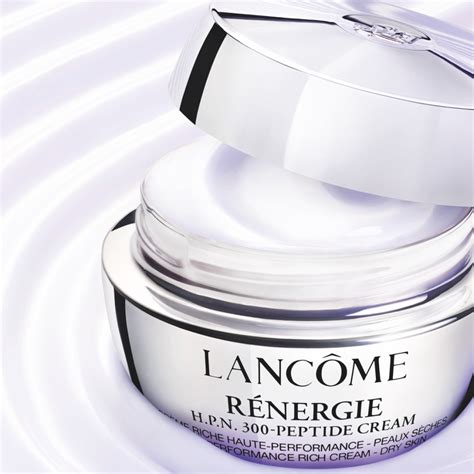
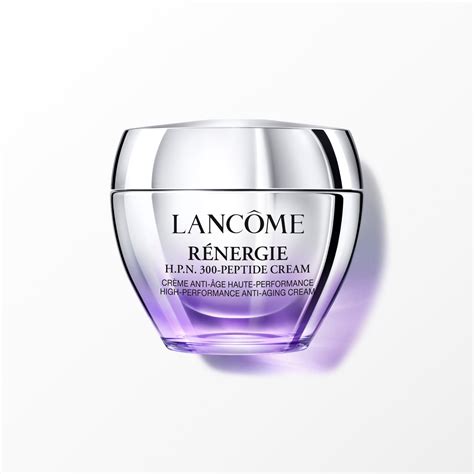
The Lancôme Rénergie H.p.n. 300-Peptide Cream is a highly advanced skincare formula designed to deliver exceptional efficacy through a unique combination of key ingredients.
Understanding the H.P.N. Technology
The "H.P.N." in the cream's name represents a powerful trio of ingredients: Hyaluronic Acid, over 300 different Peptides, and Niacinamide. This synergistic blend is encapsulated in a highly sensorial formula to achieve remarkable results in skin renewal and anti-aging.
The Power of Peptides
Peptides are widely recognized for their crucial role in skin renewal processes and are considered one of the skin's most effective allies against the visible signs of aging. The Rénergie H.P.N. 300-Peptide Cream features an unprecedented number and variety of peptides. The complementary effect of these 300 peptides works to stimulate faster and enhanced skin renewal, addressing key concerns associated with aging.
Clinically Proven Efficacy
This innovative formula is designed to visibly improve signs of aging, including wrinkles, dark spots, and lower face sagging. Clinically significant results have been observed as early as two weeks of consistent use.
Key Ingredients and Their Benefits
Hyaluronic Acid
The Hyaluronic Acid used in this cream is ferment-based and produced using biotechnology. It is renowned for its ability to absorb multiple times its own weight in water, which helps to smooth and re-plump the skin. Lancôme's Hyaluronic Acid offers enhanced skin penetration and provides additional benefits for reducing wrinkles and skin roughness.
300 Types of Peptides
This ultra-concentrated and potent combination of over 300 natural peptides works to make the skin appear renewed. It achieves this by improving firmness, elasticity, and reducing the appearance of wrinkles.
Niacinamide (Vitamin B3)
Also known as Vitamin B3, Niacinamide is recognized for its ability to soothe the skin. It contributes to effective skin tone management and helps visibly reduce the appearance of dark spots.
Commitment to Science and Sustainability
Lancôme's unique combination of peptides in this formula is derived from the protein extracts of three naturally sourced ingredients, utilizing green science principles. This commitment reflects a dedication to both efficacy and environmental responsibility.
Research and Clinical Results
Extensive testing has demonstrated the cream's effectiveness:
- Decreased appearance of wrinkles by -21% and fine lines by -26%
- Reduced visibility of dark spots by -22%
- Improved skin tone by +22%
- Enhanced firmness by +38%
- Reduced lower face sagging by -27%
These results are based on clinical study data.
Lancme 2pack Renergie HPN 300 Peptide Cream SPF 25 AutoS...
Consumer Self-Assessment Results
In consumer studies, participants reported significant improvements:
- 96% agreed overall skin appearance looks improved.
- 93% agreed skin looks regenerated/renewed.
- 86% agreed skin appears younger.
These findings are based on self-assessment results from an 8-week consumer study with 58 women.
How to Use
For optimal results, use this day moisturizer consistently as part of your morning routine. Apply once daily to the face, neck, and décolleté after cleansing, toning, and applying your facial serums.
Ingredient Breakdown (Common Skincare Components)
Water (Aqua/Eau)
Normal, purified, and deionized water serves as the primary solvent in most cosmetic products. It is essential for the formulation's consistency and efficacy.
Dimethicone
A widely used silicone that provides a silky-smooth feel to the skin, creates a subtle gloss, and forms a protective barrier. It can also temporarily fill fine lines and wrinkles, giving the skin a plump appearance. In scar treatment gels, it helps soften scars and improve their elasticity.
Glycerin
An extremely common multitasking ingredient that imparts a soft feel to the skin (emollient) and adds body to creams and lotions. It also aids in stabilizing oil-water mixtures.
Cetearyl Alcohol
A fatty alcohol, a blend of cetyl and stearyl alcohol, known for its emollient properties. Unlike drying alcohols, it has different properties and contributes to the cream's texture and feel.
Glyceryl Stearate
Chemically, it's the attachment of a glycerin molecule to stearic acid. It can be produced from vegetable oils through an eco-friendly process and is readily biodegradable. Often paired with Glyceryl Stearate SE, it forms a highly effective emulsifier duo that is tolerant to salt, acid, and a wide pH range.
Isopropyl Myristate
A clear, colorless emollient ester that smooths and softens the skin.
Caprylic/Capric Triglyceride
A clear, slightly yellow, odorless oil that acts as a common, medium-spreading emollient, contributing to the cream's smooth application.
Adenosine
An important compound in the body with a vital cell-signalling role, contributing to skin health and renewal.
Hydrolyzed Hyaluronic Acid
A lower molecular weight version of Hyaluronic Acid, this chopped-up form is designed for enhanced penetration. It acts like a sponge, helping the skin retain water for plumpness and elasticity. Different molecular weights offer varying benefits, from moisturization to potential skin repair and long-lasting hydration.
Pentaerythrityl Tetra-Di-T-Butyl Hydroxyhydrocinnamate
An antioxidant molecule used in small concentrations to prevent product degradation, such as discoloration, and maintain product integrity.
Tocopherol (Vitamin E)
The most commonly used form of pure Vitamin E in cosmetics. It functions as a potent antioxidant, offering significant photoprotection against UVB rays and working synergistically with Vitamin C.
Cera Alba (Beeswax)
A natural material produced by honey bees, used in skincare as an emollient and thickening agent, providing a smooth texture and protective qualities.
Sucrose Stearate
A sugar-based emulsifier particularly effective in low-viscosity lotions and sprays, requiring only small amounts to create stable emulsions with excellent spreadability and a soft skin feel.
Citric Acid
An Alpha Hydroxy Acid (AHA) derived from citrus fruits, known for its exfoliating properties. While it has skincare benefits, other AHAs like glycolic and lactic acid may offer more pronounced skin-improving effects.
Acrylates/C10-30 Alkyl Acrylate Crosspolymer
A polymer molecule that aids in emulsifying and stabilizing oil-in-water formulas. It also acts as a thickener and gelling agent, creating smooth, non-sticky textures across a wide pH range.
Sodium Acrylate/Sodium Acryloyldimethyl Taurate Copolymer
A versatile emulsifier that helps oil and water mix effectively, contributing to the cream's stable formulation.
Phenoxyethanol
A widely used, gentle, and safe preservative that prevents cosmetic products from deteriorating. It is effective against bacteria and fungi and is often used with other preservatives like ethylhexylglycerin to enhance its broad-spectrum activity.
Potassium Sorbate
A preservative that works effectively against bacteria, fungi, and yeast. It is often used in combination with other preservatives to ensure comprehensive protection.
Geraniol, Linalool, Limonene
These are common fragrance ingredients. While they contribute to the product's scent, they can oxidize upon exposure to air, potentially becoming allergenic for some individuals. Limonene, in particular, is found in citrus peel oils and can act as a penetration enhancer, but its potential for skin sensitization means caution is advised for sensitive skin types.
Alcohol Denat.
Alcohol with additives to make it undrinkable. It functions as a solvent, penetration enhancer, creates elegant formulas, and acts as an astringent and antimicrobial agent.
Cocos Nucifera (Coconut) Oil
A clear, slightly yellowish oil derived from coconut or palm kernel oil, used as a traditional emollient with medium spreading properties.
BHT (Butylated Hydroxytoluene)
A synthetic antioxidant used to preserve the integrity of cosmetic formulations by preventing oxidative degradation.