You may have heard about people taking collagen supplements. But what exactly are collagen peptides? They’re small, easily digestible bits of collagen, a naturally occurring protein in humans and animals. It’s found in skin, cartilage, and bone, among other areas. Foods like fish, beef, chicken skin, and pork skin are good natural sources of collagen. The body obtains it by breaking the food down into amino acids and peptides.
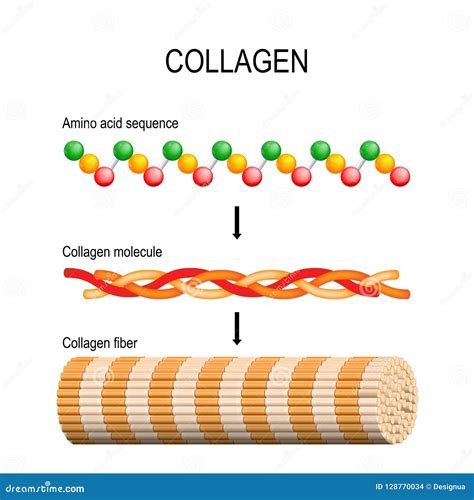
Collagen is the most abundant protein in your body, accounting for about 30% of your body’s total protein. It is the primary building block of your body’s skin, muscles, bones, tendons, ligaments, and other connective tissues. It’s also found in your organs, blood vessels, and intestinal lining. Proteins are made from amino acids, and the main amino acids that make collagen are proline, glycine, and hydroxyproline. These amino acids group together to form protein fibrils in a triple helix structure. Your body also needs the proper amount of vitamin C, zinc, copper, and manganese to make this structure.
Collagen’s main role is to provide structure, strength, and support throughout your body. Its specific roles include helping fibroblasts form in your dermis (middle skin layer), which helps new cells grow, playing a role in replacing dead skin cells, providing a protective covering for organs, giving structure, strength, and elasticity to your skin, and helping your blood to clot.
Types of Collagen
Some 28 types of collagen have been identified. They differ by how the molecules are assembled, the cell components that are added, and where the collagen is used in your body. All collagen fibrils have at least one triple helix structure. The main five types of collagen and their functions are:
- Type I: Makes up 90% of your body’s collagen. It is densely packed and used to provide structure to your skin, bones, tendons, and ligaments.
- Type II: Found in elastic cartilage, which provides joint support.
- Type III: Found in muscles, arteries, and organs.
- Type IV: Found in the layers of your skin.
- Type V: Found in the cornea of your eyes, some layers of skin, hair, and tissue of the placenta.
Collagen and Aging
Your body produces less collagen as you age, and existing collagen breaks down at a faster rate. The collagen also becomes lower in quality than when you were younger. Women experience a significant reduction in collagen production after menopause, and it is normal for everyone to experience a decline in collagen production after age 60.
While collagen levels cannot be measured directly in a blood test, there are signs that your collagen level is decreasing. These include:
- Smoking: Decreases collagen production, damages collagen and elastin, leading to wrinkles and slow wound healing. Nicotine constricts blood vessels near your skin’s surface, preventing the delivery of oxygen and nutrients.
- Eating too much sugar and refined carbs: Sugar attaches to proteins to form advanced glycation end products (AGEs). These molecules damage nearby proteins and cause collagen to become weak, dry, and brittle.
- Exposure to ultraviolet light: Too much sunlight reduces collagen production and causes collagen to break down more rapidly, leading to wrinkles.
Autoimmune diseases (where the body’s immune system attacks its own tissue) such as rheumatoid arthritis, lupus, dermatomyositis, and scleroderma can damage collagen. Genetic mutations can also damage collagen, resulting in conditions like Ehlers-Danlos syndrome and osteogenesis imperfecta. Collagen levels also decline naturally with age.
To slow the effects of skin aging, it is recommended to wear sunscreen every day, as exposure to ultraviolet (UV) light damages collagen. Using products with a sun protection factor (SPF) of 30 or higher, wearing protective clothing, and avoiding tanning beds are also advised. Eating a well-balanced diet, like the Mediterranean diet, which is rich in vegetables, beans, whole grains, nuts, and fruits, and includes moderate amounts of seafood, meats, poultry, dairy, and eggs, can also support collagen production.
What are Collagen Peptides?
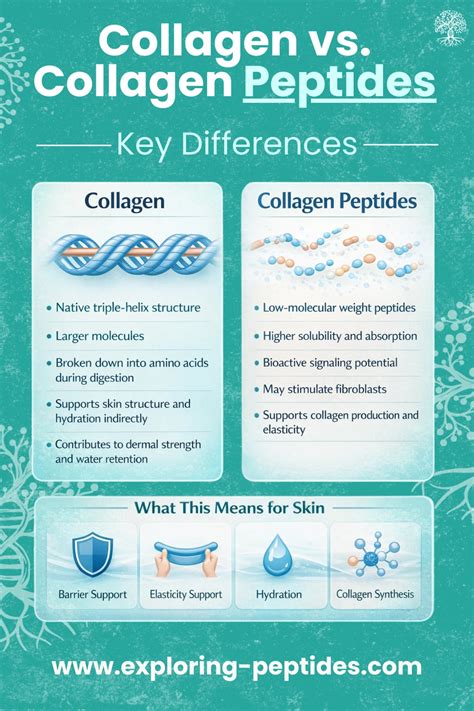
Collagen peptides are small pieces of animal collagen. Collagen cannot be absorbed by your body in its whole form; it has to be broken down into smaller peptides or amino acids. Oral collagen supplements usually come in the form of pills and powders and typically contain two or three amino acids. They are sold as collagen peptides or hydrolyzed collagen and are absorbed through your gastrointestinal tract.
When taken by mouth, collagen peptides seem to build up in the skin and cartilage. This might help improve some skin and joint conditions. Collagen peptides are used for dry skin, aging skin, and osteoarthritis. They are also used for osteoporosis, brittle nails, muscle strength, and many other purposes, although there is no good scientific evidence to support most of these uses.
It is important not to confuse collagen peptides with collagen type I (native), collagen type II (native), or gelatin.
Uses & Effectiveness of Collagen Peptides
Research into the benefits of collagen peptides is ongoing. Some potential uses and their effectiveness include:
Possibly Effective For:
- Aging skin: Taking collagen peptides by mouth seems to improve skin hydration and skin elasticity in older people. It might also help reduce wrinkles, but it's not clear if it helps enough to be noticeable.
- Dry skin: Taking collagen peptides by mouth seems to improve skin hydration and skin elasticity in people with dry skin.
Possibly Ineffective For:
- Muscle strength: Taking collagen peptides by mouth does not seem to improve leg muscle strength. However, collagen peptides may improve hand-grip strength.
There is interest in using collagen peptides for a number of other purposes, but there isn't enough reliable information to say whether it might be helpful.
Potential Health Benefits Backed by Science
Collagen supplementation provides a variety of health benefits, with some supported by scientific evidence:
1. May Improve Skin Health
Collagen is a major component of your skin, playing a role in strengthening, elasticity, and hydration. As you age, your body produces less collagen, leading to dry skin and wrinkles. Several studies have shown that collagen peptides or supplements containing collagen may help slow skin aging by reducing wrinkles and dryness. One review of 26 studies found that taking 1-12 grams of collagen per day for 4-12 weeks led to improvements in skin elasticity and hydration. These supplements may work by stimulating your body to produce collagen and other proteins that help structure your skin, such as elastin and fibrillin. However, anecdotal claims about preventing acne and other skin conditions are not supported by scientific evidence.
2. May Relieve Joint Pain
As you age, collagen decreases, increasing the risk of joint disorders like osteoarthritis. Some studies suggest that collagen supplements may help improve symptoms of osteoarthritis and reduce overall joint pain. A review of studies in people with osteoarthritis found that taking collagen led to significant improvements in joint stiffness but not pain or functional limitation. Researchers suggest supplemental collagen may accumulate in cartilage and stimulate tissues to make collagen, potentially leading to lower inflammation, better joint support, and reduced pain. However, more evidence is needed to recommend collagen as a treatment for osteoarthritis.
3. May Prevent Bone Loss
Bones are made mostly of collagen. As you age, collagen deteriorates, and bone mass decreases, potentially leading to conditions like osteoporosis. Research suggests collagen supplements may help inhibit bone breakdown. In a 12-month study of postmenopausal women, those taking calcium, vitamin D, and collagen had significantly lower blood levels of proteins promoting bone breakdown and less loss of mineral bone density compared to those taking only calcium and vitamin D. Another study found similar results, with participants taking 5 grams of collagen daily for 12 months showing an increase in bone mineral density (BMD). However, more human studies are needed.
4. May Boost Muscle Mass
Collagen is an important component of skeletal muscle. In a 12-week study, older men with sarcopenia who took 15 grams of collagen while exercising gained significantly more muscle mass and strength compared to those who exercised without collagen. However, more research is necessary to confirm this potential benefit.
5. May Promote Heart Health
Collagen provides structure to your arteries, making them flexible and elastic. Without enough collagen, arteries may become less flexible, potentially leading to atherosclerosis (narrowing of arteries), which can cause heart attack and stroke. In a 6-month study, adults taking 16 grams of collagen daily experienced a significant reduction in measures of artery stiffness. Additionally, their levels of HDL (good) cholesterol rose, which is an important factor in heart health, though more research is needed.
6. May Improve Gut Health
Although no randomized controlled trials support this claim, some health professionals report that collagen supplements can treat leaky gut syndrome (intestinal permeability). Individuals report collagen helps, but research is needed.
7. May Strengthen Your Hair and Nails
While research is limited, there is interest in collagen's potential to strengthen hair and nails.
8. May Help Maintain Brain Health
While no studies have examined the role of collagen supplements in brain health, some people claim they improve mood and reduce anxiety symptoms.
9. May Help Support Weight Loss
Proponents believe that collagen supplements may promote weight loss and a faster metabolism. However, no studies support these claims.
The Truth About Collagen Supplements & If They Really Work | Nutritionist Explains | Myprotein
Side Effects and Precautions
Collagen peptides are generally well-tolerated with few reported side effects. However, many supplements are made from common food allergens such as fish, shellfish, and eggs. People with allergies to these foods should avoid collagen supplements made with these ingredients.
Some individuals report nausea, bloating, and heartburn when taking collagen supplements, but research has not consistently shown these as side effects. It is important to note that collagen may be found in or derived from animal products. Foods that contain collagen include gelatin, bone broth, connective tissues of animals, chicken skin, pork skin, beef, and fish.
Vitamin C is crucial for collagen synthesis, and foods high in Vitamin C, like citrus fruits, broccoli, and strawberries, are beneficial. Because collagen’s amino acid composition differs from other proteins, alternative sources are limited. Vegan collagen can be made from genetically modified yeast and bacteria, which contain proteins similar to collagen and are being investigated.
A nutritionally balanced diet rich in fruits, vegetables, and plant-based protein foods may help boost the body’s production of collagen.
Pregnancy and breast-feeding: There isn't enough reliable information to know if collagen peptides are safe to use when pregnant or breast-feeding. It is best to avoid use during these times.
Kidney Stones: If you have kidney stones or are at risk for them, you may want to avoid collagen supplements. They contain an amino acid called hydroxyproline that is converted into oxalate in your body. Too much oxalate may lead to kidney stones.
How Long Does It Take to See Results?
Collagen turnover is a slow process. Most studies use a minimum of 8 weeks to assess collagen’s effects on skin health and joint pain relief, but other studies use longer periods, such as 12 months, for bone health.
It is probably fine to take supplements containing collagen daily, and few side effects have been reported. Speak with a healthcare provider to find out what dose might be best for a specific condition.
Live Conscious® Collagen Peptides is an all-natural hydrolyzed Grade A bovine protein designed to support skin, hair, nails, and joint health as collagen naturally declines with age. It is certified hormone-free and 100% non-GMO. The hydrolyzed formula is grass-fed, pasture-raised, and designed to mix easily into coffee, smoothies, or recipes.
One user reported starting collagen peptides to manage conditions related to perimenopause, such as dry eyes and skin, and joint pain. After reading numerous user reviews, they chose Live Conscious Collagen Peptides. The daily suggested use is 11 grams of powder mixed with a beverage. While the powder is unflavored, there is a faint earthy taste that was not off-putting. Even though research suggests it can take 6-12 weeks for improvements, after about three weeks, the user noticed clearer, brighter, and smoother skin on their face.