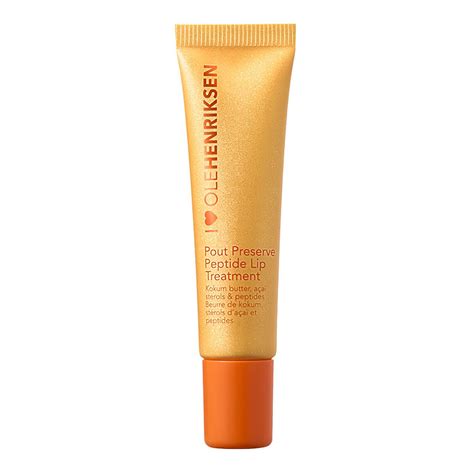
The Olé Henriksen Pout Preserve Hydrating Peptide Lip Treatment is designed to go beyond basic hydration, actively addressing concerns such as visible volume loss and restoring the lips' natural bounce. This is achieved through a potent combination of lip-specific peptides and nourishing butters and oils. The formula has undergone clinical testing and is proven to deliver softer, bouncier, and fuller-looking lips in as little as one week. Additionally, the treatment is available in a variety of appealing flavors, enhancing the user experience.
Key Ingredients and Their Functions
Lip-specific Peptides
These peptides are integral to the treatment's ability to enhance the lips' appearance, making them look more defined and fuller.
Nourishing Butters and Oils
- Kokum and Mango Seed Butter: These ingredients are included for their soothing, nourishing, and conditioning properties, contributing to overall lip health and comfort.
- Scandinavian Cloudberry Oil: This oil is a powerful moisturizer, providing intense hydration and visibly softening the lips.
- Açai Sterols: These sterols play a crucial role in strengthening the skin barrier of the lips and boosting hydration levels.

Research and Clinical Results
An 8-week clinical study involving 39 participants demonstrated significant improvements in lip appearance and condition:
- Lips appeared fuller within the first week of use.
- The treatment effectively plumps lips with hydration.
- It contributes to smoothing and softening lip lines.
- A remarkable 95% of participants agreed that the treatment rescues dry, flaky lips.
- 90% of participants reported that the treatment leaves their lips looking and feeling plumper.
How to Use
For an immediate and lasting boost of hydration, simply swipe the treatment onto your lips. For an added touch of shine, it can be applied after lip color.
Note: This product is intended for external use only.
Ingredient Breakdown and Benefits
The formulation includes a variety of ingredients, each contributing unique benefits to the lip treatment:
Emollients and Texture Enhancers
- Hydrocarbon-based Emollient: This ingredient, available in various viscosities, forms a non-occlusive film on the skin's surface, providing gloss without a greasy feel.
- Paste-like Emollient Ester: Touted as a vegetable-derived lanolin alternative, this ingredient offers a thick, paste-like texture. (Note: This ingredient name is not according to INCI-standard.)
- Silica: A white, powdery substance that is a major component of glass and sand. In cosmetics, it is utilized for its excellent oil-absorbing abilities, helping to maintain a matte finish.
- Caprylic/Capric Triglyceride: A very common, medium-spreading emollient that imparts richness to the formula and a mild feel during application.
- C12-15 Alkyl Benzoate: A common, medium-spreading emollient that is clear, slightly yellow, and odorless.
- Isostearyl Isostearate: A super common, medium-spreading emollient ester that adds richness and a mild feel during rubout.
- Cocos Nucifera (Coconut) Oil and Glycerin-derived Emollient: A very common emollient that provides a smooth and pleasant skin feel. It is light-textured, clear, odorless, and non-greasy, making it well-tolerated by all skin types.
- Copernicia Cerifera (Carnauba) Wax: A vegetable wax derived from the leaves of the Brazilian tropical palm tree. It is used to stabilize products and provide body, or to maintain the solidity of stick-type formulas. It is odorless, has a neutral taste, and is hard at room temperature.
- Glyceryl Stearate Citrate: A handy helper ingredient that functions as an emulsifier, facilitating the smooth mixing of oil and water.
- Isostearyl Alcohol: A liquid emollient derived from isostearic acid, it provides a rich, cushiony skin-feel and exceptionally high levels of gloss. It also forms a film without a sticky residue and contributes to long-lasting, water-resistant properties.
Peptides for Anti-Aging and Repair
- Palmitoyl Hexapeptide-14: A six-amino acid peptide claimed to improve firmness and skin tone.
- Palmitoyl Tripeptide-1: A well-known peptide, part of the widely sold Matrixyl 3000 complex. It is a small peptide composed of three amino acids (glycine-histidine-lysine, or GHK). The GHK component is a fragment of type I collagen, signaling the skin to produce new collagen. When combined with Palmitoyl Tetrapeptide-7 in Matrixyl 3000, it works synergistically to reduce wrinkles and promote younger-looking skin.
- Palmitoyl Tetrapeptide-7: A three-amino acid peptide that is part of the renowned Matrixyl 3000 peptide duo.
Vitamins and Antioxidants
- Tocopherol (Vitamin E): The most common form of Vitamin E used in cosmetics, it acts as an antioxidant. Pure Vitamin E is a great antioxidant that offers significant photoprotection against UVB rays and works synergistically with Vitamin C.
- Pentaerythrityl Tetra-Di-T-Butyl Hydroxyhydrocinnamate: An antioxidant molecule used in small concentrations (less than 0.8%) to enhance product longevity by preventing discoloration and oxidative degradation.
Botanical Extracts and Oils
- Rubus Chamaemorus (Cloudberry) Seed Oil: Provides intense moisture and visibly softens lips.
- Euterpe Oleracea (Açai) Sterols: Help to strengthen the skin barrier and boost hydration.
- Citrus Aurantium Dulcis (Orange) Peel Oil: The essential oil derived from the rind of sweet oranges. It can contribute mild, natural exfoliant properties due to citric and malic acids. Orange peel also contains antioxidants like Vitamin C, flavonoids (hesperidin, naringin, luteolin, ferulic acid) with potential antioxidant, anti-inflammatory, and vasoprotective effects. It may also provide a pleasant scent and antibacterial properties. However, it contains furanocoumarins which can cause mild phototoxicity, and limonene, a potential fragrance allergen and sensitizer, especially when oxidized.
- Linoleic Acid (Omega-6 Fatty Acid): The most abundant fatty acid in the epidermis, it is a crucial precursor for ceramides and plays a vital role in the skin barrier's structure and function. Deficiency can lead to a compromised barrier. Topical application can rapidly repair dry, damaged skin. It is also beneficial for acne-prone skin, with research showing reduced microcomedones and potential for lightening hyperpigmentation.
- Alpha-Linolenic Acid (Omega-3 Fatty Acid): An essential fatty acid that the body cannot synthesize. While its topical role is less direct than Linoleic Acid, it may modulate the epidermis's immune response, potentially benefiting inflammatory skin conditions. Some studies suggest topical ALA can help fade spots. Oral supplementation is considered more impactful for general health and inflammation-related skin issues.
- Oleic Acid: A common fatty acid found in many plant oils. It is monounsaturated, making it slightly thicker than polyunsaturated fatty acids. In its free form, it acts as an emulsifier or emulsion stabilizer.
- Helianthus Annuus (Sunflower) Seed Oil: A great emollient that smooths and hydrates the skin, protects the surface, and enhances the damaged or irritated skin barrier. It is rich in fatty acids, primarily linoleic acid (50-74%) and oleic acid (14-35%). The unrefined version is particularly high in linoleic acid, beneficial for acne-prone skin.
Fragrance Components
- Fragrance: This generic term refers to pleasant-smelling substances added to cosmetic products. It's important to note that "fragrance" can be a complex mixture, and some individuals, especially those with sensitive skin, may experience allergic reactions. Natural fragrances can be just as allergenic as synthetic ones.
- Limonene: A common fragrance ingredient with a lemon-like scent. It is found in many plant oils, including citrus peel oils. It is listed separately due to its potential allergenicity. Limonene can oxidize upon exposure to air, forming compounds that may cause allergic contact dermatitis and act as a skin sensitizer. It can also enhance the penetration of other ingredients.
- Linalool: Another widely used fragrance ingredient found in numerous plants and cosmetic products. Like limonene, linalool can oxidize when exposed to air, becoming allergenic. Products opened for extended periods may pose a higher risk of allergic reactions.
Colorants
- Iron Oxides (CI 77491, CI 77492, CI 77499): A mix of red, yellow, and black iron oxides used as colorants.
- Titanium Dioxide (CI 77891): Used as a white colorant.
tags: #olehenriksen #pout #preserve #hydrating #peptide #lip