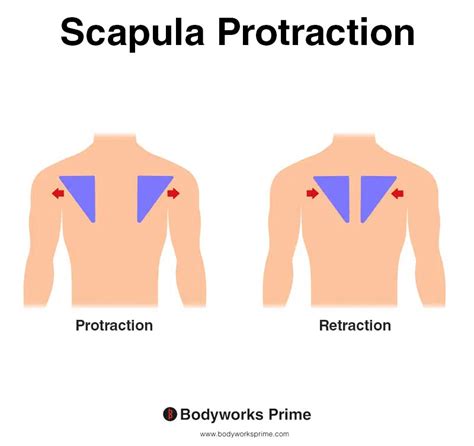
Scapular push-ups are a highly effective exercise for warming up the shoulders and building strength in the muscles responsible for shoulder protraction. This movement specifically targets the ability to slide the shoulder blades away from the spine and forward around the ribcage, laying a crucial foundation for overall shoulder health and improved performance in various upper-body activities.
Understanding the Scapular Push-Up
The Scapular Push-Up is a foundational bodyweight exercise that primarily works the muscles responsible for shoulder protraction, namely the serratus anterior and pectoralis minor. It involves adopting a high plank or push-up position and executing a controlled motion of protracting the scapulae (shoulder blades) and then allowing them to retract through gravity, all while keeping the elbows straight.
This exercise is vital for enhancing scapular strength, stability, and mobility. These elements are paramount for maintaining optimal shoulder health and ensuring efficient performance in most upper-body movements that require scapular protraction.
How to Perform Scapular Push-Ups
The execution of scapular push-ups can be broken down into simple steps:
Starting Position
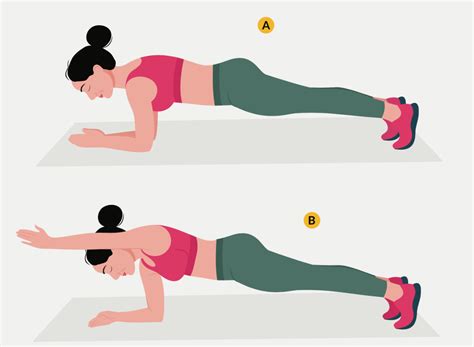
Begin in a high plank position. Your hands should be positioned directly under your shoulders, slightly wider than shoulder-width apart, and your body should form a straight line from your head to your heels. Engage your core to prevent your hips from sagging.
Execution
Keeping your arms straight and elbows locked, allow your chest to sink slightly towards the floor by squeezing your shoulder blades together. This movement should be controlled, focusing on the retraction of the scapulae. You may feel a stretch in the muscles between your shoulder blades.
Following the retraction, actively protract your shoulder blades by pushing them away from each other. This action will push your upper body away from the floor, creating a subtle rounding in your upper back. Hold this position briefly.
Breathing Technique
Proper breathing can enhance performance and stamina. A common technique is to inhale at the starting position or as you return to it, and exhale at the top/end position (when protracting the scapulae).
Hand and Shoulder Positioning
To reduce wrist strain, rotate your hands slightly outward from a pronated (palms down) position. Maintain shoulder external rotation for better stability throughout the exercise. It is also important to maintain scapular depression throughout the exercise to stabilize the shoulders and engage the target muscles more effectively.
Elbows and Range of Motion
The standard technique involves keeping the arms straight throughout the movement. The primary focus is on the movement of the scapulae, not bending the elbows. However, if you experience mobility issues or discomfort, a slight bend in the elbows may be beneficial for comfort and effective execution.
Key Benefits of Scapular Push-Ups
Incorporating scapular push-ups into your routine offers numerous advantages:
- Scapular Strength: Strengthens the muscles responsible for scapular protraction, which is fundamental for improving posture, enhancing shoulder stability, and serving as a prerequisite for standard push-ups.
- Scapular Control: Promotes better control and coordination of the shoulder blades, essential for proper shoulder mechanics and overall shoulder health.
- Improved Push-Up Performance: Enhances control of the shoulder blades, leading to better performance in push-ups and other upper-body exercises.
- Joint Stability: By engaging supporting muscles, scapular push-ups enhance shoulder, elbow, and wrist stability, contributing to joint health and injury prevention.
- Core Activation: Requires significant core engagement to maintain stability and control throughout the movement, thus contributing to core strength.
- Functional Performance: Improves athletic performance by enhancing scapular mobility and upper-body mechanics.
- Posture Improvement: Encourages the shoulder blades to sit more naturally against the ribcage, counteracting the tendency for rounded shoulders and reducing upper back tension.
- Pain Reduction: Can help reduce shoulder discomfort during pressing movements by improving how the shoulder blade supports the upper arm.
- Versatile and Scalable: Adaptable for all fitness levels, with or without added resistance.
- Convenience: Can be performed virtually anywhere without requiring special equipment.
Wall Slides for Serratus Anterior Activation
Muscles Worked During Scapular Push-Ups
While traditional push-ups primarily target the chest, shoulders, and triceps, scapular push-ups shift the focus:
- Primary Movers: Serratus anterior (responsible for protraction and upward rotation of the scapula) and pectoralis minor.
- Supporting Muscles: Anterior deltoids (support the straight-arm plank), lower and middle trapezius (control shoulder blade movement), and rhomboids (contribute to stabilization).
- Stabilizers: Core muscles (abs and obliques) brace to maintain a stable plank, and rotator cuff muscles support the shoulder joint.
- Isometric Engagement: Triceps and biceps keep the elbows locked.
Variations and Progressions
Scapular push-ups can be modified to suit different fitness levels:
Ways to Make it Easier:
- Perform on an inclined surface (e.g., against a wall or on a raised platform).
- Perform on your knees.
- Increase the base of support by getting your feet further apart for more stability.
- Regress to an even simpler variation or a different exercise.
Ways to Make it Harder:
- Play with the tempo and add an isometric phase (pause/hold) at different points of the movement.
- Perform on a declined surface or by elevating your feet until your body is horizontally aligned.
- Perform on an unstable surface (e.g., a BOSU ball or stability discs).
- Progress to a unilateral (one-arm) scapular push-up.
- Add resistance with a weight vest or a backpack (Weighted Scapular Push-up).
- Elevate your hands on a stable surface (Elevated Scapular Push-up).
Common Mistakes to Avoid
To maximize the effectiveness and safety of scapular push-ups, be mindful of these common errors:
- Bending the Elbows: This transforms the exercise into a standard push-up, shifting the focus away from the scapular muscles. Keep the arms straight throughout.
- Shrugging the Shoulders: Avoid raising your shoulders towards your ears. Maintain a long neck and keep the shoulders down and back.
- Allowing Hips to Sag or Rise: Maintain a straight line from head to heels by engaging the core.
- Rushing the Movement: Perform the exercise slowly and with control to ensure proper muscle activation and prevent injury.
- Jerking the Movement: Focus on smooth, deliberate transitions between protraction and retraction.
If a full plank feels too demanding, performing the exercise on your knees is still effective. If you experience shoulder pinching or discomfort, reduce the range of motion and ensure you remain pain-free. If discomfort persists, it is advisable to seek professional guidance.