Understanding Stearyl Alcohol
Unlike traditional alcohols that can be drying to both skin and hair, stearyl alcohol is a fatty alcohol. It’s great for skin and hair, adding emollient properties to emulsified or oil-based products. It also acts as a co-emulsifier, helping to stabilize emulsions, and as a thickening agent. It has a silky feel in products and adds body without making your product feel heavy or greasy.
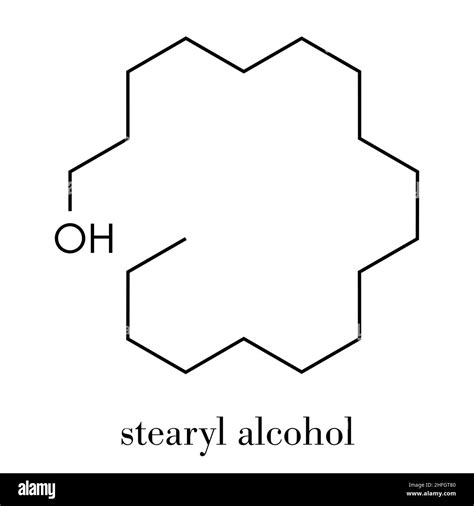
Stearyl alcohol coats hair and skin with a thin coating, protecting strands and skin with a smooth film, helping to prevent damage and moisture loss. It can also help make hair smoother and shinier.
Properties and Composition of Stearyl Alcohol
Stearyl Alcohol, along with Oleyl Alcohol and Octyldodecanol, are long-chain fatty alcohols. Stearyl Alcohol is characterized as a white, waxy solid with a faint odor, while Oleyl Alcohol and Octyldodecanol are clear, colorless liquids. These ingredients play a crucial role in forming emulsions and preventing them from separating into their oil and liquid components. Additionally, they reduce the tendency of finished products to generate foam when shaken.
Stearyl Alcohol and Oleyl Alcohol are mixtures of long-chain fatty alcohols. Stearyl Alcohol consists primarily of n-octadecanol, while Oleyl Alcohol is primarily unsaturated 9-n-octadecenol. Octyldodecanol, in contrast, is a branched-chain fatty alcohol.
Fatty alcohols are higher molecular weight, nonvolatile alcohols. They are produced from natural fats and oils through the reduction of the fatty acid (-COOH) grouping to the hydroxyl function (-OH).
Applications and Benefits in Skincare and Haircare
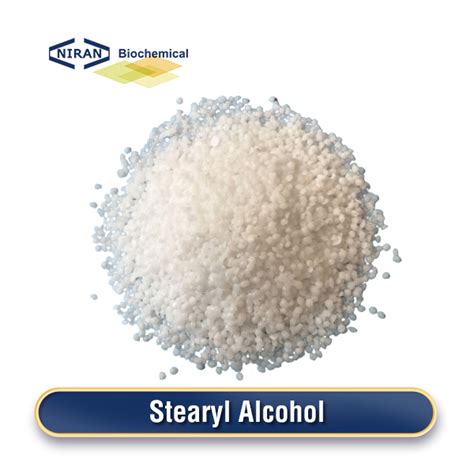
This product comes as a solid, waxy pellet. It is melted and then added to oil-based or emulsified products. Stearyl alcohol is plant-derived and biodegradable, making it an environmentally friendly choice. This makes it a great ingredient to have in your collection if you’re making skincare or hair care products.
Stearyl Alcohol, Oleyl Alcohol, and Octyldodecanol function as emulsion stabilizers and surfactants. A surfactant is an ingredient that helps two substances that normally do not mix to become dissolved or dispersed in one another, also known as a surface-active agent.
Safety and Regulatory Approval
The Food and Drug Administration (FDA) has reviewed the safety of Stearyl Alcohol and approved its use as a multipurpose additive for direct addition to food. Stearyl Alcohol and Oleyl Alcohol have also been approved for use as indirect food additives.
The safety of Stearyl Alcohol and related ingredients has been assessed by the Cosmetic Ingredient Review (CIR) Expert Panel. The CIR Expert Panel evaluated the scientific data and concluded that Stearyl Alcohol, Oleyl Alcohol, and Octyldodecanol were safe for use in cosmetics and personal care products.
The CIR Expert Panel noted that Stearyl Alcohol is found naturally in various mammalian tissues, and the metabolism of Stearyl Alcohol and Oleyl Alcohol in animals is well described. Due to the chemical nature and benign biological activity of these compounds, they are not suspected of having significant potential for carcinogenesis, reproductive, or developmental effects.
If they are made from plants, Stearyl Alcohol, Oleyl Alcohol, and Octyldodecanol may be used in cosmetics and personal care products marketed in Europe according to the general provisions of the Cosmetics Regulation of the European Union. Fatty alcohols, including Stearyl and Oleyl Alcohols, occur in small quantities as components of wax esters in plants and animals. These compounds serve to protect the outer surface of plants and animals from water loss.