Stretch marks, also known medically as striae, are a common skin condition characterized by indented streaks that appear on various parts of the body. These marks commonly manifest on the stomach, breasts, hips, buttocks, and thighs. While they are not harmful to one's health, many individuals find them cosmetically undesirable and wish for them to disappear. Although stretch marks will never truly vanish, they can fade over time or with the assistance of specific products and procedures.
Types of Stretch Marks
Stretch marks are often categorized based on their color or the cause of their appearance. The common types include:
- Striae atrophicans: Stretch marks resulting from thinning skin.
- Striae gravidarum: Stretch marks that appear after pregnancy.
- Striae rubrae: Red, newer stretch marks.
- Striae albae: White, older stretch marks that have faded.
- Striae nigra: Black stretch marks.
- Striae caerulea: Dark blue stretch marks.
Causes of Stretch Marks
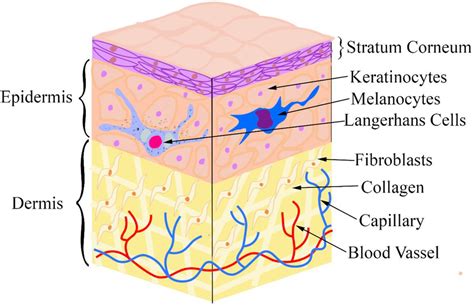
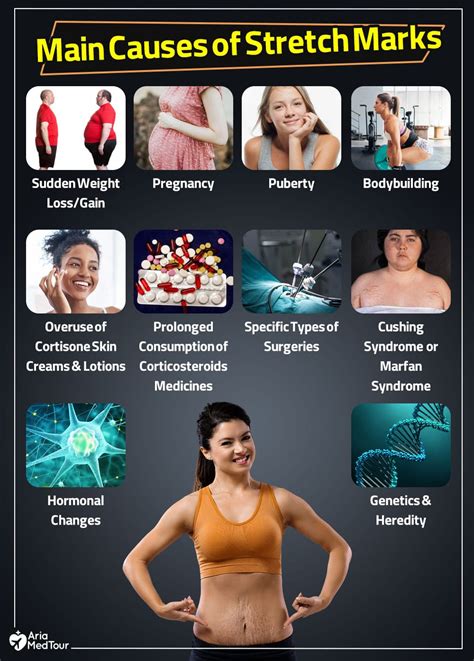
Stretch marks develop when the body grows quickly or changes size, and the skin cannot stretch sufficiently to keep up. Collagen, a protein that provides elasticity to the skin, plays a crucial role. If the skin lacks adequate collagen, stretch marks may appear as it stretches.
Several factors can contribute to the development of stretch marks:
- Rapid weight gain or loss: This affects both men and women.
- Childhood growth spurts during puberty: It's important for children to understand that these marks are normal and may fade as they mature.
- Pregnancy: Caused by stretched skin and a surge in hormones that weaken skin fibers. These marks might fade after childbirth.
- Breast implant surgery.
- Bodybuilding: Even individuals with low body fat can develop stretch marks where muscles bulge.
- High amounts of steroids: This can be due to steroid medications or certain illnesses like Cushing's syndrome.
- Genetic disorders: Conditions such as Marfan syndrome, which weakens skin fibers and causes unusual growth, and Ehlers-Danlos Syndrome (EDS), a group of conditions resulting from genetic changes to collagen, can predispose individuals to stretch marks.
- Family history: Stretch marks often run in families.
Appearance and Diagnosis
New stretch marks may feel slightly raised and itchy. These rippled, streaky lines can vary in color, often starting as red or pink, progressing to purplish-blue, and eventually fading to thinner, pale, scar-like streaks over time, making them less noticeable.
Stretch marks can appear on many parts of the body, including the arms, back, breasts, buttocks, hips, shoulders, and abdomen or torso. A doctor can typically diagnose stretch marks through visual examination and by inquiring about your medical history. If you have a history of long-term oral or topical steroid use, high cortisol levels might be implicated.
Medical Treatments for Stretch Marks
A variety of medical treatments and home remedies are available to address stretch marks, with varying degrees of effectiveness. Dermatologists and plastic surgeons can employ procedures designed to help fade these marks by stimulating collagen production.
Laser Therapies
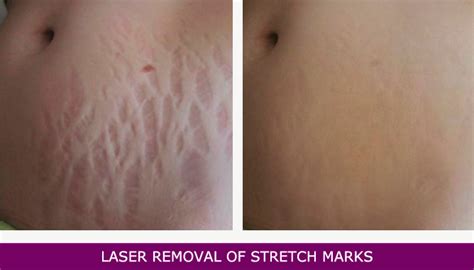
- Pulsed dye laser therapy: This painless treatment uses blasts of light, particularly effective on new, red stretch marks. The light energy calms the blood vessels beneath the skin that contribute to the marks' appearance.
- Fractional CO2 laser therapy: A newer treatment that may smooth out older, white stretch marks. Studies suggest it can help fade stretch marks, showing improvement after several sessions compared to topical treatments.
- Excimer laser therapy: This method exposes stretch marks to targeted ultraviolet B (UVB) light. Research indicates it is safe and can correct pigment problems associated with stretch marks over a period of one to four months.
Other Procedures
- Microdermabrasion: This treatment utilizes tiny crystals to gently abrade the top layer of skin. Studies have shown it can help fade new, reddish stretch marks, especially when combined with skin peels.
- Chemical peel: An acidic solution is applied to burn off the top layers of skin, removing dead and damaged cells and promoting new skin growth. While it may offer minor improvement, it typically does not eliminate stretch marks entirely.
- Radiofrequency: This technique uses radio wave energy to generate heat, stimulating the body's collagen production. Studies suggest it is safe and can improve the appearance of stretch marks, though more research is needed.
- Ultrasound: Similar to radiofrequency treatments, ultrasound uses sound waves to penetrate deep into the skin, generating heat to tighten the skin and initiate collagen production.
- Cosmetic surgery: Procedures like a tummy tuck can remove skin containing stretch marks, but they may result in scars and are often painful and costly.
- Microneedling: This procedure involves using a device with fine needles to create tiny punctures in the skin, stimulating the growth of new collagen and elastin fibers. Multiple sessions are usually required for noticeable results.
- Platelet-rich plasma (PRP) injections: These injections can help rebuild collagen, making stretch marks less visible.
Home Remedies and Topical Treatments
Numerous creams, salves, oils, and ointments claim to prevent or treat stretch marks, but scientific proof of their efficacy is often limited. However, some treatments and home remedies may help fade or conceal them:
- Body makeup and self-tanner: These products can temporarily hide stretch marks. It's important to note that tanning can make stretch marks more visible.
- Tretinoin: Creams containing tretinoin (a retinoid) increase collagen production and are often used for wrinkles. They may help fade newer stretch marks but can cause skin redness, irritation, or scaling. Pregnant or nursing individuals should consult a healthcare provider before using retinoids.
- Collagen boosters: Products containing ingredients like StriVectin-SD and lupin seed extracts are designed to boost collagen, but their effectiveness in fading or preventing stretch marks is not definitively established.
- Centella asiatica: This herbal ingredient is believed to boost cells responsible for collagen production and skin tissue repair. While found in many over-the-counter creams, its efficacy for fading stretch marks lacks strong evidence.
- Bitter almond oil: One study suggested that massaging bitter almond oil into the skin during pregnancy was associated with fewer stretch marks compared to using oil without massage.
- Cocoa butter, shea butter, olive oil, and vitamin E oil: These natural moisturizers can soften the skin, but their impact on preventing or treating stretch marks is unclear. Research suggests cocoa butter and olive oil may not effectively treat or prevent stretch marks, though a combination of almond oil and massage showed some effectiveness in reducing their development during pregnancy.
- Aloe vera gel: Research suggests aloe vera gel may help treat stretch marks.
- Hyaluronic acid: This ingredient is also suggested in some research for its potential benefits in treating stretch marks.
If you choose to use a topical cream, lotion, or gel, consistent daily application for several weeks, with thorough massage into the skin, is recommended. These products may be most effective on newer stretch marks.

Prevention and Hydration
While there is no absolute guarantee, it is possible to lower the chances of developing stretch marks. Maintaining a healthy weight, even during pregnancy, is the most effective strategy. Consulting a doctor about an appropriate exercise plan and balanced diet is advisable.
Products containing centella and hyaluronic acid may play a role in preventing stretch marks. Staying hydrated by drinking sufficient water (approximately eight glasses a day) is also important, as dehydrated skin is less resilient.
Additionally, avoiding the overuse of corticosteroid creams, lotions, and pills is recommended, as they can decrease the skin's ability to stretch, potentially causing stretch marks.
When to Seek Medical Advice
Stretch marks are very common and typically do not require treatment as they are harmless and often fade over time. However, if you are concerned about the appearance of your skin, if stretch marks cover large areas of your body, or if you notice stretch marks without a clear explanation (like pregnancy or weight gain), it is advisable to consult your healthcare provider. They can help determine the cause, rule out any underlying conditions, and discuss appropriate treatment options.
When considering treatments, it's important to discuss potential side effects, costs, and expected outcomes with your doctor. Treatments can improve the appearance of stretch marks, but complete elimination is unlikely.