Post-inflammatory hyperpigmentation (PIH) and post-inflammatory erythema (PIE) are common and often persistent sequelae of acne vulgaris. While acne's incidence and pathophysiology show minimal variation across different races and ethnicities, individuals with darker skin types are at a higher risk for developing PIH. This condition can be more distressing than acne itself and challenging to manage. Topical azelaic acid (AzA) gel has emerged as a promising treatment option for mild to moderate acne with associated PIH due to its anti-tyrosinase activity.
Efficacy and Safety of 15% Azelaic Acid Gel in Treating Acne-Induced PIE and PIH
This study aimed to assess the efficacy and safety of 15% azelaic acid (AzA) gel in treating acne-induced post-inflammatory erythema (PIE) and post-inflammatory hyperpigmentation (PIH). A randomized, double-blind, placebo-controlled trial was conducted with 72 patients experiencing mild to moderate acne. Participants were divided into two groups: the AzA group applied 15% AzA gel twice daily for 12 weeks, while the placebo group used an AzA-free gel. The study was registered with the Chinese Clinical Trial Registry (ChiCTR.org.cn) under the identifier ChiCTR2300076959.
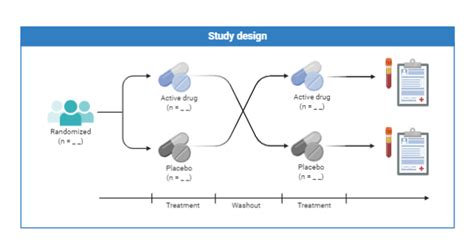
Clinical evaluations were performed at baseline (week 0) and at weeks 4, 8, and 12 using non-invasive skin detection technologies. These included VISIA skin analysis, dermoscopy, and skin physiological function tests. The main outcome measures assessed were the post-acne hyperpigmentation index (PAHPI), melanin content, hemoglobin content, individual typology angle (ITA), water content, transepidermal water loss (TEWL), and sebum levels. Additionally, Investigator Global Assessment (IGA) and Dermatology Life Quality Index (DLQI) were evaluated at weeks 0 and 12.
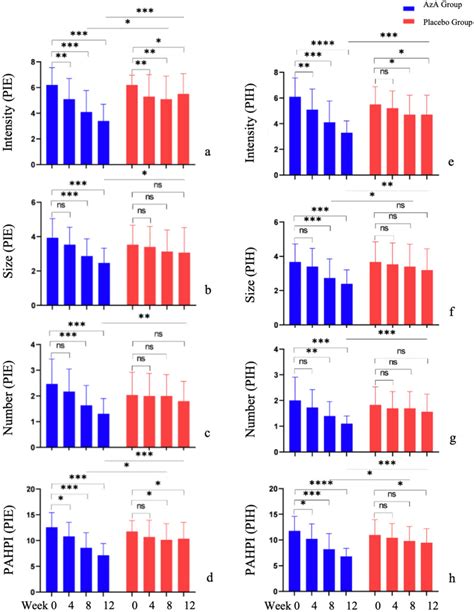
Out of the 72 patients enrolled, 60 completed the trial. The results demonstrated that by weeks 8 and 12, patients in the AzA group showed a significantly reduced PAHPI for PIE lesions compared to both baseline and the placebo group (P < 0.05). Both groups exhibited reduced PIH lesions at weeks 8 and 12, with statistically significant differences from baseline (P < 0.05).
Further analysis revealed significant reductions in hemoglobin content within AzA-treated PIE lesions compared to placebo at week 12 (P < 0.05). Similarly, melanin content was significantly decreased in AzA-treated PIH lesions at week 12 (P < 0.05). These findings indicate that 15% AzA gel is effective in improving acne-induced PIE and PIH with minimal adverse reactions, positioning it as a viable clinical application.
Specific Effects of Azelaic Acid on PIE and PIH Lesions
AzA treatment led to a significant decrease in overall PAHPI scores and Investigator Global Assessment (IGA) ratings. The study also detailed the effect of AzA on melanin, hemoglobin, and ITA in acne-induced PIE and PIH.
Impact on PIE Lesions
Within acne-induced PIE lesions, AzA treatment resulted in a reduction in melanin and hemoglobin levels. There was also an observed increase in the individual typology angle (ITA).
Impact on PIH Lesions
For acne-induced PIH lesions, AzA treatment led to a reduction in melanin content and an increase in ITA. While hemoglobin levels in PIH were also assessed, no significant difference was observed between the AzA and placebo groups.
Effect of Azelaic Acid on Skin Physiology
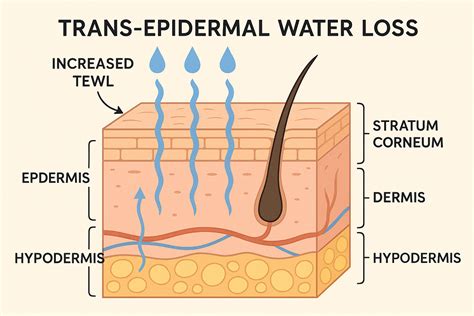
The study also investigated the impact of AzA on general skin physiology. While there were no significant changes in water content with treatment, an increase in transepidermal water loss (TEWL) and a decrease in sebum levels were observed after AzA treatment.
Subjective Improvement and Quality of Life
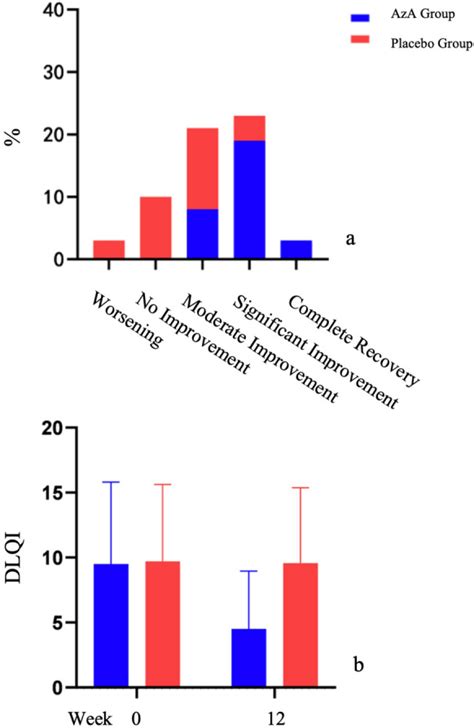
AzA treatment demonstrated a positive impact on patients' subjective experience and quality of life. There was an increase in overall subjective improvement reported by patients, and a decrease in the Dermatology Life Quality Index (DLQI) was observed in AzA-treated individuals, correlating with clinical improvements.
Clinical Evaluation and Mechanisms of Action
Clinical evaluations using the VISIA Skin Analysis system and dermatoscopy further supported the findings. At week 12, comparisons between the AzA and placebo groups revealed significant improvements in PIE and PIH.
VISIA analysis showed a notable reduction in redness area and brown spots in the AzA group, contrasting with minimal changes or exacerbation in the placebo group. Dermoscopy examinations indicated lightening of color and a reduction in brown spot area and background erythema in the AzA group, with a lack of significant changes in the placebo group.
VISIA Skin Analysis - An Explanation | David Bushore, MD | Austin, TX | Ph: 512-459-4869
Understanding Azelaic Acid
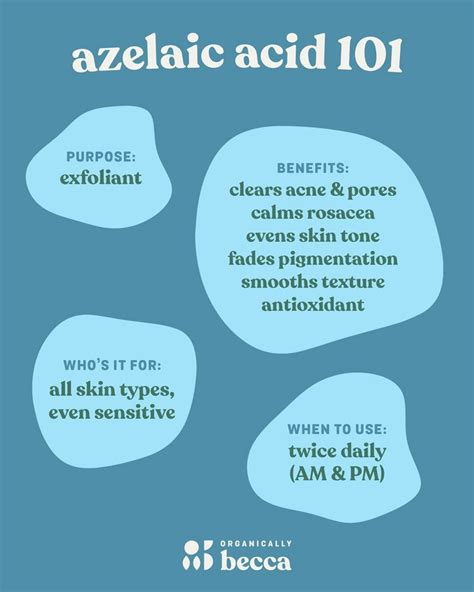
Azelaic acid is a naturally occurring compound derived from the metabolism of the yeast Malassezia furfur (also known as Pityrosporum ovale). It is primarily utilized as a topical treatment for mild to moderate acne and can be used in conjunction with oral antibiotics or hormonal therapy. Acne treatment with azelaic acid typically requires patience, with some improvement noticeable after one month and maximum results often achieved after six months of continuous use.
Azelaic acid possesses both anti-inflammatory properties and the ability to target hyperpigmentation. Its keratolytic properties contribute to its exfoliative and comedolytic effects, making it a valuable option for acne management. Compared to more potent therapies, azelaic acid generally exhibits milder side effects. Patients typically observe improvements in their acne within approximately four weeks of initiating treatment. Azelaic acid is considered nontoxic and well-tolerated by most individuals.
The scientific evidence supports azelaic acid as a safe and versatile treatment for various skin concerns, including acne, rosacea, and persistent pigmentation. Its gentle nature and multiple benefits make it a valuable component of both professional and consumer skincare regimens. For medical aesthetic clinics, educating staff and clients about azelaic acid can enhance treatment outcomes and patient satisfaction, ultimately contributing to healthier, radiant, and even-toned skin.