Botox, a widely recognized treatment for both cosmetic and medical conditions, is derived from a potent neurotoxin produced by the bacterium Clostridium botulinum. This bacterium is naturally found in various environments, including soils, lakes, and forests, and is generally harmless in its natural state. However, in concentrated amounts, the neurotoxin it produces can lead to botulism-like symptoms, characterized by muscle weakness and breathing difficulties. This inherent toxicity often leads to concerns about the safety of Botox injections.
It is crucial to understand that Botox injections utilize a small, purified, and diluted form of this neurotoxin. This carefully controlled preparation allows Botox to provide relief for a range of health and cosmetic issues. In cosmetic applications, Botox works by relaxing wrinkles and fine lines, contributing to a more youthful appearance. The mechanism involves preventing nerve fibers from releasing acetylcholine, a chemical transmitter essential for muscle contraction. When muscles do not receive acetylcholine, they remain relaxed, thereby smoothing out wrinkles in the treated area.
The process of creating Botox is meticulous and involves several key stages, beginning with the cultivation of Clostridium botulinum bacteria in a controlled laboratory setting. Companies like Allergan Aesthetics adhere to strict quality control measures throughout this cultivation process to ensure the purity and potency of the toxin. Following cultivation, the toxin is harvested through fermentation, where the bacteria release the botulinum toxin into the surrounding medium.
Once the purified botulinum toxin is obtained, the manufacturing process moves to the formulation stage. Here, the toxin is combined with a proprietary blend of proteins and stabilizing agents to create a safe and effective injectable solution. Throughout this entire manufacturing process, a strong emphasis is placed on quality control and safety. Rigorous standards set by regulatory authorities are followed, with extensive testing conducted at every stage to verify the purity, potency, and stability of the final product.
The botulinum toxin used in Botox is specifically a purified form of botulinum toxin type A, a natural protein created by the Clostridium botulinum bacterium. The main ingredient, botulinum toxin A, is carefully refined and mixed with stabilizers to ensure its safe use. It is important to note that Botox does not contain preservatives, parabens, or animal by-products, debunking the myth that it is made from snake venom.
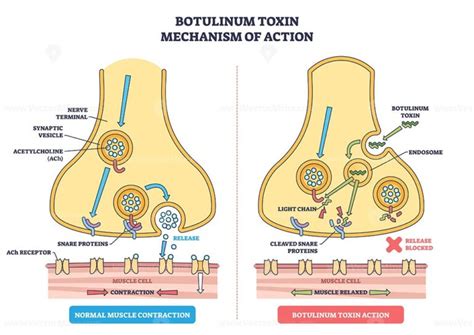
The Science Behind Botox's Action
Botulinum toxin exerts its effect by cleaving key proteins necessary for nerve activation. The process begins when the toxin binds specifically to the presynaptic surface of neurons that utilize acetylcholine as a neurotransmitter. Once attached to the nerve terminal, the neuron internalizes the toxin through receptor-mediated endocytosis. As the vesicle containing the toxin moves deeper into the cell, it acidifies, activating a part of the toxin that breaches the vesicle membrane and enters the cell cytoplasm.
Inside the cytoplasm, the toxin cleaves SNARE proteins, which are crucial for vesicle fusion with the target cell membrane. This action prevents the release of acetylcholine vesicles from the nerve cell, thereby blocking the signal for muscle contraction. The active form of the toxin is a two-chain protein, composed of a heavy chain and a light chain joined by a disulfide bond. The heavy chain is responsible for binding to nerve terminals and facilitating the translocation of the light chain into the cell. The light chain, a zinc metalloprotease, is the active component that cleaves host proteins like SNAP-25, a member of the SNARE protein family, to inhibit neurotransmitter release.
There are seven known serotypes of botulinum toxin (A-G), distinguished by their antigenicity and differing tertiary structures. While all types target SNARE proteins, they may target different members of this family. Serotypes A, B, and E are known to cause human botulism, with types A and B having the longest duration of activity in the body, typically lasting from several weeks to months.
Historical Development and Evolution of Botox
The history of understanding botulism and its causative agent dates back to the late 18th century. An early recorded outbreak of foodborne botulism occurred in 1793 in Germany, linked to the consumption of pork stomach. In the early 19th century, German physician Justinus Kerner provided the first comprehensive description of botulism symptoms. The bacterium Clostridium botulinum and its toxin were definitively identified in 1895 by Belgian microbiologist Émile van Ermengem following an outbreak at a funeral in Ellezelles, Belgium.
Initially, it was believed that only contaminated meat or fish could cause botulism, but this was disproven in 1904 by an outbreak linked to canned white beans. The early 20th century saw the growth of the food canning industry, which unfortunately also led to an increase in botulism cases, highlighting the need for better preservation techniques. Swiss-American veterinary scientist Karl Friedrich Meyer played a significant role in developing methods for growing the organism, extracting the toxin, and inactivating it by heating.
During World War II, the weaponization of botulinum toxin was explored. In the mid-20th century, the mechanism of botulinum toxin's action-blocking acetylcholine release-was elucidated. The therapeutic application of botulinum toxin began to emerge with ophthalmologists specializing in strabismus (eye muscle disorders). They developed techniques for guided injections to treat muscle imbalances. Inspired by research on chicks, Alan B. Scott, M.D., began developing botulinum type A neurotoxin for therapeutic use, eventually leading to the establishment of Oculinum Inc. for its manufacturing and distribution.
The cosmetic potential of botulinum toxin type A, specifically for reducing forehead wrinkles, was first described and published by plastic surgeon Richard Clark, M.D., in 1987. He experimented with paralyzing forehead muscles to achieve symmetry. Later, in 1992, J. D. and J. A. Carruthers reported on the use of botulinum toxin type-A for cosmetic treatment of glabellar frown lines, with a significant number of participants showing cosmetic improvement.

Therapeutic and Cosmetic Applications of Botox
Botox injections are utilized for a wide array of medical conditions beyond their well-known cosmetic uses. These therapeutic applications leverage the toxin's ability to selectively inhibit muscle contraction. For instance, Botox is approved by the FDA for the treatment of chronic migraines, helping to reduce the frequency and severity of headaches, particularly for individuals experiencing them at least 15 days a month. The medication works by blocking pain-signaling chemicals at nerve endings, and its effectiveness often improves with subsequent treatments.
Other medical conditions treated with Botox include:
- Neck spasms (cervical dystonia): To alleviate uncontrolled muscle contractions in the neck.
- Muscle spasms: In conditions like cerebral palsy, where limbs may pull inward.
- Lazy eye (strabismus): To correct imbalances in the eye muscles.
- Excessive sweating (hyperhidrosis): To reduce profuse sweating even in the absence of heat or exertion.
- Overactive bladder: To manage urinary incontinence.
- Migraine: As mentioned, for chronic migraine sufferers.
In the realm of cosmetic procedures, Botox is primarily used to relax wrinkles and fine lines caused by facial expressions such as smiling, frowning, and squinting. Standard treatment areas include the forehead, between the eyebrows (glabellar lines), and around the eyes (crow's feet).
Safety, Side Effects, and Regulatory Oversight
Botox injections are generally considered safe when administered by a licensed and skilled healthcare professional. However, like any medical procedure, there are potential risks and side effects. The most common side effects are localized to the injection site and can include pain, bruising, and swelling. Some individuals may also experience flu-like symptoms, headaches, or upset stomachs.
In cosmetic use, side effects can arise from unintended paralysis of facial muscles, leading to temporary drooping eyelids or muscle weakness. Side effects from therapeutic use can be more varied and potentially more serious, depending on the injection site and dosage. Rarely, the toxin can spread to unintended areas, causing symptoms distant from the injection site. To mitigate these risks, it is crucial to receive injections only from a licensed professional, as "black market" or counterfeit products may contain unsafe amounts of the toxin.
Regulatory bodies play a vital role in ensuring the safety and efficacy of Botox. In the United States, the Food and Drug Administration (FDA) approves Botox for various cosmetic and therapeutic treatments. The FDA also approves the text of prescription medicine labels and specifies the medical conditions for which a drug can be sold. In the UK, Botox is prescribed by a registered practitioner and regulated by the Medicines and Healthcare products Regulatory Agency (MHRA).
The FDA has issued warnings regarding the potential dangers of botulinum toxin, including its ability to spread from the injection site. Boxed warnings have been added to product labels to alert users to this possibility. Despite these concerns, the clinical use of botulinum toxin A in children with conditions like cerebral palsy has been demonstrated to be safe with minimal side effects.
It's important to distinguish Botox from other treatments. Dermal fillers, for example, are made from different materials like hyaluronic acid and work by adding volume, whereas Botox paralyzes muscles to reduce wrinkles. Furthermore, while there are different brand names for botulinum toxin injections, such as Dysport®, Xeomin®, and Jeuveau®, they may vary in potency and duration of effect. Healthcare providers can help determine the most suitable option for an individual's needs.
Botox Neural Signaling Blockade Process - 3D Animation
Understanding Botox vs. Other Botulinum Toxin Products
While "Botox" is a household name, it is a brand name for a specific botulinum toxin type A product manufactured by Allergan Aesthetics. Several other botulinum toxin products are available on the market, each with its own brand name and potentially slight variations in formulation or approved uses. These include:
- Dysport® (AbobotulinumtoxinA): Approved for cosmetic use and certain therapeutic indications. It may offer faster results for some patients compared to Botox.
- Xeomin® (IncobotulinumtoxinA): Another botulinum toxin type A product that is purified to remove accessory proteins. It is approved for cosmetic use and certain therapeutic conditions.
- Jeuveau® (PrabotulinumtoxinA): Approved in the U.S. specifically for cosmetic use to improve the appearance of moderate to severe frown lines.
- Myobloc® or NeuroBloc® (RimabotulinumtoxinB): A botulinum toxin type B product, often used for treating neck spasms.
The primary differences between these products often lie in the potency of trace proteins, the size of the molecule, and their specific FDA approvals. For example, Dysport may spread more readily in the tissue, potentially leading to a faster onset of action but also a slightly higher risk of affecting unintended muscles. Botox's formulation with specific stabilizing proteins is designed for prolonged effect. The choice between these products is typically made by a healthcare provider based on the patient's specific needs, the area being treated, and desired outcomes.
Regarding insurance coverage, Botox injections for cosmetic purposes are generally not covered by health insurance. However, treatments for medical conditions such as chronic migraines, neck spasms, or overactive bladder may be covered, depending on the specific insurance policy. It is always advisable to check with one's insurance provider for detailed information.