As a frequent adjudicator for State Solo and Ensemble events, I have the opportunity to hear the best high school students from throughout Florida as they perform their prepared solos. My task is to comment on their performance, offer coaching, and assign a rating. For a student to receive the highest rating, they need to demonstrate age-appropriate mastery of all aspects of playing the clarinet and their chosen literature, including honoring the instructions indicated by the composer as written in the music.
Musical directions make an enormous difference in how we as performers approach and play a piece. These are the words that the composer uses to tell us exactly how they would like a piece played. We ignore this direct communication from the creative source of the music at our peril. Any information that is available that will help us craft our best performance should be used as we prepare a piece.
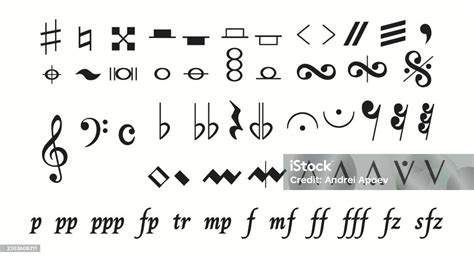
Understanding the Words on the Page
One of the things I always do after listening to a student performance is find a musical direction in the piece and ask them what it means. I, of course, usually ask one of the less obvious words. If it says “quickly,” I assume it’s understood. If it says “plus retenu,” I assume most folks will have to look it up when they first encounter it. I am often surprised when the answer is “I don’t know.” Truly, to bring the composer’s music to life the way they intended, we are compelled to honor every bit of information given to us, including paying attention to the words on the page. These words can completely change how we perform a piece. Honoring the composer’s intentions is so much more than just playing the correct notes!
Piece Example: Rhapsody for Clarinet by Willson Osborne
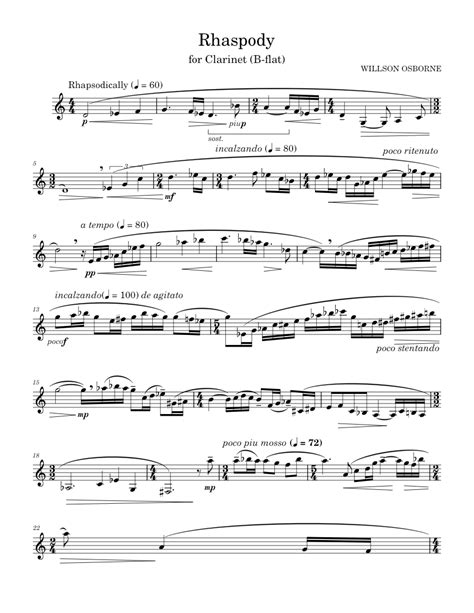
For example, let’s look at one piece in particular, the Rhapsody for Clarinet by Willson Osborne. This piece relies heavily on understanding the composer's words. Osborne has included many detailed instructions throughout this piece and uses words that I have only encountered in his piece. I have heard it played often at auditions and at events like Solo and Ensemble, and it is an excellent example of how looking up these words and exploring how they guide the performer is a crucial step.
The Significance of the Title and Its Meaning
The title itself can also be a helpful direction for us. The word is Rhapsodically. Or is it? Rhapsody is defined as “a free instrumental composition in one extended movement, typically one that is emotional or exuberant in character.” Wow! That gives us a wonderful insight into how to approach performing this piece.
The term Rhapsodically means “Rapturous” and “extravagantly emotional.” How does one infuse a piece with extravagant emotion? Osborne gives musical directions that tell the performer how to accomplish some of this feeling. Terms such as incalzando (pressing or chasing), molto rubato (playing with much expressive or rhythmic freedom), and con esitazione (with hesitation) are detailed instructions a performer must look up and understand to achieve the rapturous quality of this piece. That is our goal as a performer, because that is the composer’s goal.
The same attention to the composer’s own words needs to be applied to pieces written by Stravinsky, Brahms, Takemitsu, and beyond.