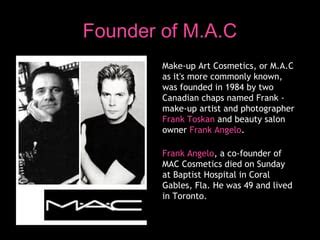
M.A.C. Cosmetics, or Make-up Art Cosmetics, stands as a pioneering authority in the beauty industry, celebrated for its professional-grade makeup and innovative artistry. Founded in Toronto, Canada, in 1984 by makeup artist Frank Toskan and salon owner Frank Angelo, M.A.C. was initially conceived to meet the specialized needs of professional makeup artists. However, its distinctive bold colors, inclusive shade ranges, and unwavering commitment to diversity quickly propelled it to widespread popularity among consumers.
The Genesis of M.A.C.: A Kitchen-Table Revolution
The story of M.A.C. begins in the kitchens of its founders, Frank Angelo and Frank Toskan. Frustrated by the limitations of existing makeup products, particularly how they performed under the intense glare and heat of photography studio lights, they embarked on a mission to create their own. Toskan, a photographer, recognized the need for makeup that translated well on camera, while Angelo, a beauty salon owner, brought an entrepreneurial spirit. Together, they began crafting their initial products, driven by a desire for quality and artistic expression. Their first creation was a lipstick inspired by a bold pink Crayola crayon named Flamingo, notable for being one of the first matte lipsticks that accurately represented its true color on the lips as it did in the tube.
The brand's ethos was rooted in inclusivity from its inception. Angelo and Toskan felt that the makeup industry at the time excluded members of the LGBTQ+ community. As members of the community themselves, they aimed to create products that were not only functional for artists but also welcoming and expressive for all demographics. This foundational principle of "All Ages, All Races, All Sexes" became the brand's enduring motto and a cornerstone of its identity.
Early Growth and Cultural Impact
The early days saw M.A.C. operating from the back of Angelo's hair salon, serving freelance makeup artists and industry creatives. The first M.A.C. Pro store, opened in Toronto in 1982, functioned more as a resource hub for professionals to share tips and purchase products in bulk. As demand grew, the company opened its first public retail store in New York City's West Village in 1985. This location, situated in the epicenter of the AIDS epidemic, became a vibrant gathering place for club personalities, drag queens, and beauty enthusiasts, reflecting the brand's inclusive and optimistic spirit.
M.A.C.'s unconventional approach extended to its hiring practices, with the brand deliberately choosing employees of diverse genders and backgrounds, often featuring bold hair colors, piercings, and tattoos. This commitment to showcasing a wide spectrum of beauty and individuality set M.A.C. apart from traditional cosmetic companies.
A Defining Moment: Madonna and the Rise to Stardom
A significant breakthrough for M.A.C. occurred when Madonna was photographed wearing its lipstick. This exposure, coupled with her later appearance in a M.A.C. T-shirt, brought considerable attention to the burgeoning brand. The relationship deepened when Toskan and Angelo formulated a custom lipstick shade for Madonna's 1990 Blonde Ambition tour. Dubbed "Russian Red," this long-lasting lipstick became an instant sensation, solidifying M.A.C.'s reputation and driving demand among both professionals and the public.
The Viva Glam Initiative: Philanthropy and Advocacy
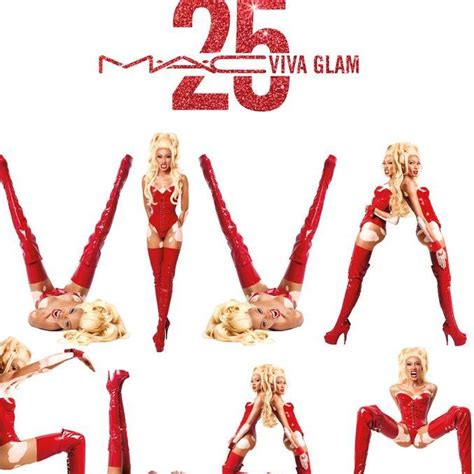
In 1994, M.A.C. launched its groundbreaking Viva Glam campaign, a philanthropic initiative aimed at raising awareness and funds for HIV/AIDS research and prevention. The campaign's first spokesperson was the then-up-and-coming drag queen RuPaul, a bold choice that underscored M.A.C.'s commitment to inclusivity and challenging conventional beauty standards. The tagline for the campaign, "We won't look down on you, and we won't intimidate you, because we know what it was like to be picked on by the cool kids. And guess what? Now we're the cool kids," perfectly encapsulated the brand's ethos.
The Viva Glam initiative proved to be a monumental success. 100% of the proceeds from Viva Glam products, including lipsticks and lip glosses, are donated to the M.A.C. AIDS Fund. Since its inception, the campaign has raised hundreds of millions of dollars, making M.A.C. a pioneer in corporate HIV/AIDS funding. Over the years, numerous celebrities have lent their support as Viva Glam spokespersons, including Lady Gaga, Nicki Minaj, Miley Cyrus, Ariana Grande, and, more recently, Kim Petras, further amplifying the campaign's reach and impact.

Expansion and Acquisition by Estée Lauder
M.A.C.'s rapid growth caught the attention of industry giants. In 1995, the Estée Lauder Companies acquired a 51% stake in M.A.C., a move that significantly expanded the brand's global distribution and operational capabilities. While Estée Lauder managed the business aspects, the founders retained creative control. This partnership allowed M.A.C. to establish freestanding retail locations and counters in major department stores worldwide, accelerating its expansion into new markets.
Tragically, co-founder Frank Angelo passed away in 1997. Following his death, Estée Lauder acquired the remaining shares of M.A.C., fully integrating it into its portfolio. Under Estée Lauder's ownership and the subsequent leadership of John Demsey as Senior Vice President of Creative Director, M.A.C. continued to thrive, solidifying its position as a global beauty powerhouse. Demsey was instrumental in expanding the brand internationally, leveraging his understanding of pop culture and youth trends to drive global success.
M.A.C.'s Product Innovation and Cultural Relevance
M.A.C. has consistently been recognized for its innovative product development and its ability to stay at the forefront of beauty trends. The brand is renowned for its extensive range of high-performance cosmetics, including foundations, lipsticks, eyeshadows, and blushes, celebrated for their vivid colors and professional-grade results. M.A.C. also offers a high-performance skincare line, designed to improve skin health and enhance makeup application.
The brand's commitment to creativity is evident in its numerous collaborations with artists, celebrities, and fashion designers. These partnerships, ranging from iconic figures like Rihanna and Selena Quintanilla to fashion houses like Proenza Schouler and cultural phenomena like "The Rocky Horror Picture Show," have consistently pushed the boundaries of makeup artistry and set new trends.
Iconic Products and Enduring Popularity
M.A.C. sells more lipstick than any other non-drugstore brand, a testament to the enduring appeal of its iconic shades like Ruby Woo. Products such as the Studio Fix Foundation and the Spice Lip Pencil have become cult favorites, deeply embedded in the beauty lexicon. The brand's influence is visible in popular culture, with M.A.C. products being used in films like "Black Swan" and worn by celebrities on and off screen.
In recent years, M.A.C. has embraced innovation with new product launches like the Studio Radiance Serum-Powered Foundation, tapping into the "skinification" trend. The brand has also updated its signature matte lipsticks with formulas offering longer wear and enhanced moisture, catering to contemporary consumer preferences. Furthermore, M.A.C. has leaned into nostalgia, re-releasing beloved collections and iconic shades that resonate with its long-standing fanbase.
M.A.C.'s Continued Influence and Future Outlook
Despite the rise of numerous new beauty brands, M.A.C. remains a dominant force in the global cosmetics market. Its unwavering commitment to inclusivity, artistry, and social responsibility, particularly through the Viva Glam campaign, continues to resonate with consumers. The brand's ability to blend innovation with its rich heritage, coupled with strategic cultural relevance and storytelling, ensures its enduring impact on the beauty industry and its ability to connect with both legacy fans and new generations.