Makeup artistry offers a vast spectrum of possibilities, ranging from effortlessly natural looks to vibrant, bold statements and even intricate Halloween transformations. While foundational products like foundation, blush, and eyeshadow are standard, achieving special effects or altering facial features often requires specialized tools and techniques. This is where the use of prosthetics and face adhesives comes into play.
The Versatility of Prosthetic Makeup
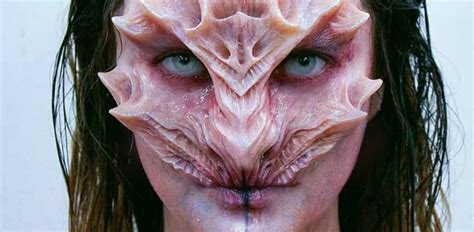
Prosthetic makeup, commonly associated with creating convincing fake injuries or monstrous visages, extends far beyond these applications. It is a valuable tool for actors and cosplayers alike, enabling subtle or dramatic alterations to facial features. For instance, cosplayers frequently employ prosthetic pieces to add pointed tips to their ears, achieving an elegant elf-like appearance.
Materials and Adhesives for Prosthetics
Prosthetics themselves are typically crafted from materials such as latex, silicone, or gelatine. The choice of adhesive for application is influenced by the makeup artist's expertise and any potential allergies the wearer may have.
Liquid Latex: A Popular Choice with Caveats
Liquid latex is a widely used adhesive. However, its ingredients can sometimes trigger allergic reactions. Its inherent elasticity and moldability make it an excellent option for areas of the face that experience significant movement, such as during conversations or when expressing emotions, as noted by Art Hearty.
Elmer's Glue: A Beginner-Friendly Alternative
Surprisingly, Elmer's glue, the familiar white liquid or purple stick glue used in arts and crafts, can also serve as a makeup adhesive. It is particularly well-suited for beginners who are practicing application techniques before investing in more specialized products.
Spirit Gum: For Latex Allergies
For individuals with latex allergies, spirit gum presents a viable alternative. It offers a lightweight feel on the skin while securely adhering prosthetics. However, its complexity in removal necessitates its use by experienced makeup artists.
Application Techniques for Adhesives
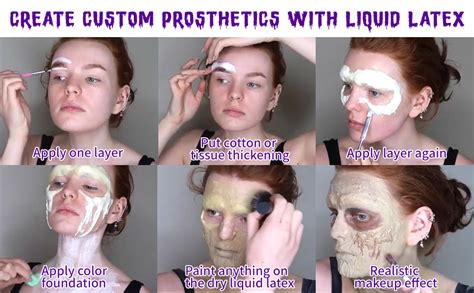
Regardless of the adhesive chosen, a clean canvas is paramount. Both the face and hands should be thoroughly cleansed, with rubbing alcohol recommended for ensuring the skin is free from oils and makeup. The application process for liquid latex and spirit gum shares similarities.
- Tools such as wedge sponges or Q-tips are recommended, as they are less likely to be damaged than makeup brushes.
- Apply a thin layer of adhesive to the skin.
- Allow the adhesive to become tacky. Last Looks FX & Beauty Supply suggests testing tackiness by gently tapping with a finger.
Using Elmer's glue involves a more layered approach to achieve sufficient hold for prosthetics, as detailed by Keneshi Project.
- Apply the white liquid glue from the bottle using similar tools.
- Use a hairdryer to quickly dry each layer.
- Repeat this process to build up at least four layers of dried glue.
- Apply an additional layer of glue without drying it completely.
- Once tacky, press the prosthetic firmly into the adhesive.
3D Embellishments and Graphic Liners
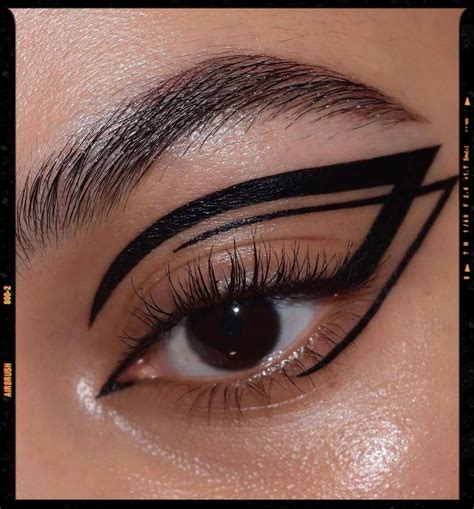
Beyond prosthetics, the realm of makeup has seen a surge in 3D embellishments and intricate graphic liners. Beauty creators are incorporating elements like pearls, sequins, and stickers, moving beyond traditional makeup brushes to achieve these striking looks.
The Unexpected Tool: Hot Glue Guns
An unexpected addition to the makeup artist's toolkit has been the hot glue gun. While effective for creating 3D elements, it's crucial to remember that hot glue guns are designed for crafting and should be used with extreme caution, if at all, near the face due to their heat and stickiness.
Once the glue has dried, shimmer or eyeshadow can be applied using a makeup sponge to tap the color directly onto the glued design, mimicking techniques used for chrome nail powder or metallic eyeshadow.
Lash Glue for Adhering Embellishments
For smaller embellishments, eyelash glue is a reliable option. As King points out, lash glue is formulated for skin application and is less likely to cause irritation or allergic reactions, though sensitivities can still occur.
Pioneers of this trend, like Funes, compare the intricate designs to the puffy stickers of childhood, emphasizing the control required over the glue gun trigger and hand movements to create smooth lines.
Challenges and Creative Solutions in Application
The application process can present challenges. Initial attempts at creating sharp, graphic lines or 3D wings may result in less-than-perfect outcomes, potentially due to factors like unsteady hands or the absence of a defined eye shape for guidance. Pivoting to more playful dots and squiggles can lead to successful results.
Adding sparkle involves pressing fingers into eyeshadow palettes and smoothing iridescent colors over dried glue designs. Embellishments are then placed with tweezers and gently pressed for about 10 seconds.
Allure news writer Gabi Thorne encountered similar difficulties, with circles appearing as shapeless blobs due to shaky hands and the glue's stickiness. To refine the look, Thorne trimmed excess glue with lash scissors to reshape the elements into more uniform circles. Thorne also opted to blend shimmery eyeshadows directly onto the eyelids for a gradient effect, rather than applying color before the embellishments.
Removal of 3D Makeup Elements
Removing these 3D makeup creations is akin to removing strip false eyelashes. Board-certified dermatologist Mona Gohara M.D. recommends loosening the eyelash glue with Vaseline, followed by a gentle facial cleanser or micellar water. This careful removal process can prevent irritation and marks, with the goal being to allow the pieces to slide away rather than forcing them off.
The experimentation with these trends can uncover surprising levels of creativity, where precision and symmetry may yield to unique, one-of-a-kind artistic expressions.
Recommended Products for 3D Graphic Eye Looks
- Danessa Myricks Beauty Lightwork Vol.
Topical Skin Adhesives in Medical Contexts
In medical settings, topical skin adhesives, particularly cyanoacrylates, are utilized for closing simple incisions, such as those resulting from minimally invasive surgery. However, their application is not universal for all types of wounds.
Limitations and Potential Side Effects
The wound strength achieved with cyanoacrylates can be significantly less than that of sutured wounds, sometimes as low as 10%. Post-treatment, patients may experience redness, swelling, pain, or tenderness in the treated area. In rare instances, topical skin adhesives can lead to wound dehiscence, where a previously closed wound reopens. Contact allergic dermatitis is also a possibility, with reactions typically resolving within a few days, though some may persist for months.
NYX's "Face Glue" Primer and Setting Spray: User Reviews
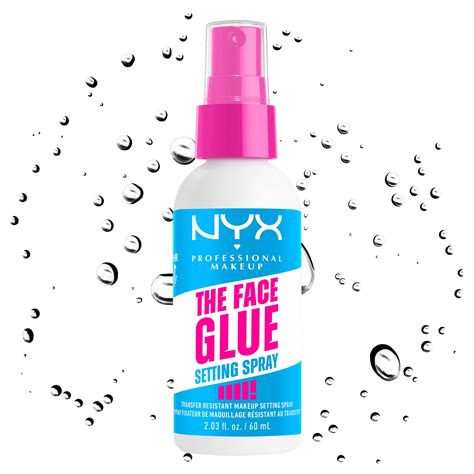
More recently, NYX's "Face Glue" Primer and setting spray have garnered attention, with user feedback presenting a mixed reception.
Promises and User Expectations
Beauty professionals and consumers alike have been drawn to the product's promotional campaigns, which promise long-lasting and favorable makeup results, including 24-hour wear. Reviews compiled from various consumer platforms offer insights into the product's performance.
Positive Feedback on Face Glue Primer
Many users report that Face Glue Primer initially feels slightly sticky upon application but ultimately settles into a smooth finish. Its lightweight texture and lack of strong odors are often praised. The accompanying setting spray also receives commendation for helping makeup maintain its freshness and longevity throughout the day.
User Dinkyp_123236 describes the primer as a "game-changer" that provides a "sticky base" keeping makeup in place, while the setting spray locks everything in without feeling heavy, resulting in makeup that looks "fresh and flawless for hours." Similarly, lanap5_876450 highlights the primer's ability to keep makeup in place even in hot and humid conditions, noting its lightweight, non-sticky texture that creates a smooth base for flawless application and reduces the need for touch-ups.
Negative Feedback and Concerns
Despite the positive reviews, some users with sensitive skin have experienced dryness or breakouts. Complaints also include makeup appearing cakey and separated, or the product being excessively sticky without achieving a desirable finish. A few users have noted that the product possesses a scent reminiscent of glue, which, while fitting the product's name and aesthetic, is not ideal for application.
User Meaghanw9 expresses disappointment, stating that their face becomes "cakey and separated" by the end of the day and that breakouts have occurred since using the product, despite liking the packaging and theme. While acknowledging the product applies thick but spreads evenly, Meaghanw9 suggests it may be too heavy for their pores.
Issues with the Setting Spray Nozzle
A significant criticism of the setting spray relates to its nozzle, which can dispense the product in heavy, uneven spurts rather than a fine mist. One review points out the presence of "white stuff" at the bottom of the spray bottle, resembling glue settled in water, which proved difficult to fully mix even after shaking.
User comments indicate that while the spray does work to keep makeup intact, its consistency and smell can be off-putting. Some users prefer to use it on a sponge before or after base application rather than as a final setting spray. The sticky finish is also noted as a potential drawback for those who prefer a more natural feel.
In conclusion, while NYX's Face Glue products may effectively help makeup adhere, they might not be suitable for individuals with uneven or sensitive skin. It is also advisable to inspect distributed products for quality control, as some may not meet advertised standards.