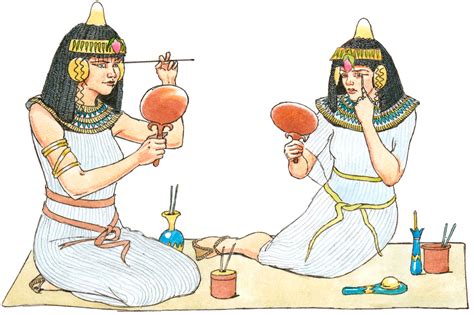
From the copper and lead ore that the ancient Egyptians used to create the world's first cosmetics to the scientifically advanced products of today that can do everything from hide pores, smooth complexions, and turn the pale green of your eyes a vivid shade of emerald, makeup has been an integral part of humankind for thousands of years.
Ancient Practices and Early Cosmetics
Over the centuries, women used burnt matches to darken their eyes, berries to stain their lips, and young boys' urine to fade their freckles. They even swallowed ox blood in some misguided attempt to improve their complexions. Women throughout history put their health at risk with many of their homemade cosmetics. In some cultures, for example, women used arsenic, lead, mercury, and even leeches to give themselves the pale appearance deemed beautiful in the old days.
Cosmetics have been in use for thousands of years, with ancient Egyptians and Sumerians using them. In Europe, the use of cosmetics continued into the Middle Ages, where the face was whitened and the cheeks rouged. Though attitudes towards cosmetics varied throughout time, the use of cosmetics was openly frowned upon at many points in Western history. Regardless of the changes in social attitudes towards cosmetics, many occasionally achieved ideals of appearance through cosmetics.
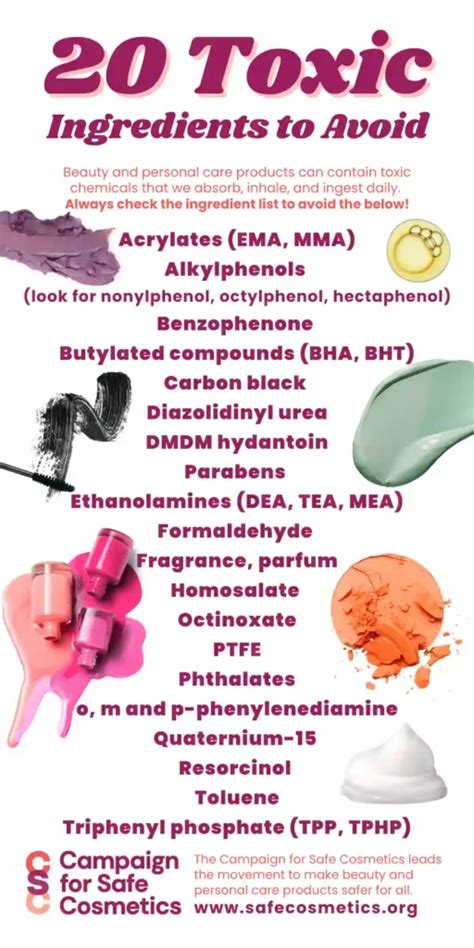
Historically, the absence of regulation of the manufacture and use of cosmetics, as well as the absence of scientific knowledge regarding the effects of various compounds on the human body for much of this time period, led to a number of negative effects upon those who used cosmetics, including deformities, blindness, and, in some cases, death. Although harmless products were used, such as berries and beetroot, many cosmetic products available at this time were still chemically dubious and even poisonous.
Harmful Ingredients and Their Consequences
Examples of the prevalent usage of harmful cosmetics include the use of ceruse (white lead) throughout a number of different cultures, such as during the Renaissance in the West, and blindness caused by the mascara Lash Lure during the early 20th century. During the 19th century, there were numerous incidents of lead poisoning due to the fashion for red and white lead makeup and powder, leading to swelling and inflammation of the eyes, weakened tooth enamel, and blackened skin, with heavy use known to lead to death. Usage of white lead was not confined only to the West, with the white Japanese face makeup known as oshiroi also produced using white lead.
The Rise of the Modern Cosmetics Industry
Throughout the late 19th and early 20th centuries, changes in the prevailing attitudes towards cosmetics led to a wider expansion of the cosmetics industry. In 1882, English actress and socialite Lillie Langtry became the poster girl for Pears of London, making her the first celebrity to endorse a commercial product. She allowed her name to be used on face powders and skin products. During the 1910s, the market in the US was developed by figures such as Elizabeth Arden, Helena Rubinstein, and Max Factor. These firms were joined by Revlon just before World War II and Estée Lauder just after.
By the middle of the 20th century, cosmetics were in widespread use by women in nearly all industrial societies around the world, with the cosmetics industry becoming a multibillion-dollar enterprise by the beginning of the 21st century. Today's multibillion-dollar cosmetic industry must meet strict government regulations about what it can and cannot include in products and must follow safe manufacturing guidelines.
The History of Cosmetics Giant Revlon
Defining and Categorizing Cosmetics
Cosmetics are substances that are intended for application to the body for cleansing, beautifying, promoting attractiveness, or altering appearance. They are mixtures of chemical compounds derived from either natural sources or created synthetically. Cosmetics have various purposes, including personal and skin care. They can also be used to conceal blemishes and enhance natural features (such as the eyebrows and eyelashes). People have used cosmetics for thousands of years for skin care and appearance enhancement.
Visible cosmetics for both women and men have gone in and out of fashion over the centuries. Although modern makeup has been traditionally used mainly by women, men also use makeup in order to enhance their own facial features or cover blemishes and dark circles.
Types and Applications of Cosmetics
Cosmetics are typically intended to be applied externally. These products can be applied to the face (on the skin, lips, eyebrows, and eyes), to the body (on the skin, particularly the hands and nails), and to the hair. Most cosmetics are also distinguished by the area of the body intended for application, with cosmetics designed to be used on the face and eye area usually applied with a brush, a makeup sponge, or the fingertips.
Face Cosmetics
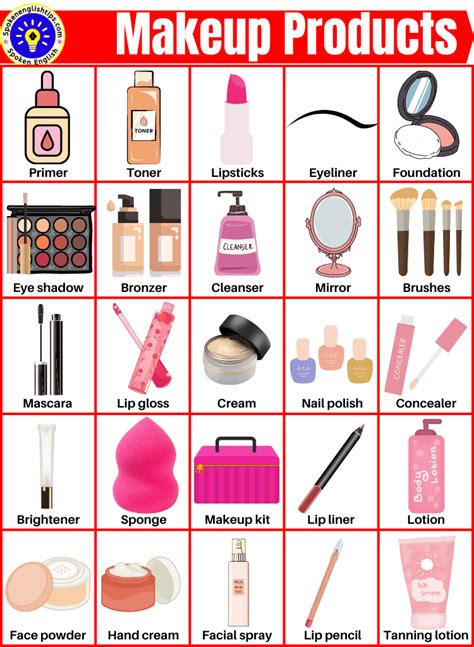
- Primers: Used on the face before makeup is applied, creating a transparent, smooth layer over the skin to allow for smooth and even makeup application.
- Concealer: A cream or liquid product used to conceal marks or blemishes. It is typically the color of the user's skin tone and is generally applied after priming to even out skin tone before foundation. Concealer is usually more heavily pigmented, has higher coverage, and is thicker than foundation or tinted primers.
- Foundation: A cream, liquid, mousse, or powder product applied to the entirety of the face to create a smooth and even base for the user's skin tone.
- Rouge, blush, or blusher: A liquid, cream, or powder product applied to the center of the cheeks to add or enhance their natural color.
- Bronzer: A powder, cream, or liquid product that adds color to the skin, typically in bronze or tan shades, intended to give the skin a tanned appearance and enhance the color of the face. Bronzer may also contain substances providing a shimmer or glitter effect and comes in matte, semi-matte, satin, or shimmer finishes.
- Highlighter: A liquid, cream, or powder product applied to the high points of the face, such as the eyebrows, nose, and cheekbones. Highlighter commonly has substances added, providing a shimmer or glitter effect.
- Face powder, setting powder, or setting sprays: Used to 'set' foundation or concealer, giving it a matte or consistent finish while also concealing small flaws or blemishes. Both powders and setting sprays claim to keep makeup from absorbing into the skin or melting off.
Eye Cosmetics
- Eyeshadow: A powder, cream, or liquid pigmented product used to draw attention to, accentuate, and change the shape of the area around the eyes, the eyelids, and the space below the eyebrows.
- Eyeliner: Used to enhance and elongate the apparent size or depth of the eye.
- False eyelashes: Used to extend, exaggerate, and add volume to the eyelashes.
- Eyelash extensions: A more permanent way to achieve enhanced eyelashes, lasting two to three weeks.
- Mascara: Used to darken, lengthen, thicken, or enhance the eyelashes through the use of a typically thick, cream-like product applied with a spiral bristle mascara brush.
Lip Cosmetics
- Lipstick, lip gloss, lip liner, and lip balms: Commonly add color and texture to the lips, as well as serving to moisturize the lips and define their external edges.
- Lip stains: Temporarily saturate the lips with a dye and typically do not alter the texture of the lips.
Nail Cosmetics
- Nail polish: A liquid used to color the fingernails and toenails. Transparent, colorless nail polishes may be used to strengthen nails or be used as a top or base coat.
Skin Care and Treatment Cosmetics
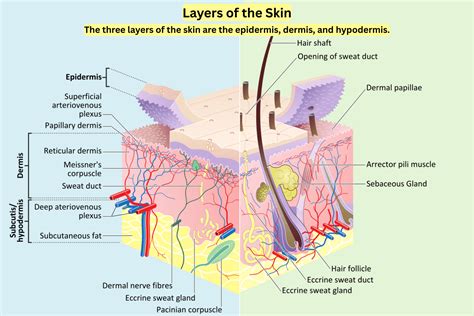
Cosmetics designed for skin care may be used to cleanse, exfoliate, and protect the skin, as well as replenish it, using body lotions, cleansers, toners, serums, moisturizers, eye creams, retinol, and balms.
Key Skin Care Products
- Cleansing oil, or oil cleanser: An oil-based solution that gently emulsifies the skin's natural oils and removes makeup. Typically used as part of a two-step cleansing process.
- Toners: Used after cleansing to remove any remaining traces of cleanser and restore the pH of the skin. They may also add some hydration.
- Facial masks: Treatments applied to the skin and then removed. Types include clay-based masks, peel masks, and sheet masks.
- Exfoliants: Products that help slough off dead skin cells from the topmost layer of the skin to improve its appearance.
- Moisturizers: Creams or lotions that hydrate the skin and help it to retain moisture. Tinted moisturizers contain a small amount of foundation for light coverage.
- Eye creams: Typically very light lotions or gels designed for the delicate skin around the eyes, often containing ingredients to reduce puffiness and dark circles.
- Sunscreens: Creams, lotions, sprays, gels, sticks, or other topical products that protect the skin from the sun.
- Serums: Light, easily absorbed liquids that provide a high concentration of specific ingredients to the face, usually applied before moisturizer.
Makeup Application Tools
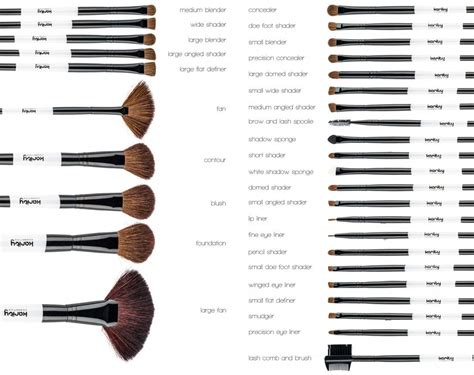
A makeup brush is used to apply makeup to the face. There are two types of makeup brushes: synthetic and natural.
Common Types of Makeup Brushes
- Foundation brush: Usually a dense brush that distributes product evenly while smoothing out the face.
- Stippling brush: Has soft, synthetic bristles that give an airbrushed effect.
- Powder brush: Tends to be big and fluffy for quick and easy application of dusting powder all over the face.
- Bronzer brush: Can also serve as a contour brush, it is an angled brush that gives the face dimensions and illusions by allowing makeup to be placed in place of bone structure.
- Kabuki brush: Used to apply any sort of powder makeup to large areas of the face.
Intriguing Facts About Makeup
Cosmetics are composed of various natural and synthetic components. They play a vital role in improving our appearance and, consequently, our self-esteem. However, strict government regulations ensure only safe ingredients are used in these products. As the demand for beauty products rises, manufacturers strive to create formulations with skin-friendly chemicals.
- The patent for nail polish was issued in 1919, and it was a light pink shade.
- Ancient Romans and Greeks were innovative in beauty and medicine, developing acne treatments like barley flour and butter blends.
- The Aztecs utilized crushed cochineal beetles to create vibrant red lipstick, obtaining a deep crimson pigment known as carmine, which remains a valuable natural dye.
- The famous actress Elizabeth Taylor is said to have made it a rule that other women couldn’t wear red lipstick on set.
- Frank Toskan and Frank Angelo started MAC cosmetics in Toronto in 1985, addressing the need for professional makeup professionals to withstand bright lighting.
- For some, lipstick symbolized freedom from societal norms rather than beauty for extravagance.
- In 1915, the Wilkenson Sword razor company labeled underarm hair as unfeminine, influencing grooming habits.
- Women have often created beauty marks with black velvet patches during the 18th century, considered fashionable and attractive.
- “Rimmel” translates to mascara in several languages, ironically tying it to the product’s essence.
- Every year, approximately 900 million lipsticks are bought worldwide.
From its ancient origins to the science behind cosmetics, we now grasp the significance of makeup in human history and culture. Understanding its ingredients and proper usage enhances our daily routines. Furthermore, recognizing its impact on self-confidence and expression allows us to appreciate its empowering nature.