If you’re tired of people asking if you’re upset when you’re feeling perfectly fine, you’ve probably met your “11 lines.” Those two creases that form between your eyebrows can be frustratingly persistent, sticking around even when your face is relaxed. The great news is that a simple Botox treatment can help relax the underlying muscles, smoothing the skin for a more serene look. But before you book an appointment, you’re likely wondering, how many units of Botox for 11 lines will I need?
Ever catch your reflection and notice two vertical lines between your brows that make you look a little more serious or tired than you actually feel? You’re not alone. These lines, often called “11 lines,” are one of the most common reasons people explore cosmetic treatments. They can show up whether you’re 25 or 55, and they’re a natural part of how our faces express emotion. But just because they’re natural doesn’t mean you have to live with them if they bother you.
What Are "11 Lines" and Why Do They Form?
Those two pesky vertical lines that set up camp between your eyebrows are technically called glabellar lines. They get their nickname, “11 lines,” from their parallel appearance. While they’re a completely normal result of facial expressions, they can sometimes create an unintended look of being angry, worried, or stressed out. This can be frustrating when you’re feeling perfectly happy and relaxed on the inside.
Glabellar lines don’t just appear overnight. They form over years of repeated muscle movements. Every time you frown, squint at your phone, or concentrate on a task, the muscles between your brows-the corrugator and procerus muscles-contract. When you’re young, your skin has plenty of collagen and elastin, so it bounces right back. As you get older, your skin naturally loses some of that elasticity. The constant folding from these expressions starts to etch permanent creases into the skin, which remain visible even when your face is at rest.
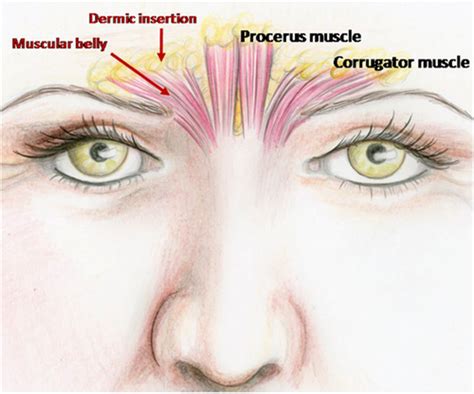
Factors Influencing the Prominence of 11 Lines
While repeated muscle contractions are the primary cause, several other factors determine how prominent your 11 lines become.
- Genetics plays a big role; if your parents have deep frown lines, you might be more prone to them, too.
- The natural strength of your facial muscles is another key factor-some people just have stronger corrugator muscles.
- Sun exposure can also accelerate the breakdown of collagen and elastin, making lines appear sooner.
Botox for 11 Lines: Understanding the Treatment
Figuring out the right amount of Botox for your “11” lines is one of the most common questions I hear. While there’s no single magic number, understanding the typical dosage and the factors that influence it can help you feel more prepared for your consultation. The goal is always a natural, refreshed look, not a “frozen” one.
How Botox Works
Botox injections use a purified protein derived from the bacterium Clostridium botulinum. It works by temporarily blocking nerve signals to specific muscles, preventing them from contracting. This relaxation of the muscles smooths the overlying skin, reducing the appearance of wrinkles caused by repeated expressions.
When to Start Botox for 11 Lines
The decision of when to start Botox isn't about a specific birthday; it's more about understanding your skin and addressing your concerns. Some people notice their frown lines starting to stick around in their late 20s, while others don’t see them until their 40s. The best time to consider treatment is when those lines start to bother you, whether your face is moving or at rest. It’s about feeling confident in your own skin, at any age.
Preventative Botox is becoming increasingly popular for people in their 20s and 30s. The idea is to relax the muscles between the brows before they have a chance to etch deep, permanent lines into the skin. This proactive approach helps keep the skin smoother for longer, essentially preventing those creases from forming in the first place.
Determining Your Botox Dosage for 11 Lines
The exact number of units needed for 11 lines isn’t a set formula; it’s carefully determined by your specific muscle strength and goals to ensure a smooth, natural finish. A “frozen” look comes from the injector, not the Botox. Your results depend entirely on your provider’s skill. Choosing an experienced medical professional is the key to relaxing wrinkles while still looking like yourself.
Average Dosage Ranges
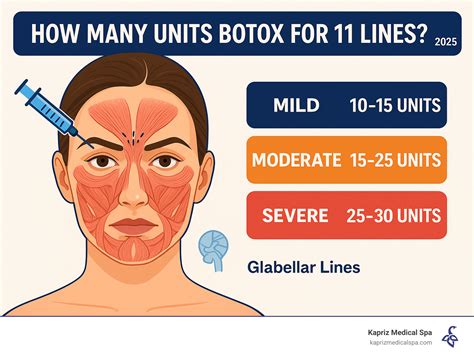
On average, treating 11 lines requires between 10 and 30 units of Botox. Most people find that 20 to 25 units is the sweet spot for smoothing moderate lines.
- Fine lines: You might only need 10 to 15 units.
- Moderate lines: 15 to 25 units is common.
- Deeper, more prominent lines: Your provider may recommend closer to 25 or 30 units.
If you’re also treating horizontal forehead lines at the same time, the total number of units for both areas could be anywhere from 30 to 60.
Factors Influencing Your Ideal Dose
Your perfect dose is unique to you! A skilled injector doesn’t just follow a formula; they act as a guide, assessing several personal factors to determine exactly what your muscles need to relax those 11 lines while still looking completely natural. It’s a delicate balance of art and science.
- Depth and Severity of Wrinkles: Deeper, more established lines require a higher dose to effectively relax the underlying muscles and soften their appearance.
- Muscle Strength and Metabolism: Stronger facial muscles typically require more Botox units to achieve the desired relaxation. Your metabolism can also influence how long results last.
- Previous Treatment History: If you’ve had Botox consistently, you might need fewer units over time as your muscles become accustomed to being relaxed.
- Gender: Men generally have greater muscle mass, so they often require higher doses than women to achieve the same level of muscle relaxation and wrinkle reduction. For example, while a woman might need 20 units for her 11 lines, a man might need 30 or more.
- Desired Outcome: Discuss your aesthetic goals with your provider. Do you want a completely smooth forehead, or would you prefer to soften the lines while maintaining some natural expression?
What to Expect During and After Treatment
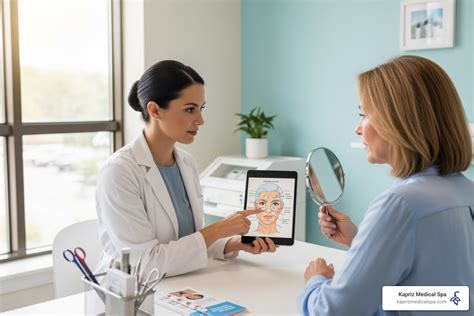
Your appointment will always start with a one-on-one consultation. This is your time to talk about the results you’re hoping for and ask any questions you have. Your provider will assess your facial anatomy, the muscle strength in your forehead, and the depth of your 11 lines. This step is essential for creating a treatment plan that’s tailored just for you.
The Procedure
Once you and your provider have a plan, the treatment itself is surprisingly quick-often taking just a few minutes. Using a very fine needle, your provider will inject the Botox into the specific muscles between your eyebrows that cause the 11 lines to form. Most people say it feels like a tiny pinch.
Immediate Post-Treatment Care (First 4 Hours)
Right after your appointment, you might notice a little bit of redness, swelling, or even some tiny bumps at the injection sites. This is completely normal and usually fades within an hour or two. The most important rule for the first four hours is to stay upright-no lying down or bending over. This simple step helps ensure the Botox stays exactly where it was intended to work its magic. It’s also a good idea to avoid anything that could increase blood flow to your face, so hold off on that hot yoga class or steamy shower for a little while.
First 24 Hours and Beyond
For the first full day, the main goal is to avoid anything that could disrupt the Botox or increase bruising.
- Avoid rubbing or massaging the treated area for at least 24 hours.
- Skip strenuous exercise, saunas, or hot tubs for the first day.
- Avoid alcohol for at least 24 hours before and after treatment to minimize bruising.
- It’s also best to avoid facials or massages for at least a week to prevent disrupting the injected area.
Dermatologist on what NOT to do after your Botox injections
Results and Longevity
Patience is key, as Botox results don’t appear instantly. You’ll likely start to see a softening of your 11 lines within three to five days, with the full effect becoming visible in about two weeks. These smooth, refreshed results typically last for three to four months. As the effects gradually wear off, your muscles will regain their normal movement. If you decide to stop treatments, your lines will simply return to how they were before.
Consistency is key to maintaining your results and even preventing lines from deepening over time. Many people find that after consistent treatments, their muscles become accustomed to being relaxed, which can mean needing fewer units to maintain results in subsequent appointments.
Cost and Safety Considerations
Botox isn’t priced by the syringe or by the area treated; it’s priced per unit. On average, you can expect the cost to be somewhere between $10 and $20 per unit. For treating 11 lines, most people need about 20 to 30 units, which puts the typical cost in the $200 to $600 range. This per-unit model is great because it means you only pay for exactly what you need.
Safety and Side Effects
When administered by a trained and experienced professional, Botox is a very safe and effective treatment. The key to getting beautiful, natural-looking results lies in the skill of your injector. An expert provider understands the nuances of facial anatomy and knows precisely where to place the injections to soften lines without making you look “frozen.”
Like any medical procedure, Botox can have side effects, but they are typically minor and temporary. The most common ones include:
- Slight bruising at the injection site
- Swelling or redness at the injection site
These usually fade within a few days. More serious but rare side effects can include drooping eyelids (ptosis) or muscle weakness in an unintended area. Choosing a highly skilled injector is the best way to minimize these risks.
Choosing a Qualified Provider
Your results and safety depend almost entirely on the person holding the syringe. Always choose an experienced, qualified, and licensed injector. A great provider will not only have the technical skill to administer the treatment correctly but will also take the time to understand your goals. They can accurately determine the right dosage for you and use the proper technique to get the best results while minimizing risks.
Botox vs. Other Neurotoxins
While “Botox” is often used generically, there are other FDA-approved neurotoxins available, including Dysport, Xeomin, and Jeuveau. These treatments work similarly by relaxing muscles, but they may have slight differences in formulation, onset of action, and duration.
- Dysport: May have a slightly faster onset than Botox.
- Xeomin: Has a purified formula without accessory proteins, which may reduce the risk of antibody development.
- Jeuveau: Primarily approved for cosmetic purposes.
An experienced provider can help you decide which option is best suited for your individual needs and desired results.