The pursuit of hydrated, radiant skin often leads to an exploration of advanced skincare formulations. Among these, serums stand out for their concentrated active ingredients designed to deliver targeted benefits. This article delves into the world of hydrating serums, with a particular focus on the benefits, ingredients, and efficacy of products like those from La Mer, a brand renowned for its innovative skincare.
Understanding Hydration in Skincare
Hydration is a fundamental aspect of healthy skin. It refers to the skin's ability to retain moisture, which is crucial for maintaining its barrier function, elasticity, and overall appearance. Dehydrated skin can appear dull, feel tight, and be more prone to fine lines and wrinkles. Hydrating serums are formulated to replenish and retain moisture within the skin.
Key Ingredients in Hydrating Serums
The efficacy of a hydrating serum is largely determined by its ingredient profile. A well-formulated serum will contain a blend of humectants, emollients, and occlusives, alongside other beneficial active ingredients.
Humectants: Drawing Moisture In
Humectants are ingredients that attract water from the environment and the deeper layers of the skin to the surface. This helps to plump the skin and provide immediate hydration.
- Water (Aqua/H2O): The most fundamental ingredient, purified and deionized water serves as the base for many cosmetic formulations.
- Butylene Glycol (BG): A versatile ingredient that acts as a solvent, humectant, and penetration enhancer, helping other ingredients absorb faster and improving the product's feel on the skin. It is approved by Ecocert and widely used in natural products.
- Glycerin: A common and effective humectant that attracts water to the skin, keeping it hydrated and supple.
- Sodium Hyaluronate: The salt form of hyaluronic acid, known for its remarkable ability to hold large amounts of water, providing significant hydration and plumping effects.
- Urea: A naturally occurring component of the skin's Natural Moisturizing Factor (NMF), urea is an excellent humectant that also helps to improve skin barrier function.
- Sorbitol: A sugar alcohol that functions as a humectant, drawing moisture into the skin.
- Trehalose: A disaccharide known for its protective and moisturizing properties, helping cells retain water under stress conditions.
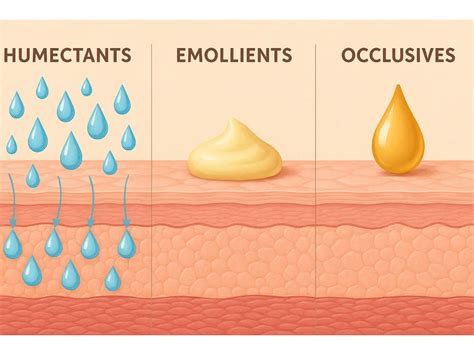
Emollients: Smoothing and Softening
Emollients fill in the gaps between skin cells, creating a smooth surface and preventing moisture loss. They contribute to a soft and supple skin texture.
- Lecithin: A phospholipid that acts as an emollient and emulsifier, helping to create a smooth skin feel and stabilize the formulation.
- Meadowfoam Oil: An emollient plant oil with a unique fatty acid composition that makes it exceptionally stable and rapidly absorbed, providing a non-greasy feel.
- Sesame Oil: A nourishing and moisturizing plant oil rich in fatty acids, known for its ability to repair and regenerate dry skin.
- Squalane: A stable, non-greasy emollient derived from natural sources, it mimics the skin's natural sebum, providing excellent moisturization and preventing water loss. It is well-tolerated by all skin types.
- Cholesterol: A vital lipid naturally found in the skin's outer layer, contributing to the skin's barrier function and suppleness.
Occlusives: Creating a Protective Barrier
Occlusives form a physical barrier on the skin's surface, preventing transepidermal water loss (TEWL) and sealing in moisture.
- Dimethicone: A silicone that creates a smooth, silky feel on the skin, forms a protective barrier, and can temporarily fill fine lines for a plumper appearance.
Antioxidants and Skin Conditioners
Beyond basic hydration, many serums incorporate ingredients that offer additional benefits like antioxidant protection and skin conditioning.
- Algae Extract: Derived from various species of algae, it acts as a humectant, emollient, and skin conditioner. Algae are rich in antioxidants, anti-inflammatory agents, and polysaccharides. Different types of algae extracts can offer varied benefits, including potential anti-aging effects and free radical scavenging.
- Sea Salt (Maris Sal): Rich in minerals, it can contribute to skin conditioning and revitalization.
- Sigesbeckia Orientalis (St. Paul's Wort) Extract: Known for its soothing and regenerating properties.
- Castanea Sativa (Chestnut) Seed Extract: Contains beneficial compounds that can support skin health.
- Plankton Extract: A source of beneficial marine-derived nutrients that can nourish and condition the skin.
- Hydrolyzed Rice Extract: May offer skin-conditioning benefits.
- Laminaria Digitata Extract, Laminaria Saccharina Extract, Ascophyllum Nodosum Extract, Undaria Pinnatifida Extract: These are various types of seaweed extracts, rich in minerals, vitamins, and antioxidants that can help condition and protect the skin.
- Grape Seed Extract: Contains potent antioxidants called proanthocyanidins (GSPs), which are significantly stronger than Vitamin C or E, helping to protect the skin from oxidative stress.
- Rosemary Extract: Contains potent antioxidants like rosmarinic acid, with anti-inflammatory properties.
- Eucalyptus Globulus Leaf Oil: Known for its refreshing scent and potential antimicrobial properties, though it should be used with caution by those with sensitive skin.
Peptides and Actives for Targeted Benefits
Advanced serums often include peptides and other active ingredients to address specific concerns.
- Acetyl Hexapeptide-8 (Argireline): Marketed as "Botox in a jar," this peptide targets muscle movement that causes expression lines, leading to a smoothing effect on wrinkles.
- Caffeine: A stimulant known for its antioxidant properties and its ability to improve microcirculation, potentially reducing puffiness and dark circles. Research also suggests potential benefits for hair growth.
- Soybean Protein: Rich in antioxidants and flavonoids, it offers skin-smoothing and softening properties. Certain components may also help inhibit skin pigmentation.
- Magnesium Ascorbyl Phosphate: A stable derivative of Vitamin C, acting as an antioxidant and helping to brighten the skin.
Supporting Ingredients
These ingredients play crucial roles in formulation stability, texture, and overall product performance.
- Lactoperoxidase & Glucose Oxidase: Enzyme systems that can help preserve the product and offer mild antimicrobial benefits.
- Xanthan Gum: A common thickening agent that improves the texture and stability of the serum.
- Carbomer: A thickening and gelling agent used to create the desired consistency.
- Polyquaternium-51: A polymer that helps to bind moisture to the skin, enhancing hydration.
- Triacetin: Used as a solvent and plasticizer.
- Alcohol Denat.: Denatured alcohol, used as a solvent and to help with product absorption.
- Fragrance (Parfum): Added for scent. Components like Geraniol, Hydroxycitronellal, Citronellol, Limonene, and Linalool are common fragrance allergens.
- Tocopheryl Acetate: A stable form of Vitamin E, providing antioxidant benefits.
- BHT (Butylated Hydroxytoluene): An antioxidant used to preserve the product.
- Disodium Edta: A chelating agent that binds metal ions, helping to stabilize the formula.
- Potassium Phosphate: A pH adjuster.
- Sodium Hydroxide: A pH adjuster.
- Phenoxyethanol, Potassium Sorbate, Chlorphenesin, Sorbic Acid: Preservatives used to prevent microbial growth.
- Blue 1 (CI 42090), Red 4 (CI 14700): Colorants.
The La Mer "Miracle Broth" and its Influence
While the specific formulation of La Mer's "Miracle Broth" is proprietary, it is widely understood to be a fermented blend of various sea-derived ingredients, including kelp and other algae, combined with minerals and vitamins. This potent elixir is the cornerstone of La Mer's products, believed to provide significant regenerative and soothing benefits, contributing to the brand's reputation for luxurious and effective skincare.
Are there benefits of fermented ingredients in skincare? | Ask Doctor Anne
Potential Benefits of Using a Hydrating Serum
Consistent use of a high-quality hydrating serum can lead to:
- Enhanced Moisture Levels: Plumps the skin and reduces the feeling of tightness.
- Improved Skin Texture: Smoother, softer skin surface due to emollients and humectants.
- Reduced Appearance of Fine Lines: Hydrated skin appears fuller, making fine lines less noticeable.
- Strengthened Skin Barrier: Ingredients like cholesterol and ceramides (though not explicitly detailed in this list) help maintain a healthy skin barrier.
- Soothing and Calming Effects: Ingredients like Bisabolol and Dipotassium Glycyrrhizate can help calm irritation.
- Antioxidant Protection: Helps defend the skin against environmental damage from free radicals.
Efficacy and Considerations
The effectiveness of any serum depends on the concentration and synergy of its active ingredients, as well as individual skin types and concerns. While ingredients like hyaluronic acid and glycerin are proven hydrators, the inclusion of peptides, antioxidants, and specialized extracts can offer more comprehensive anti-aging and skin-renewing benefits.
It is important to note that while many ingredients are well-researched, the overall efficacy of a product is a result of the complete formulation. Consumers should consider their skin's sensitivity, especially when fragrances or certain preservatives are present.