The beefsteak plant, scientifically known as Perilla frutescens, is a flowering annual herb belonging to the Lamiaceae (mint) family. Native to the Himalayas and Southeast Asia, this plant is recognized for its striking flowers and aromatic, often purple-red leaves, which can visually resemble raw meat, giving rise to its common name. The genus name, Perilla, is derived from the Latin word "pera," meaning bag, a reference to the shape of its fruiting calyx.
This plant is known for its rapid and vigorous growth, reaching heights of up to 3 feet and spreading to 1 1/2 feet wide. To manage its spread, which occurs through wind-dispersed seeds, it is advisable to pinch off the flowers before they go to seed. Without intervention, Perilla frutescens will self-seed prolifically.
Fortunately, the plant is not susceptible to serious insect or disease problems, making it a relatively low-maintenance addition to gardens.
Varieties and Nomenclature
Perilla frutescens has several regional names and variations:
- In Korea, it is known as deulkkae (들깨) or Korean perilla.
- In Japan, it is referred to as egoma (エゴマ).
- In China, it is called zisu (紫苏).
The plant is traditionally cultivated in the Korean peninsula, southern China, Japan, and India. A notable variety is P. frutescens var. crispa, commonly known as shiso or oba (green shiso), which is a staple in Japanese cuisine.
Botanical Characteristics
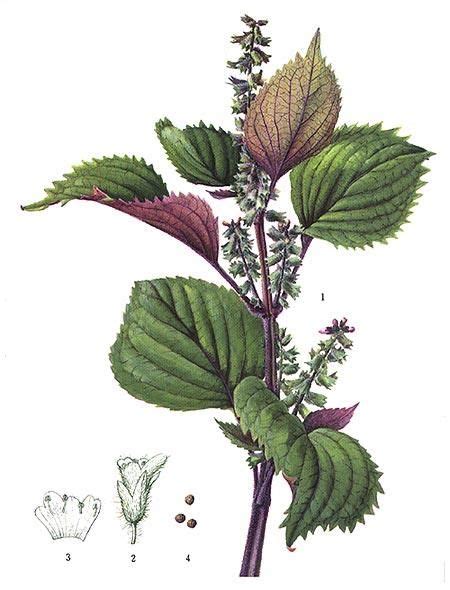
As an edible plant, perilla is cultivated in gardens and is known to attract butterflies. It possesses a distinct, strong mint-like aroma. The leaves are arranged oppositely on the stem, measuring 7-12 cm (3-4+1⁄2 in) in length and 5-8 cm (2-3 in) in width. They have a broad oval shape with pointed ends, serrated (saw-toothed) margins, and long leafstalks.
The flowers appear on racemes at the tips of branches and the main stalk in late summer. The calyx, measuring 3-4 mm (1⁄8-5⁄32 in) long, consists of three upper sepals and two hairy lower sepals. The corolla is 4-5 mm (5⁄32-3⁄16 in) long, with the lower lip being longer than the upper lip.
Geographic Distribution and Introduction
The native range of Perilla frutescens encompasses a wide area, including:
- Bangladesh
- India (particularly the Eastern and Western Himalayas, and Northeast India)
- Nepal
- Myanmar
- China (especially South Central and Southeast China)
- Thailand
- Laos
- Vietnam
- Java
- Taiwan
- Japan
- Korea
- Russia (specifically Primorsky Krai and Khabarovsk Krai)
The plant has also been introduced to other regions of Asia, such as Inner Mongolia and Cambodia, as well as parts of Europe, including Germany, Romania, Ukraine, and South European Russia. It has further established itself in several states within the United States and the province of Ontario, Canada.
Cultivation and Harvesting
In its natural state, the yield of perilla leaves and seeds is moderate. To enhance fruit production, the stem can be cut approximately 5 cm (2 in) above ground level during the summer, which encourages the growth of new stalks. Leaves can be harvested from the cut stems as well as from the new growth throughout the summer and autumn. The seeds are typically harvested in the autumn when the fruits are ripe.
Growing Perilla:
- Sunlight: Perilla thrives in full sun but can tolerate light shade.
- Soil: It performs best in moist, loose, humusy, and organically rich soils.
- Planting: Seeds can be sown directly into the garden after the last frost or started indoors 8-12 weeks before the last frost date.
- Care: Pinching plant stem tips can promote bushiness and compactness. Plants are resistant to heat and drought.
- Reseeding: Perilla plants are prolific and often reseed themselves, though this can lead to them escaping gardens and naturalizing in surrounding habitats. Deadheading spent flowers promptly can help manage unwanted self-seeding.
- Overwintering: Containers can be brought indoors before frost for overwintering, or favorite plants can be dug up and potted as houseplants.
Perilla frutescens is winter hardy in USDA Zones 10-11 and is grown as an annual in colder climates.
Culinary Uses and Flavor Profile
Perilla leaves and seeds are integral to various Asian cuisines, prized for their distinctive aroma and taste.
Flavor Notes
The flavor of shiso is often described as a complex blend, reminiscent of basil, mint, and clove. Some perceive it as fresh, fruity, and slightly citrusy, with red shiso offering milder notes and more prominent basil undertones. The aroma has been poetically described as "the smell of a mountain meadow after a rainstorm," possessing an earthy, fragrant quality that is difficult to pinpoint with other familiar flavors. It contains aromatic compounds like limonene, contributing a citrus note, as well as compounds that evoke almonds, wood, and honeysuckle. The presence of glutamic acid enhances the savory depth of dishes.
Regional Culinary Applications
- Korean Cuisine: Perilla leaves (Korean: 깻잎) are widely used as a herb and vegetable. The seeds, known as deulkkae, are toasted and ground into powder or pressed to produce perilla oil. Toasted deulkkae powder serves as a spice and condiment for soups, seasoned vegetables, noodle dishes, kimchi, and fishcakes. It's also used as a coating or topping for desserts like yeot and rice cakes. In fusion cuisine, perilla leaves can substitute for basil, and the seed powder and oil are used in salad dressings and dipping sauces. Korean perilla leaves are typically larger, thicker, and have a slightly grassier, anise-like flavor compared to Japanese shiso.
- Japanese Cuisine: The variety P. frutescens var. crispa, known as shiso or oba, is commonly used. It can be a seasoning, garnish, or coloring agent. Chopped or chiffonaded shiso is a frequent addition to rice, noodles, salads, pickles, and dressings. It complements sushi and other dishes, adding a unique flavor. Red shiso is used to color umeboshi plums and is an ingredient in furikake. It's important to note that red shiso can impart a purple hue to anything it touches.
- Indian Cuisine: In parts of India, perilla seeds are roasted and ground with salt, chilies, and tomatoes to create a savory side dish or chutney. In Kumaon, cultivated perilla seeds are eaten raw, the oil is used for cooking, and the oil cake is consumed or fed to cattle. The seeds and leaves are also used for flavoring curries in Northeast India, and Manipuri cuisine uses ground roasted seeds in salads.
Shopping and Storage
Shiso and perilla can be found year-round in Asian grocery stores, well-stocked supermarkets, and farmers' markets during warmer months. When purchasing, look for vibrant leaves that are not papery and show no signs of browning or discoloration. For optimal flavor, choose bunches with large, mature leaves.
To maintain freshness at home, it is crucial to keep the leaves dry. Store them in a resealable bag or an airtight container in the refrigerator for 5 to 7 days. Alternatively, for use within two days, place the leaves upright in a glass of water, ensuring the water level is slightly below the stem length to avoid wetting the leaves.
Nutritional Value and Health Aspects
Perilla leaves are not only flavorful but also nutritious, containing vitamins A, C, and K, along with antioxidants. The oil pressed from perilla seeds is notably rich in omega-3 fatty acids, with some sources indicating up to 64% Omega 3 content.
Historically, oil pressed from the seeds was used for lamps. However, caution is advised regarding the use of perilla seed oil for cooking. Similar to unrefined canola oil, it contains a chemical that may be a potential lung toxin. Furthermore, perilla contains chemical compounds such as egomaketone, isoegomaketone, and perilla ketone, which are known lung toxins to cattle and have been shown to produce pulmonary emphysema in laboratory animals.
Common Names and Identification
Perilla frutescens is known by numerous common names, reflecting its widespread use and varied appearances:
- Ao Shiso
- Beefsteak Plant
- Ji Soo
- Perilla
- Purple Perilla
- Shiso
- Wild Basil
- Wild Red Basil
- Chinese Basil
- Purple Mint
- Rattlesnake Weed
- Summer Coleus
- Perilla Mint
- Kkaennip (Korean)
- Egoma (Japanese)
- Zisu (Chinese)
Identification features:
- Stems can reach up to a yard high, are erect, herbaceous, and typically purple with four angles and a single vertical groove on each side.
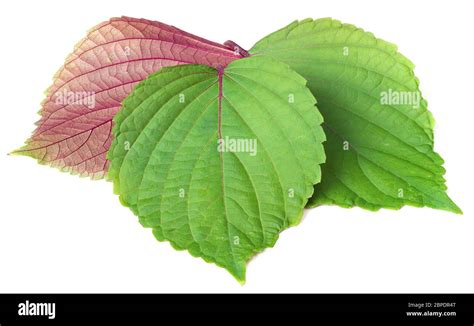
- Leaves are opposite, petiolate, ovate, serrated, and acute, measuring up to 4 inches long and 3 inches wide. They are often green above and purple-green or entirely purple below, typically hairless on top and hairy on the veins below. Leaves can sometimes be crisped (curled or undulated).
- Flower spikes emerge from leaf axils or the top of the plant. Blossoms are pink with four stamens and pinkish anthers that fade to purple, with two blossoms per node, each accompanied by a folded bract.