Just as a doctor wouldn't proceed with surgery based on a cursory examination, building owners shouldn't decide on a full roof replacement without a thorough investigation. Advanced imaging techniques, akin to those used in medicine, now provide crucial information for building professionals to pinpoint problems accurately.
Identifying wet insulation within a commercial roofing system is paramount for several reasons. Instead of relying solely on a visual assessment, building owners can now utilize professionals who employ a variety of non-destructive moisture tests. These tests provide unbiased, scientific information to support reliable recommendations.
Understanding Non-Destructive Moisture Testing Methods
Several non-destructive testing methods are available to assess the moisture content within commercial roofing systems. Each method has its own principles, advantages, and limitations, making the choice of technique dependent on the specific roofing assembly and environmental conditions.
Infrared Thermography (IR Scan)
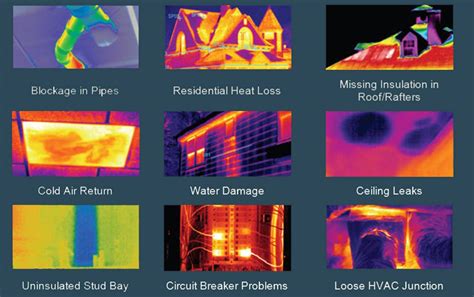
Infrared Thermography, also known as an IR scan, is a widely used non-destructive method to detect and record temperature differences across a roof's surface. This technique is particularly effective for identifying wet insulation in non-ballasted commercial roofing systems.
The principle behind IR scanning is that wet insulation absorbs more heat from the sun during the day. At night, this absorbed heat is retained longer by the denser, wet insulation compared to dry insulation. This temperature differential allows professionals to identify and often outline the wet areas with spray paint for future reference.
Optimal conditions for IR scans include a significant temperature difference between the interior and exterior of the building, preferably at night following a sunny day with rapid temperature cooling. However, IR cameras detect heat, not moisture directly, and certain conditions can lead to inaccurate readings. Ponding water, precipitation within the last 24 hours, strong winds creating friction heat, and specific roof constructions like ballasted systems, lightweight concrete decks, or highly reflective surfaces can all produce false anomalies.
Nuclear Scans
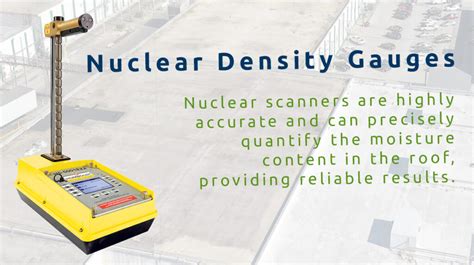
Nuclear scans utilize a gauge that detects hydrogen ions trapped within the roof system. These ions are more concentrated in wet insulation than in dry insulation. The readings are used to create a map of the wet areas on the roof plan.
During a nuclear scan, the roof is typically divided into a grid pattern (e.g., 5'x5' or 10'x10'), and a reading is taken at each grid point. A smaller grid pattern yields more data points and greater accuracy but also increases the time and cost. Experienced technicians may narrow the grid in suspected wet areas to pinpoint problems more precisely. However, nuclear scans can miss small areas of wet insulation due to the limited proportion of the roof sampled by the gauge, and they can be time-consuming on larger roofs.
Electronic Field Vector Mapping (EFVM)
Electronic Field Vector Mapping (EFVM) takes a different approach by aiming to locate the point of moisture entry into a roof system, rather than just the wet insulation itself. This method involves establishing a grounded wire loop around a section of the roof (typically 5,000 to 20,000 square feet).
Water is then applied to the roof surface, acting as a conductive medium. A watertight roof will isolate the electrical difference, while a puncture or point of entry will create an electrical connection. A significant advantage of EFVM is that once a leak point is detected, it can be repaired and then re-checked for accuracy.
Capacitance Moisture Meters
Capacitance Moisture Meters are the only method that directly detects moisture. Other methods often require verification with a moisture meter. This device works by transmitting a signal between two electrodes. The speed at which the signal travels is calculated to provide a moisture reading.
This method requires contact with the entire surface of the roofing system, making it a time-consuming and potentially more expensive option compared to other methods.
The Importance of Non-Destructive Testing
Non-destructive testing provides invaluable information for roofing professionals and building owners, enabling informed business decisions regarding roofing assets. By identifying moisture issues early, building owners and facility managers can significantly extend the lifespan of their roofs.
Premature roof replacement, when repairs or restoration are possible, costs building owners millions of dollars annually. Non-destructive moisture tests help answer the critical question of "repair versus replace" with data-driven insights.
While most commonly performed on aging roof systems, non-destructive tests are increasingly being adopted by design and roofing professionals for newly installed roofs as a quality assurance measure. Some manufacturers even require these tests as a condition of warranty.
Advanced Applications and Considerations
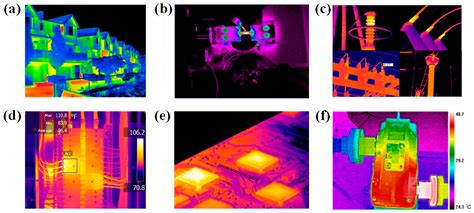
Thermal imaging cameras can generate detailed maps of commercial low-slope roofs, clearly indicating areas of trapped moisture, potential leak sources, or compromised insulation. Professionals capture these images to compile composite maps or aerial views of the entire roof.
These cameras capture infrared radiation, which is invisible to the human eye. The principle is that moisture increases the thermal mass of roofing materials, causing them to retain heat longer. Thermal imaging is crucial for the predictive maintenance of valuable roof assets, illustrating moisture infiltration and aiding in life cycle budgeting and remediation planning.
Before the widespread availability of thermographic cameras, roofing professionals relied on methods like dielectric capacitance meters and nuclear density gauges. These older techniques often provided only spot measurements and could be intrusive and time-consuming, involving guesswork.
Interpreting Thermal Images
Heat emits infrared light, and areas with more heat appear brighter in the resulting image. When used for roof moisture detection, the principle that water adds thermal mass is exploited. Wet roofing insulation absorbs more solar heat during the day, and the temperature difference between wet and dry areas can be as little as 2 to 4 degrees Fahrenheit. Therefore, highly sensitive thermal imaging cameras are required.
It's important to note that certain roof elements, such as HVAC equipment or vents, can appear warmer without indicating moisture. A certified infrared professional is essential to identify these elements beforehand and interpret the final images correctly. Furthermore, the results of thermal imaging must be confirmed, as the camera detects heat from excess moisture, not moisture itself.
Optimal Conditions and Limitations
For accurate IR scans, specific conditions are necessary. For a "hot scan," outside temperatures should be above 50°F (10°C) and sunny. Insufficient heat or heavy cloud cover can prevent the roof from absorbing enough solar energy for clear results. Scanning immediately after rain is not recommended, as it can be impossible to distinguish between rain moisture and leak-related moisture.
Dew can also affect readings. On warm, dry days, scans can be performed in the early evening as temperatures drop. The wet areas will retain heat longer, appearing brighter. The scan needs to be performed quickly, as temperature changes can cause even wet areas to lose detectable heat.
In colder climates, "cold scans" may be performed when temperatures are 50°F (10°C) or less. This method relies on the building's internal heat to warm the roof. Different types of thermal cameras are available, but for commercial roofing, a highly heat-sensitive camera capable of detecting a single-degree difference is ideal.
Compatible Roofing Systems
Thermal imaging technology is most effective on certain commercial low-slope (flat) roof types under specific weather conditions. Built-up roofing systems and heat-welded membrane systems are generally ideal for infrared roof moisture scans. However, not all commercial roofing materials are suitable. "Cold" roof assemblies, which have insulation below the deck and a ventilation layer, can make infrared scans challenging.
Methods of Thermal Imaging Acquisition
Several methods can be employed for thermal imaging:
- Internal Scan: Performed from inside the building after moving obstructions. This is labor-intensive and rarely used unless no other option is available.
- Roof Surface Scan: Images are taken while standing on the roof.
- Elevated Position Scan: Taking images from a higher vantage point provides a broader view of the roof surface and potential landmarks for repairs.
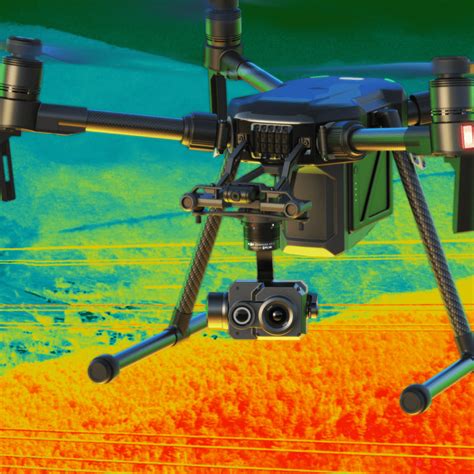
- Aerial Scan (Drone/Aircraft): Offers significant advantages, allowing for the creation of detailed maps of large or inaccessible roofs. This method is convenient for roofers, enabling multiple roofs to be surveyed per night without extensive equipment transport.
Before any scan, professionals should examine the roof for access points, heat sources, flashing details, penetrations, and safety hazards.
Combining Non-Destructive and Destructive Testing
While non-destructive methods are essential for initial assessments, destructive testing methods, such as core sampling and probe testing, offer highly precise results and are often recommended to validate preliminary findings.
Core Sampling
Core sampling involves extracting small sections of the roof for moisture analysis. These samples can be analyzed on-site or in a laboratory. Strategic selection of core sample locations is based on data from non-destructive tests like thermal imaging, electric leak detection, or nuclear scans.
Moisture Meters
Handheld moisture meters with specialized probes can be inserted into roofing materials to measure moisture content layer by layer. The depth of the probe can be adjusted based on the assessment requirements.
While destructive methods involve some intrusion, their precision and ability to provide in-depth insights make them vital components of a comprehensive moisture detection strategy. Integrating the right combination of non-destructive and destructive assessments is crucial for the health and longevity of a commercial roof.
The Evolution of Roof Moisture Analysis
The roofing industry is moving towards standardized procedures for determining moisture content, moving beyond subjective "educated toe" assessments. Advanced technological equipment, laboratory testing, and scientific equations are now employed for accurate moisture analysis.
Standard Moisture Analysis Procedures
Proper moisture analysis typically involves a combination of both non-destructive and destructive methods. Investigations relying on only one method are often considered insufficient.
Non-destructive testing equipment includes:
- Impedance/Capacitance Meters: Handheld meters that emit low-frequency electronic signals to determine if a roof area is wet or dry. They typically do not measure the percentage of moisture.
- Infrared Thermography: Uses infrared cameras to detect temperature differentials, identifying "hot spots" that may indicate moisture. It's most effective after sunset when temperature differences are pronounced.
- Nuclear Gauges: Emit neutrons that are slowed down by hydrogen atoms in water. Higher levels of slowed neutrons indicate wet areas. These tests can penetrate up to 7 inches and can be conducted in areas with ponded water.
Destructive testing, primarily core cuts followed by gravimetric analysis, is required to verify the conditions observed by non-destructive equipment. Gravimetric testing involves weighing a roof component before and after drying to determine its moisture content by weight.
Gravimetric Testing and Thermal Resistance Ratio (TRR)
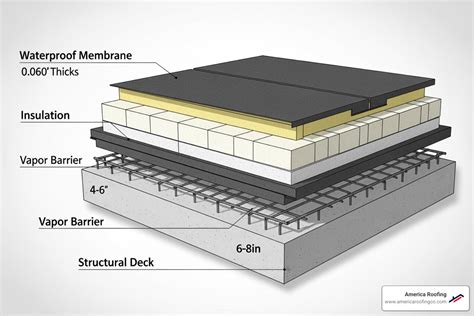
When insulation becomes wet, it loses its thermal and structural integrity. Each insulation type has a specific moisture content percentage at which it loses its thermal capacity and is considered "wet." The Thermal Resistance Ratio (TRR), calculated by dividing the material's wet thermal resistivity by its dry thermal resistivity, helps determine this threshold. If the TRR falls below 80%, the insulation is considered wet.
The results of a moisture analysis should be presented in a report that includes an accurate roof plan identifying all wet areas, a report of findings, test analysis, and recommendations. Removing all wet insulation is crucial to prevent potential structural deck damage.
Key Technologies in Roof Moisture Surveys
Several technologies are instrumental in roof moisture surveys:
- Infrared Thermal Imaging: Detects temperature differences, highlighting "hot spots" that may indicate moisture. It's common for nighttime scans after a sunny day.
- Nuclear Gauges: Measure hydrogen atom concentration, a reliable indicator of water presence. They can be used during the day and are effective on reflective surfaces.
- Capacitance/Impedance Meters: Pass an electrical current through roof materials; areas with moisture conduct current better. These are useful on reflective surfaces and for daytime testing.
It is important to recognize that all non-destructive techniques have the potential for false positives and false negatives. Experienced and certified independent third-party providers often use a combination of techniques to achieve the highest accuracy.
Infrared Moisture Surveys
When conditions are optimal (sunny day, dry membrane, low winds), moisture damage appears as "hot spots." Infrared surveys can cover 100% of the membrane and are often the quickest. However, they require sunlight exposure, and shaded areas may not yield accurate results. Reflective membranes ("cool roofs") and coatings can also lead to false negatives as they emit less infrared radiation.
Nuclear Roof Moisture Surveys
Nuclear surveys operate on the principle of neutron moderation. They provide accurate results, especially when infrared imagery is inconclusive or on reflective roofs. Nuclear testing can be performed during the day, addressing potential access or safety concerns associated with nighttime infrared scans. Readings are taken on a grid, but they are generally straightforward and reliable.
Capacitance/Impedance Surveys
Capacitance testing also surveys 100% of the membrane and reliably locates boundaries between wet and dry materials. It is an excellent choice for highly reflective surfaces where infrared may fail. Like nuclear testing, capacitance surveys are suitable for daytime assessment and serve as a valuable backup or cross-check for infrared testing.
How to Use a Moisture Meter | Ask This Old House
Verifying Findings and Ensuring Accuracy
Accurate evaluation of roof conditions is critical for making smart maintenance and repair decisions. Roof moisture surveys provide an accurate assessment of the true moisture conditions, helping to prevent structural damage, mold growth, and reduce repair costs.
While non-destructive methods are valuable, verifying survey findings with selected core samples is best practice. Independent third-party non-destructive moisture surveys, conducted by certified and experienced technicians, are quick, accurate, and cost-effective additions to a comprehensive inspection program.
It is crucial to understand that instruments may report false positives or false negatives. Experienced providers utilize test techniques or combinations of techniques that yield the greatest accuracy. Combining highly accurate moisture surveys with comprehensive visual inspections benefits all stakeholders involved in maintaining commercial roofing systems.